

241
The rapid development of nanotechnology will
make the establishment of nanofactories possible
that would be operated cheap almost anywhere,
and this also contributes to decentralisation.
Finally, political decentralisation will be achieved
through network building. A typical feature of the
change will be that too many things will change in
a too short period of time, and this phenomenon is
called “future shock” (Toffler 1970; Pantzar
2010). The question is, how society as a whole
will be able to accommodate to all these.
It is worth mentioning a few results achieved
by nanotechnology so far. This technology can be
thanked for the appearance of thin film solar cells
(TFSC) composed of organic conductor polymers
placed on a plastic disc in the form of an extremely
thin film. This could be so thin that it is transparent, and placing it onto window surface electricity
could be produced. Similarly revolutionary is lithium polymer accumulators that can be produced
in ultra-thin layers. Layers can be combined making it possible that solar panels, accumulators and
organic LED lamps are printed on each other.
Such a window uses energy produced in daytime
to illuminate during the night. However, the technology is expensive for the time being (Stevenson
2011). Batteries transforming not only visible
light into electric energy but infrared waste heat as
well are also produced nowadays.
Using nanotechnology ultra-thin glasses can
be produced that could be used for avoiding
infections in hospitals, protecting metal components from rusting, protecting sculptures in public areas from corrosion. Nanomaterial is used
mostly in the construction industry. In earthquake
prone areas in Greece, buildings are built that are
able to fill fractures caused by earthquakes. The
range of products made using nanotechnology
widens rapidly, exceeding one thousand currently. Apart from the above mentioned products,
computer memories and microprocessors, detergents, anti-microbial bandage, vehicles, light and
still firm sports devices, odour-free socks, tooth
paste, air filters, puncture-free tyre, antibacterial
medical and kitchen tools, cosmetics, spotless
cloths, lasting paints, bed linen, underwear capable of binding water in soil, medicine targeting
selected cells, etc., are produced by nanotechnology (Stevenson 2011).
Real breakthrough, however, would be
achieved when nanofactories are established. In
such factories, not human labour would produce
products, but machines are capable of producing
structures and materials at molecular level and
controlled by computer software. Basic material
would be very cheap elements available without
limits (H, C, N, O, Al, Si), and production itself
would be very cheap and being environmentally
sound. Unemployment as a result of the above
process would pose a significant social problem.
Certain experts envision the end of capitalism
related to the above, but no one knows what
would come after it.
The range of nanotechnology products widens
rapidly; however, no quality change occurred yet.
For this, further development of artificial intelligence would be necessary. The intelligence of
robots is frequently criticised and rightly so in the
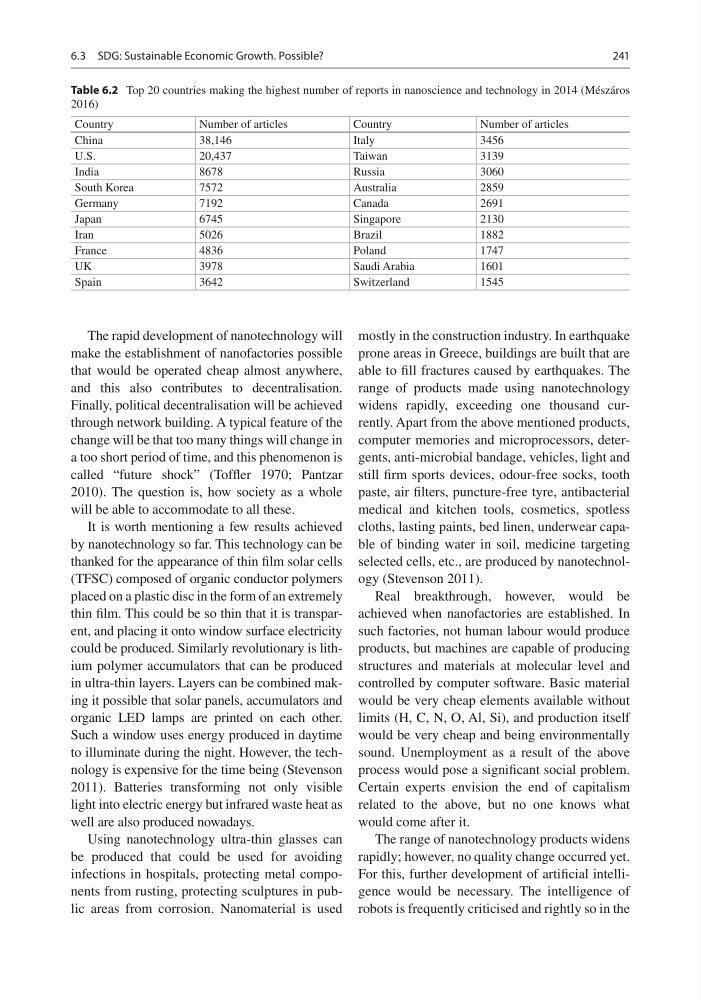
Table 6.2 Top 20 countries making the highest number of reports in nanoscience and technology in 2014 (Mészáros
2016)
Country
Number of articles
Country
Number of articles
China
38,146
Italy
3456
U.S.
20,437
Taiwan
3139
India
8678
Russia
3060
South Korea
7572
Australia
2859
Germany
7192
Canada
2691
Japan
6745
Singapore
2130
Iran
5026
Brazil
1882
France
4836
Poland
1747
UK
3978
Saudi Arabia
1601
Spain
3642
Switzerland
1545
6.3 SDG: Sustainable Economic Growth. Possible?
The rapid development of nanotechnology will
make the establishment of nanofactories possible
that would be operated cheap almost anywhere,
and this also contributes to decentralisation.
Finally, political decentralisation will be achieved
through network building. A typical feature of the
change will be that too many things will change in
a too short period of time, and this phenomenon is
called “future shock” (Toffler 1970; Pantzar
2010). The question is, how society as a whole
will be able to accommodate to all these.
It is worth mentioning a few results achieved
by nanotechnology so far. This technology can be
thanked for the appearance of thin film solar cells
(TFSC) composed of organic conductor polymers
placed on a plastic disc in the form of an extremely
thin film. This could be so thin that it is transparent, and placing it onto window surface electricity
could be produced. Similarly revolutionary is lithium polymer accumulators that can be produced
in ultra-thin layers. Layers can be combined making it possible that solar panels, accumulators and
organic LED lamps are printed on each other.
Such a window uses energy produced in daytime
to illuminate during the night. However, the technology is expensive for the time being (Stevenson
2011). Batteries transforming not only visible
light into electric energy but infrared waste heat as
well are also produced nowadays.
Using nanotechnology ultra-thin glasses can
be produced that could be used for avoiding
infections in hospitals, protecting metal components from rusting, protecting sculptures in public areas from corrosion. Nanomaterial is used
mostly in the construction industry. In earthquake
prone areas in Greece, buildings are built that are
able to fill fractures caused by earthquakes. The
range of products made using nanotechnology
widens rapidly, exceeding one thousand currently. Apart from the above mentioned products,
computer memories and microprocessors, detergents, anti-microbial bandage, vehicles, light and
still firm sports devices, odour-free socks, tooth
paste, air filters, puncture-free tyre, antibacterial
medical and kitchen tools, cosmetics, spotless
cloths, lasting paints, bed linen, underwear capable of binding water in soil, medicine targeting
selected cells, etc., are produced by nanotechnology (Stevenson 2011).
Real breakthrough, however, would be
achieved when nanofactories are established. In
such factories, not human labour would produce
products, but machines are capable of producing
structures and materials at molecular level and
controlled by computer software. Basic material
would be very cheap elements available without
limits (H, C, N, O, Al, Si), and production itself
would be very cheap and being environmentally
sound. Unemployment as a result of the above
process would pose a significant social problem.
Certain experts envision the end of capitalism
related to the above, but no one knows what
would come after it.
The range of nanotechnology products widens
rapidly; however, no quality change occurred yet.
For this, further development of artificial intelligence would be necessary. The intelligence of
robots is frequently criticised and rightly so in the
Table 6.2 Top 20 countries making the highest number of reports in nanoscience and technology in 2014 (Mészáros
2016)
Country
Number of articles
Country
Number of articles
China
38,146
Italy
3456
U.S.
20,437
Taiwan
3139
India
8678
Russia
3060
South Korea
7572
Australia
2859
Germany
7192
Canada
2691
Japan
6745
Singapore
2130
Iran
5026
Brazil
1882
France
4836
Poland
1747
UK
3978
Saudi Arabia
1601
Spain
3642
Switzerland
1545
6.3 SDG: Sustainable Economic Growth. Possible?