

201
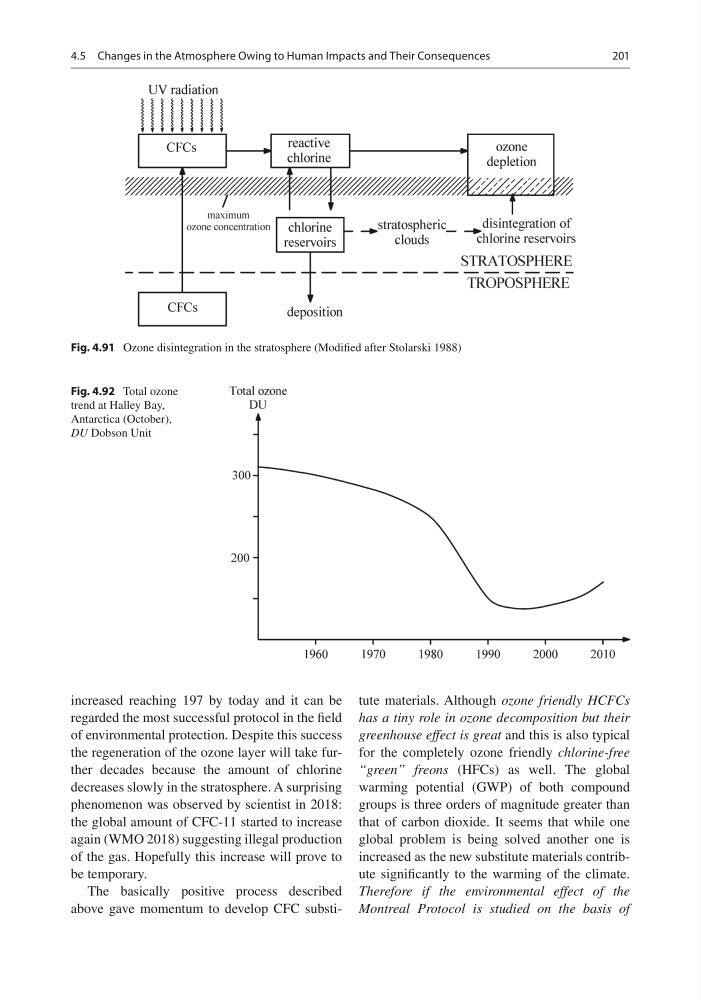
Fig. 4.91 Ozone disintegration in the stratosphere (Modified after Stolarski 1988)
Fig. 4.92 Total ozone
trend at Halley Bay,
Antarctica (October),
DU Dobson Unit
increased reaching 197 by today and it can be
regarded the most successful protocol in the field
of environmental protection. Despite this success
the regeneration of the ozone layer will take further decades because the amount of chlorine
decreases slowly in the stratosphere. A surprising
phenomenon was observed by scientist in 2018:
the global amount of CFC-11 started to increase
again (WMO 2018) suggesting illegal production
of the gas. Hopefully this increase will prove to
be temporary.
The basically positive process described
above gave momentum to develop CFC substitute materials. Although ozone friendly HCFCs
has a tiny role in ozone decomposition but their
greenhouse effect is great and this is also typical
for the completely ozone friendly chlorine-free
“green” freons (HFCs) as well. The global
warming potential (GWP) of both compound
groups is three orders of magnitude greater than
that of carbon dioxide. It seems that while one
global problem is being solved another one is
increased as the new substitute materials contribute significantly to the warming of the climate.
Therefore if the environmental effect of the
Montreal Protocol is studied on the basis of
4.5 Changes in the Atmosphere Owing to Human Impacts and Their Consequences
Fig. 4.91 Ozone disintegration in the stratosphere (Modified after Stolarski 1988)
Fig. 4.92 Total ozone
trend at Halley Bay,
Antarctica (October),
DU Dobson Unit
increased reaching 197 by today and it can be
regarded the most successful protocol in the field
of environmental protection. Despite this success
the regeneration of the ozone layer will take further decades because the amount of chlorine
decreases slowly in the stratosphere. A surprising
phenomenon was observed by scientist in 2018:
the global amount of CFC-11 started to increase
again (WMO 2018) suggesting illegal production
of the gas. Hopefully this increase will prove to
be temporary.
The basically positive process described
above gave momentum to develop CFC substitute materials. Although ozone friendly HCFCs
has a tiny role in ozone decomposition but their
greenhouse effect is great and this is also typical
for the completely ozone friendly chlorine-free
“green” freons (HFCs) as well. The global
warming potential (GWP) of both compound
groups is three orders of magnitude greater than
that of carbon dioxide. It seems that while one
global problem is being solved another one is
increased as the new substitute materials contribute significantly to the warming of the climate.
Therefore if the environmental effect of the
Montreal Protocol is studied on the basis of
4.5 Changes in the Atmosphere Owing to Human Impacts and Their Consequences