

74
Modern Food Microbiology
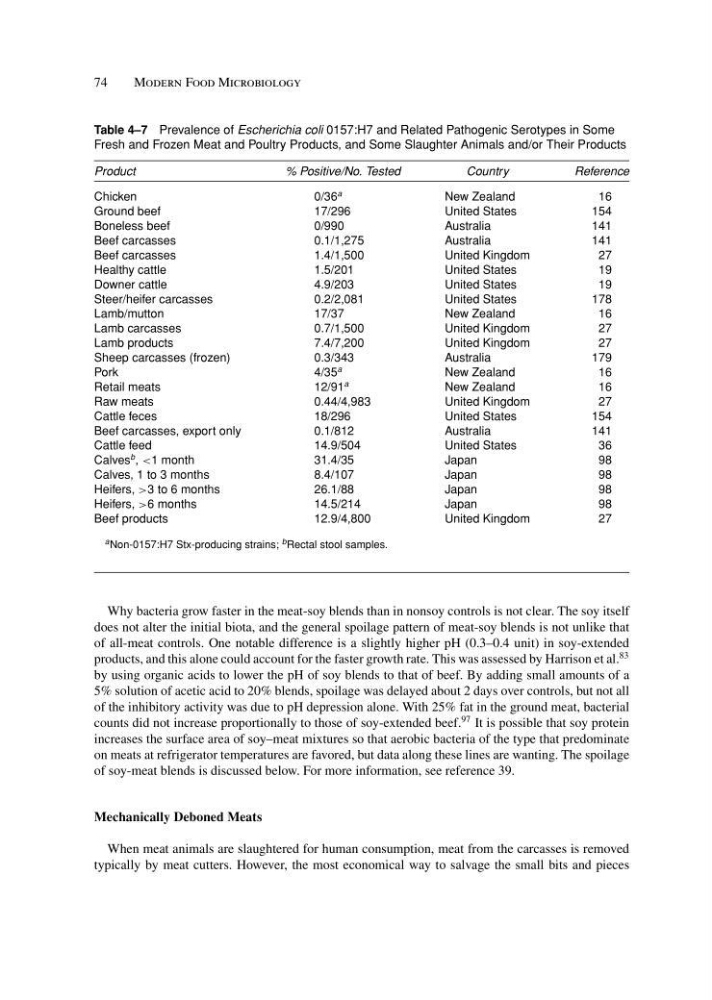
Table 4–7 Prevalence of Escherichia coli 0157:H7 and Related Pathogenic Serotypes in Some
Fresh and Frozen Meat and Poultry Products, and Some Slaughter Animals and/or Their Products
Product
% Positive/No. Tested
Country
Reference
Chicken
0/36
a
New Zealand
16
Ground beef
17/296
United States
154
Boneless beef
0/990
Australia
141
Beef carcasses
0.1/1,275
Australia
141
Beef carcasses
1.4/1,500
United Kingdom
27
Healthy cattle
1.5/201
United States
19
Downer cattle
4.9/203
United States
19
Steer/heifer carcasses
0.2/2,081
United States
178
Lamb/mutton
17/37
New Zealand
16
Lamb carcasses
0.7/1,500
United Kingdom
27
Lamb products
7.4/7,200
United Kingdom
27
Sheep carcasses (frozen)
0.3/343
Australia
179
Pork
4/35
a
New Zealand
16
Retail meats
12/91
a
New Zealand
16
Raw meats
0.44/4,983
United Kingdom
27
Cattle feces
18/296
United States
154
Beef carcasses, export only
0.1/812
Australia
141
Cattle feed
14.9/504
United States
36
Calves
b , <1 month
31.4/35
Japan
98
Calves, 1 to 3 months
8.4/107
Japan
98
Heifers, >3 to 6 months
26.1/88
Japan
98
Heifers, >6 months
14.5/214
Japan
98
Beef products
12.9/4,800
United Kingdom
27
a Non-0157:H7 Stx-producing strains; b Rectal stool samples.
Why bacteria grow faster in the meat-soy blends than in nonsoy controls is not clear. The soy itself
does not alter the initial biota, and the general spoilage pattern of meat-soy blends is not unlike that
of all-meat controls. One notable difference is a slightly higher pH (0.3–0.4 unit) in soy-extended
products, and this alone could account for the faster growth rate. This was assessed by Harrison et al.
83
by using organic acids to lower the pH of soy blends to that of beef. By adding small amounts of a
5% solution of acetic acid to 20% blends, spoilage was delayed about 2 days over controls, but not all
of the inhibitory activity was due to pH depression alone. With 25% fat in the ground meat, bacterial
counts did not increase proportionally to those of soy-extended beef.
97 It is possible that soy protein
increases the surface area of soy–meat mixtures so that aerobic bacteria of the type that predominate
on meats at refrigerator temperatures are favored, but data along these lines are wanting. The spoilage
of soy-meat blends is discussed below. For more information, see reference 39.
Mechanically Deboned Meats
When meat animals are slaughtered for human consumption, meat from the carcasses is removed
typically by meat cutters. However, the most economical way to salvage the small bits and pieces
Modern Food Microbiology
Table 4–7 Prevalence of Escherichia coli 0157:H7 and Related Pathogenic Serotypes in Some
Fresh and Frozen Meat and Poultry Products, and Some Slaughter Animals and/or Their Products
Product
% Positive/No. Tested
Country
Reference
Chicken
0/36
a
New Zealand
16
Ground beef
17/296
United States
154
Boneless beef
0/990
Australia
141
Beef carcasses
0.1/1,275
Australia
141
Beef carcasses
1.4/1,500
United Kingdom
27
Healthy cattle
1.5/201
United States
19
Downer cattle
4.9/203
United States
19
Steer/heifer carcasses
0.2/2,081
United States
178
Lamb/mutton
17/37
New Zealand
16
Lamb carcasses
0.7/1,500
United Kingdom
27
Lamb products
7.4/7,200
United Kingdom
27
Sheep carcasses (frozen)
0.3/343
Australia
179
Pork
4/35
a
New Zealand
16
Retail meats
12/91
a
New Zealand
16
Raw meats
0.44/4,983
United Kingdom
27
Cattle feces
18/296
United States
154
Beef carcasses, export only
0.1/812
Australia
141
Cattle feed
14.9/504
United States
36
Calves
b , <1 month
31.4/35
Japan
98
Calves, 1 to 3 months
8.4/107
Japan
98
Heifers, >3 to 6 months
26.1/88
Japan
98
Heifers, >6 months
14.5/214
Japan
98
Beef products
12.9/4,800
United Kingdom
27
a Non-0157:H7 Stx-producing strains; b Rectal stool samples.
Why bacteria grow faster in the meat-soy blends than in nonsoy controls is not clear. The soy itself
does not alter the initial biota, and the general spoilage pattern of meat-soy blends is not unlike that
of all-meat controls. One notable difference is a slightly higher pH (0.3–0.4 unit) in soy-extended
products, and this alone could account for the faster growth rate. This was assessed by Harrison et al.
83
by using organic acids to lower the pH of soy blends to that of beef. By adding small amounts of a
5% solution of acetic acid to 20% blends, spoilage was delayed about 2 days over controls, but not all
of the inhibitory activity was due to pH depression alone. With 25% fat in the ground meat, bacterial
counts did not increase proportionally to those of soy-extended beef.
97 It is possible that soy protein
increases the surface area of soy–meat mixtures so that aerobic bacteria of the type that predominate
on meats at refrigerator temperatures are favored, but data along these lines are wanting. The spoilage
of soy-meat blends is discussed below. For more information, see reference 39.
Mechanically Deboned Meats
When meat animals are slaughtered for human consumption, meat from the carcasses is removed
typically by meat cutters. However, the most economical way to salvage the small bits and pieces