

72
Modern Food Microbiology
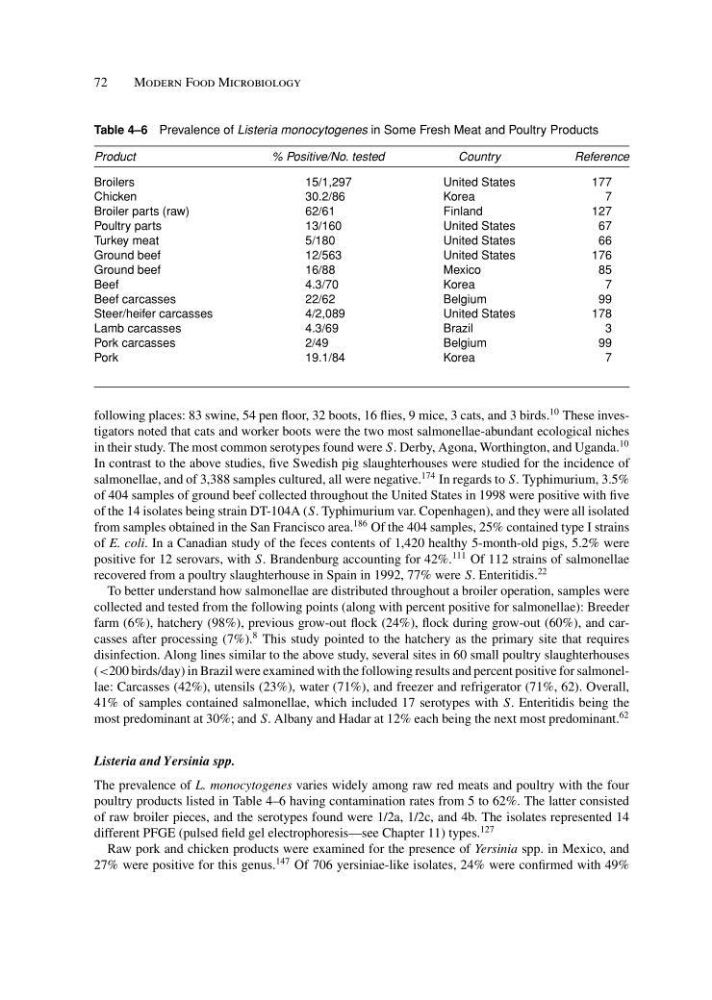
Table 4–6 Prevalence of Listeria monocytogenes in Some Fresh Meat and Poultry Products
Product
% Positive/No. tested
Country
Reference
Broilers
15/1,297
United States
177
Chicken
30.2/86
Korea
7
Broiler parts (raw)
62/61
Finland
127
Poultry parts
13/160
United States
67
Turkey meat
5/180
United States
66
Ground beef
12/563
United States
176
Ground beef
16/88
Mexico
85
Beef
4.3/70
Korea
7
Beef carcasses
22/62
Belgium
99
Steer/heifer carcasses
4/2,089
United States
178
Lamb carcasses
4.3/69
Brazil
3
Pork carcasses
2/49
Belgium
99
Pork
19.1/84
Korea
7
following places: 83 swine, 54 pen floor, 32 boots, 16 flies, 9 mice, 3 cats, and 3 birds.
10 These investigators noted that cats and worker boots were the two most salmonellae-abundant ecological niches
in their study. The most common serotypes found were S. Derby, Agona, Worthington, and Uganda.
10
In contrast to the above studies, five Swedish pig slaughterhouses were studied for the incidence of
salmonellae, and of 3,388 samples cultured, all were negative.
174 In regards to S. Typhimurium, 3.5%
of 404 samples of ground beef collected throughout the United States in 1998 were positive with five
of the 14 isolates being strain DT-104A (S. Typhimurium var. Copenhagen), and they were all isolated
from samples obtained in the San Francisco area.
186 Of the 404 samples, 25% contained type I strains
of E. coli. In a Canadian study of the feces contents of 1,420 healthy 5-month-old pigs, 5.2% were
positive for 12 serovars, with S. Brandenburg accounting for 42%.
111 Of 112 strains of salmonellae
recovered from a poultry slaughterhouse in Spain in 1992, 77% were S. Enteritidis.
22
To better understand how salmonellae are distributed throughout a broiler operation, samples were
collected and tested from the following points (along with percent positive for salmonellae): Breeder
farm (6%), hatchery (98%), previous grow-out flock (24%), flock during grow-out (60%), and carcasses after processing (7%).
8 This study pointed to the hatchery as the primary site that requires
disinfection. Along lines similar to the above study, several sites in 60 small poultry slaughterhouses
(<200 birds/day) in Brazil were examined with the following results and percent positive for salmonellae: Carcasses (42%), utensils (23%), water (71%), and freezer and refrigerator (71%, 62). Overall,
41% of samples contained salmonellae, which included 17 serotypes with S. Enteritidis being the
most predominant at 30%; and S. Albany and Hadar at 12% each being the next most predominant.
62
Listeria and Yersinia spp.
The prevalence of L. monocytogenes varies widely among raw red meats and poultry with the four
poultry products listed in Table 4–6 having contamination rates from 5 to 62%. The latter consisted
of raw broiler pieces, and the serotypes found were 1/2a, 1/2c, and 4b. The isolates represented 14
different PFGE (pulsed field gel electrophoresis—see Chapter 11) types.
127
Raw pork and chicken products were examined for the presence of Yersinia spp. in Mexico, and
27% were positive for this genus.
147 Of 706 yersiniae-like isolates, 24% were confirmed with 49%
Modern Food Microbiology
Table 4–6 Prevalence of Listeria monocytogenes in Some Fresh Meat and Poultry Products
Product
% Positive/No. tested
Country
Reference
Broilers
15/1,297
United States
177
Chicken
30.2/86
Korea
7
Broiler parts (raw)
62/61
Finland
127
Poultry parts
13/160
United States
67
Turkey meat
5/180
United States
66
Ground beef
12/563
United States
176
Ground beef
16/88
Mexico
85
Beef
4.3/70
Korea
7
Beef carcasses
22/62
Belgium
99
Steer/heifer carcasses
4/2,089
United States
178
Lamb carcasses
4.3/69
Brazil
3
Pork carcasses
2/49
Belgium
99
Pork
19.1/84
Korea
7
following places: 83 swine, 54 pen floor, 32 boots, 16 flies, 9 mice, 3 cats, and 3 birds.
10 These investigators noted that cats and worker boots were the two most salmonellae-abundant ecological niches
in their study. The most common serotypes found were S. Derby, Agona, Worthington, and Uganda.
10
In contrast to the above studies, five Swedish pig slaughterhouses were studied for the incidence of
salmonellae, and of 3,388 samples cultured, all were negative.
174 In regards to S. Typhimurium, 3.5%
of 404 samples of ground beef collected throughout the United States in 1998 were positive with five
of the 14 isolates being strain DT-104A (S. Typhimurium var. Copenhagen), and they were all isolated
from samples obtained in the San Francisco area.
186 Of the 404 samples, 25% contained type I strains
of E. coli. In a Canadian study of the feces contents of 1,420 healthy 5-month-old pigs, 5.2% were
positive for 12 serovars, with S. Brandenburg accounting for 42%.
111 Of 112 strains of salmonellae
recovered from a poultry slaughterhouse in Spain in 1992, 77% were S. Enteritidis.
22
To better understand how salmonellae are distributed throughout a broiler operation, samples were
collected and tested from the following points (along with percent positive for salmonellae): Breeder
farm (6%), hatchery (98%), previous grow-out flock (24%), flock during grow-out (60%), and carcasses after processing (7%).
8 This study pointed to the hatchery as the primary site that requires
disinfection. Along lines similar to the above study, several sites in 60 small poultry slaughterhouses
(<200 birds/day) in Brazil were examined with the following results and percent positive for salmonellae: Carcasses (42%), utensils (23%), water (71%), and freezer and refrigerator (71%, 62). Overall,
41% of samples contained salmonellae, which included 17 serotypes with S. Enteritidis being the
most predominant at 30%; and S. Albany and Hadar at 12% each being the next most predominant.
62
Listeria and Yersinia spp.
The prevalence of L. monocytogenes varies widely among raw red meats and poultry with the four
poultry products listed in Table 4–6 having contamination rates from 5 to 62%. The latter consisted
of raw broiler pieces, and the serotypes found were 1/2a, 1/2c, and 4b. The isolates represented 14
different PFGE (pulsed field gel electrophoresis—see Chapter 11) types.
127
Raw pork and chicken products were examined for the presence of Yersinia spp. in Mexico, and
27% were positive for this genus.
147 Of 706 yersiniae-like isolates, 24% were confirmed with 49%