

638 Modern Food Microbiology
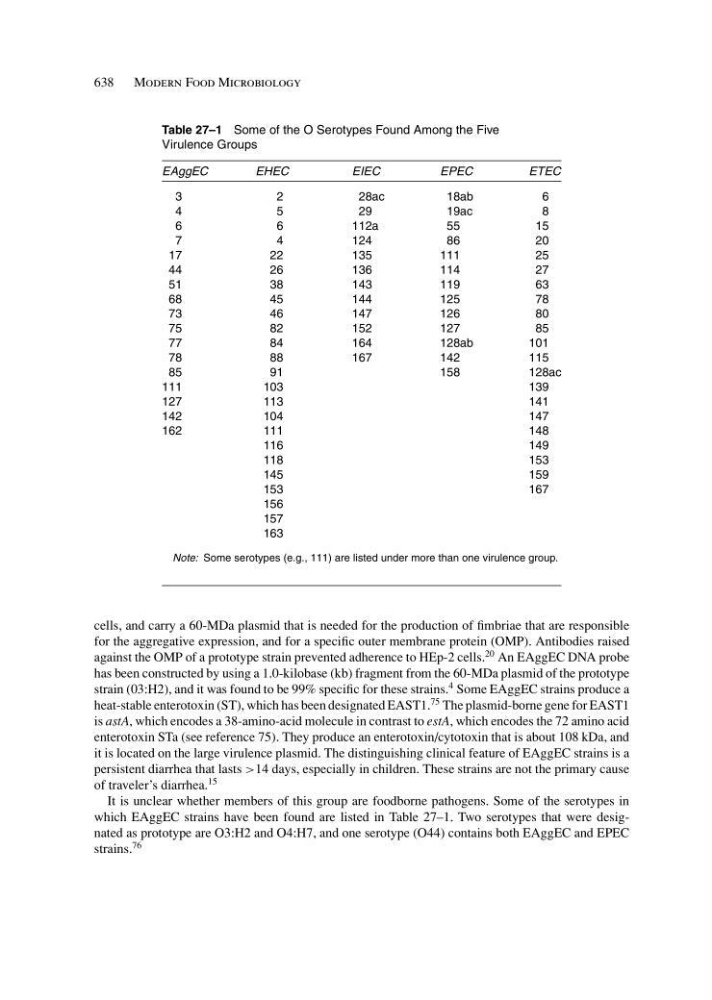
Table 27–1 Some of the O Serotypes Found Among the Five
Virulence Groups
EAggEC
EHEC
EIEC
EPEC
ETEC
3
2
28ac
18ab
6
4
5
29
19ac
8
6
6
112a
55
15
7
4
124
86
20
17
22
135
111
25
44
26
136
114
27
51
38
143
119
63
68
45
144
125
78
73
46
147
126
80
75
82
152
127
85
77
84
164
128ab
101
78
88
167
142
115
85
91
158
128ac
111
103
139
127
113
141
142
104
147
162
111
148
116
149
118
153
145
159
153
167
156
157
163
Note: Some serotypes (e.g., 111) are listed under more than one virulence group.
cells, and carry a 60-MDa plasmid that is needed for the production of fimbriae that are responsible
for the aggregative expression, and for a specific outer membrane protein (OMP). Antibodies raised
against the OMP of a prototype strain prevented adherence to HEp-2 cells.
20 An EAggEC DNA probe
has been constructed by using a 1.0-kilobase (kb) fragment from the 60-MDa plasmid of the prototype
strain (03:H2), and it was found to be 99% specific for these strains.
4 Some EAggEC strains produce a
heat-stable enterotoxin (ST), which has been designated EAST1.
75 The plasmid-borne gene for EAST1
is astA, which encodes a 38-amino-acid molecule in contrast to estA, which encodes the 72 amino acid
enterotoxin STa (see reference 75). They produce an enterotoxin/cytotoxin that is about 108 kDa, and
it is located on the large virulence plasmid. The distinguishing clinical feature of EAggEC strains is a
persistent diarrhea that lasts >14 days, especially in children. These strains are not the primary cause
of traveler’s diarrhea.
15
It is unclear whether members of this group are foodborne pathogens. Some of the serotypes in
which EAggEC strains have been found are listed in Table 27–1. Two serotypes that were designated as prototype are O3:H2 and O4:H7, and one serotype (O44) contains both EAggEC and EPEC
strains.
76