

Foodborne Gastroenteritis Caused by Salmonella and Shigella
621
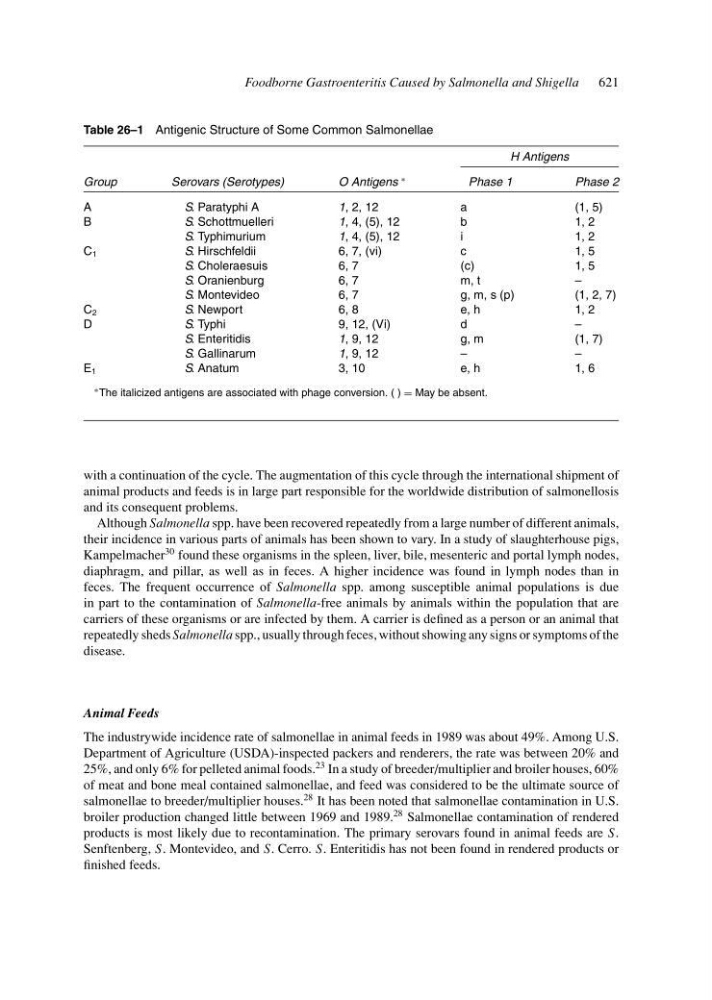
Table 26–1 Antigenic Structure of Some Common Salmonellae
H Antigens
Group
Serovars (Serotypes)
O Antigens
∗
Phase 1
Phase 2
A
S. Paratyphi A
1, 2, 12
a
(1, 5)
B
S. Schottmuelleri
1, 4, (5), 12
b
1, 2
S. Typhimurium
1, 4, (5), 12
i
1, 2
C 1
S. Hirschfeldii
6, 7, (vi)
c
1, 5
S. Choleraesuis
6, 7
(c)
1, 5
S. Oranienburg
6, 7
m, t
–
S. Montevideo
6, 7
g, m, s (p)
(1, 2, 7)
C 2
S. Newport
6, 8
e, h
1, 2
D
S. Typhi
9, 12, (Vi)
d
–
S. Enteritidis
1, 9, 12
g, m
(1, 7)
S. Gallinarum
1, 9, 12
–
–
E 1
S. Anatum
3, 10
e, h
1, 6
∗ The italicized antigens are associated with phage conversion. ( ) = May be absent.
with a continuation of the cycle. The augmentation of this cycle through the international shipment of
animal products and feeds is in large part responsible for the worldwide distribution of salmonellosis
and its consequent problems.
Although Salmonella spp. have been recovered repeatedly from a large number of different animals,
their incidence in various parts of animals has been shown to vary. In a study of slaughterhouse pigs,
Kampelmacher
30 found these organisms in the spleen, liver, bile, mesenteric and portal lymph nodes,
diaphragm, and pillar, as well as in feces. A higher incidence was found in lymph nodes than in
feces. The frequent occurrence of Salmonella spp. among susceptible animal populations is due
in part to the contamination of Salmonella-free animals by animals within the population that are
carriers of these organisms or are infected by them. A carrier is defined as a person or an animal that
repeatedly sheds Salmonella spp., usually through feces, without showing any signs or symptoms of the
disease.
Animal Feeds
The industrywide incidence rate of salmonellae in animal feeds in 1989 was about 49%. Among U.S.
Department of Agriculture (USDA)-inspected packers and renderers, the rate was between 20% and
25%, and only 6% for pelleted animal foods.
23 In a study of breeder/multiplier and broiler houses, 60%
of meat and bone meal contained salmonellae, and feed was considered to be the ultimate source of
salmonellae to breeder/multiplier houses.
28 It has been noted that salmonellae contamination in U.S.
broiler production changed little between 1969 and 1989.
28 Salmonellae contamination of rendered
products is most likely due to recontamination. The primary serovars found in animal feeds are S.
Senftenberg, S. Montevideo, and S. Cerro. S. Enteritidis has not been found in rendered products or
finished feeds.