

608 Modern Food Microbiology
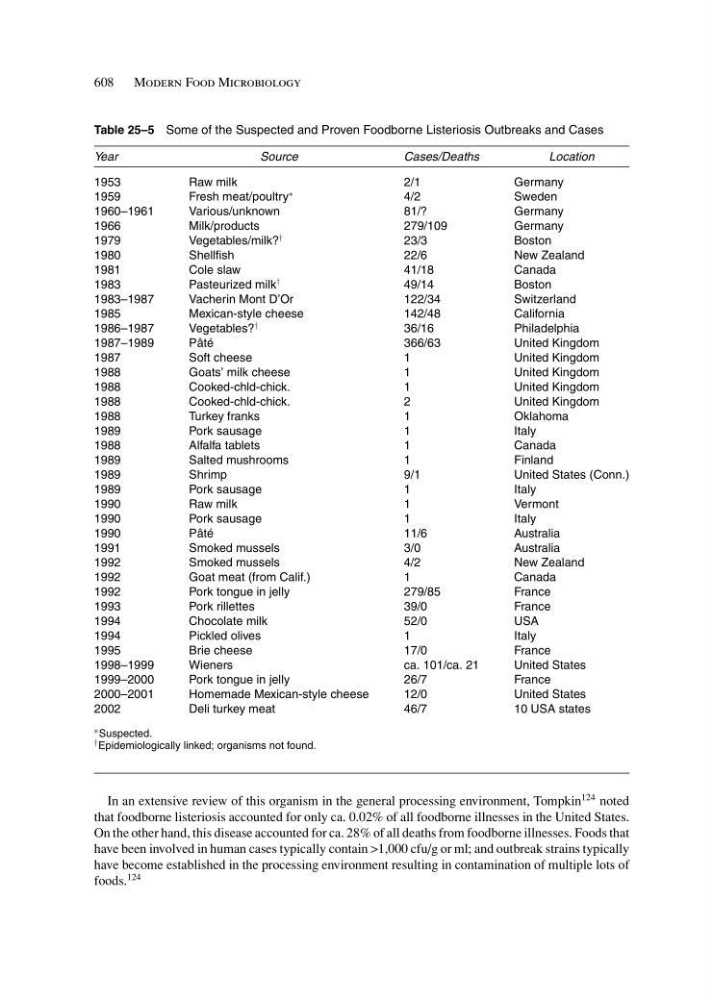
Table 25–5 Some of the Suspected and Proven Foodborne Listeriosis Outbreaks and Cases
Year
Source
Cases/Deaths
Location
1953
Raw milk
2/1
Germany
1959
Fresh meat/poultry
∗
4/2
Sweden
1960–1961
Various/unknown
81/?
Germany
1966
Milk/products
279/109
Germany
1979
Vegetables/milk?
†
23/3
Boston
1980
Shellfish
22/6
New Zealand
1981
Cole slaw
41/18
Canada
1983
Pasteurized milk
†
49/14
Boston
1983–1987
Vacherin Mont D’Or
122/34
Switzerland
1985
Mexican-style cheese
142/48
California
1986–1987
Vegetables?
†
36/16
Philadelphia
1987–1989
P ˆ
at ´
e
366/63
United Kingdom
1987
Soft cheese
1
United Kingdom
1988
Goats’ milk cheese
1
United Kingdom
1988
Cooked-chld-chick.
1
United Kingdom
1988
Cooked-chld-chick.
2
United Kingdom
1988
Turkey franks
1
Oklahoma
1989
Pork sausage
1
Italy
1988
Alfalfa tablets
1
Canada
1989
Salted mushrooms
1
Finland
1989
Shrimp
9/1
United States (Conn.)
1989
Pork sausage
1
Italy
1990
Raw milk
1
Vermont
1990
Pork sausage
1
Italy
1990
P ˆ
at ´
e
11/6
Australia
1991
Smoked mussels
3/0
Australia
1992
Smoked mussels
4/2
New Zealand
1992
Goat meat (from Calif.)
1
Canada
1992
Pork tongue in jelly
279/85
France
1993
Pork rillettes
39/0
France
1994
Chocolate milk
52/0
USA
1994
Pickled olives
1
Italy
1995
Brie cheese
17/0
France
1998–1999
Wieners
ca. 101/ca. 21
United States
1999–2000
Pork tongue in jelly
26/7
France
2000–2001
Homemade Mexican-style cheese
12/0
United States
2002
Deli turkey meat
46/7
10 USA states
∗ Suspected.
† Epidemiologically linked; organisms not found.
In an extensive review of this organism in the general processing environment, Tompkin
124 noted
that foodborne listeriosis accounted for only ca. 0.02% of all foodborne illnesses in the United States.
On the other hand, this disease accounted for ca. 28% of all deaths from foodborne illnesses. Foods that
have been involved in human cases typically contain >1,000 cfu/g or ml; and outbreak strains typically
have become established in the processing environment resulting in contamination of multiple lots of
foods.
124