

Food Poisoning Caused by Gram-Positive Sporeforming Bacteria 573
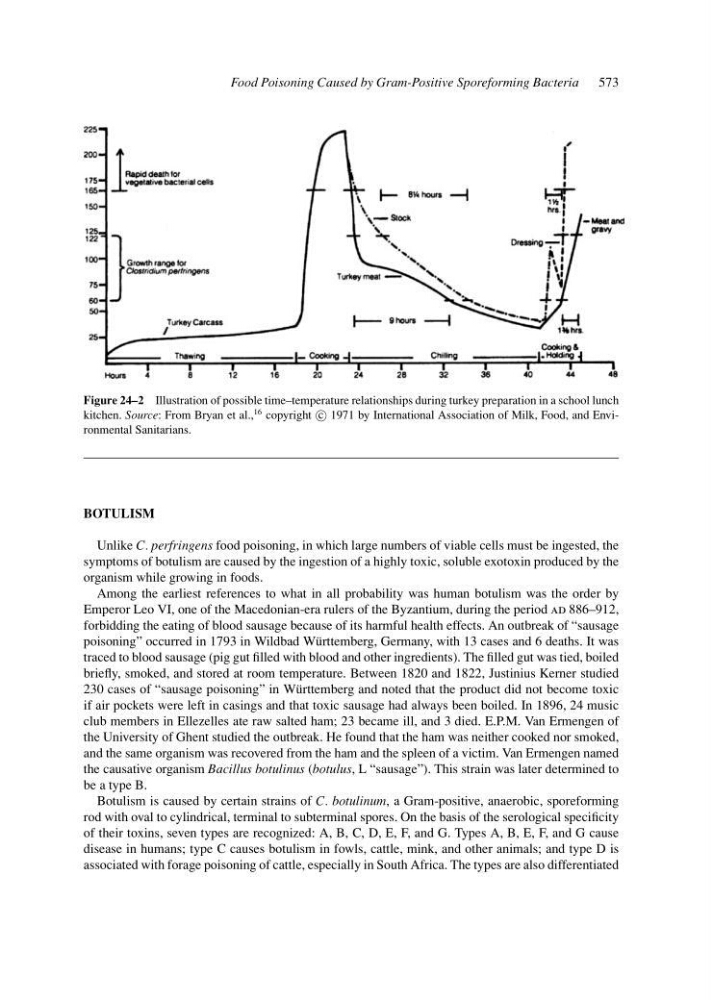
Figure 24–2 Illustration of possible time–temperature relationships during turkey preparation in a school lunch
kitchen. Source: From Bryan et al.,
16 copyright c
1971 by International Association of Milk, Food, and Environmental Sanitarians.
BOTULISM
Unlike C. perfringens food poisoning, in which large numbers of viable cells must be ingested, the
symptoms of botulism are caused by the ingestion of a highly toxic, soluble exotoxin produced by the
organism while growing in foods.
Among the earliest references to what in all probability was human botulism was the order by
Emperor Leo VI, one of the Macedonian-era rulers of the Byzantium, during the period ad 886–912,
forbidding the eating of blood sausage because of its harmful health effects. An outbreak of “sausage
poisoning” occurred in 1793 in Wildbad W¨ urttemberg, Germany, with 13 cases and 6 deaths. It was
traced to blood sausage (pig gut filled with blood and other ingredients). The filled gut was tied, boiled
briefly, smoked, and stored at room temperature. Between 1820 and 1822, Justinius Kerner studied
230 cases of “sausage poisoning” in W¨ urttemberg and noted that the product did not become toxic
if air pockets were left in casings and that toxic sausage had always been boiled. In 1896, 24 music
club members in Ellezelles ate raw salted ham; 23 became ill, and 3 died. E.P.M. Van Ermengen of
the University of Ghent studied the outbreak. He found that the ham was neither cooked nor smoked,
and the same organism was recovered from the ham and the spleen of a victim. Van Ermengen named
the causative organism Bacillus botulinus (botulus, L “sausage”). This strain was later determined to
be a type B.
Botulism is caused by certain strains of C. botulinum, a Gram-positive, anaerobic, sporeforming
rod with oval to cylindrical, terminal to subterminal spores. On the basis of the serological specificity
of their toxins, seven types are recognized: A, B, C, D, E, F, and G. Types A, B, E, F, and G cause
disease in humans; type C causes botulism in fowls, cattle, mink, and other animals; and type D is
associated with forage poisoning of cattle, especially in South Africa. The types are also differentiated