

568 Modern Food Microbiology
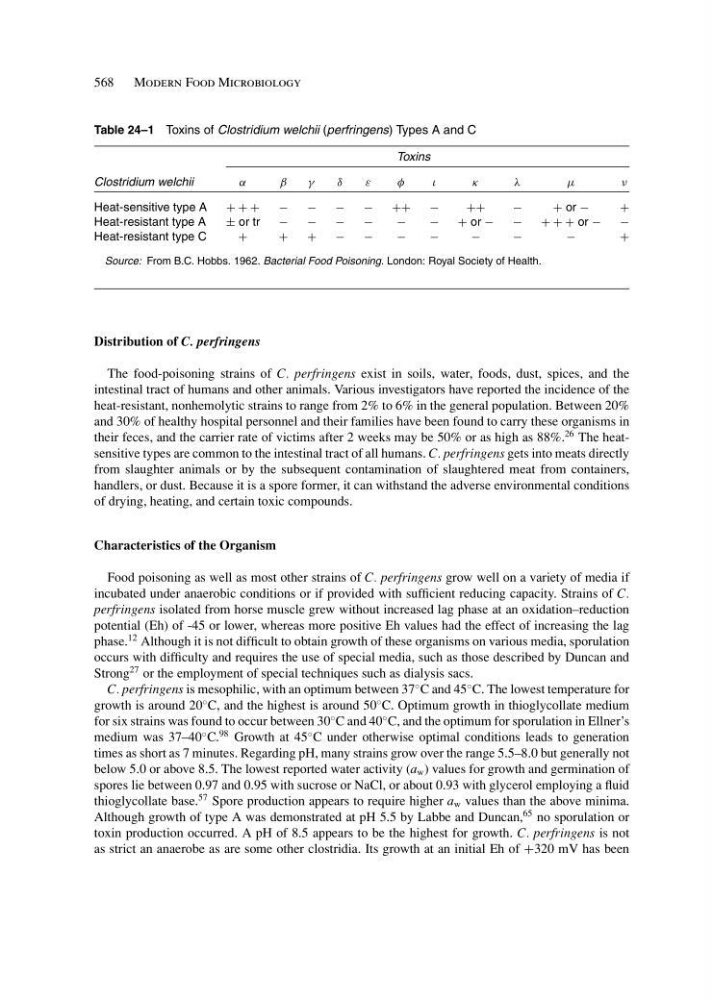
Table 24–1 Toxins of Clostridium welchii (perfringens) Types A and C
Toxins
Clostridium welchii
α
β
γ
δ
ε
φ
ι
κ
λ
µ
ν
Heat-sensitive type A
+++
−
−
−
−
++
−
++
−
+ or −
+
Heat-resistant type A
± or tr
−
−
−
−
−
−
+ or −
−
+ + + or −
−
Heat-resistant type C
+
+
+
−
−
−
−
−
−
−
+
Source: From B.C. Hobbs. 1962. Bacterial Food Poisoning. London: Royal Society of Health.
Distribution of C. perfringens
The food-poisoning strains of C. perfringens exist in soils, water, foods, dust, spices, and the
intestinal tract of humans and other animals. Various investigators have reported the incidence of the
heat-resistant, nonhemolytic strains to range from 2% to 6% in the general population. Between 20%
and 30% of healthy hospital personnel and their families have been found to carry these organisms in
their feces, and the carrier rate of victims after 2 weeks may be 50% or as high as 88%.
26 The heatsensitive types are common to the intestinal tract of all humans. C. perfringens gets into meats directly
from slaughter animals or by the subsequent contamination of slaughtered meat from containers,
handlers, or dust. Because it is a spore former, it can withstand the adverse environmental conditions
of drying, heating, and certain toxic compounds.
Characteristics of the Organism
Food poisoning as well as most other strains of C. perfringens grow well on a variety of media if
incubated under anaerobic conditions or if provided with sufficient reducing capacity. Strains of C.
perfringens isolated from horse muscle grew without increased lag phase at an oxidation–reduction
potential (Eh) of -45 or lower, whereas more positive Eh values had the effect of increasing the lag
phase.
12 Although it is not difficult to obtain growth of these organisms on various media, sporulation
occurs with difficulty and requires the use of special media, such as those described by Duncan and
Strong
27 or the employment of special techniques such as dialysis sacs.
C. perfringens is mesophilic, with an optimum between 37
◦ C and 45
◦ C. The lowest temperature for
growth is around 20
◦ C, and the highest is around 50
◦ C. Optimum growth in thioglycollate medium
for six strains was found to occur between 30
◦ C and 40
◦ C, and the optimum for sporulation in Ellner’s
medium was 37–40
◦ C.
98 Growth at 45
◦ C under otherwise optimal conditions leads to generation
times as short as 7 minutes. Regarding pH, many strains grow over the range 5.5–8.0 but generally not
below 5.0 or above 8.5. The lowest reported water activity (a w ) values for growth and germination of
spores lie between 0.97 and 0.95 with sucrose or NaCl, or about 0.93 with glycerol employing a fluid
thioglycollate base.
57 Spore production appears to require higher a w values than the above minima.
Although growth of type A was demonstrated at pH 5.5 by Labbe and Duncan,
65 no sporulation or
toxin production occurred. A pH of 8.5 appears to be the highest for growth. C. perfringens is not
as strict an anaerobe as are some other clostridia. Its growth at an initial Eh of +320 mV has been