

546 Modern Food Microbiology
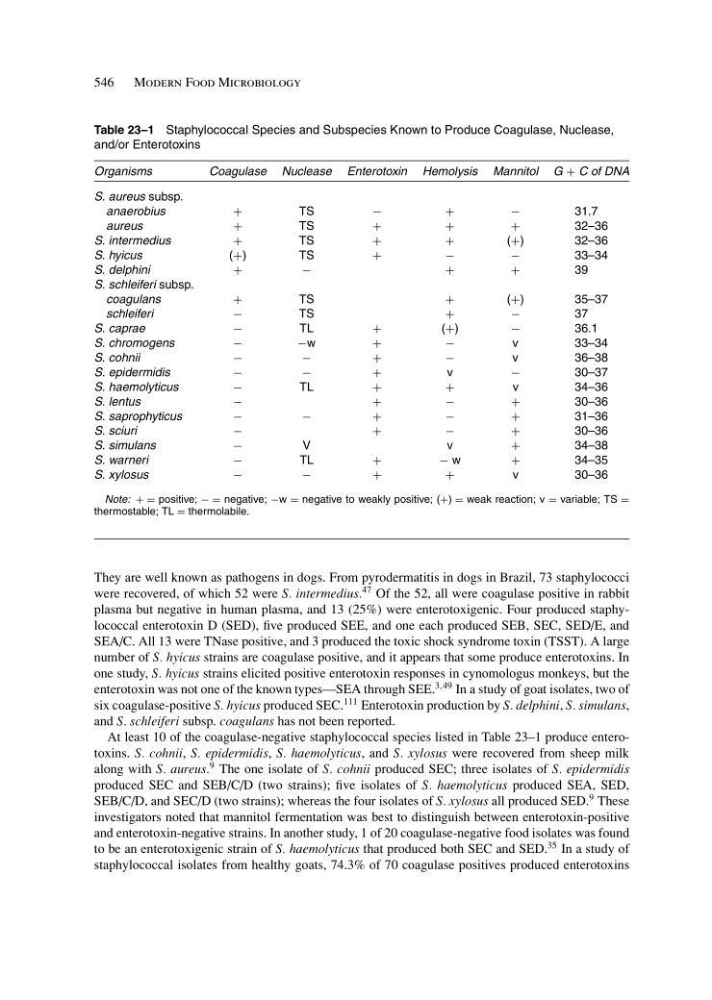
Table 23–1 Staphylococcal Species and Subspecies Known to Produce Coagulase, Nuclease,
and/or Enterotoxins
Organisms
Coagulase Nuclease Enterotoxin Hemolysis Mannitol G + C of DNA
S. aureus subsp.
anaerobius
+
TS
−
+
−
31.7
aureus
+
TS
+
+
+
32–36
S. intermedius
+
TS
+
+
(+)
32–36
S. hyicus
(+)
T S
+
−
−
33–34
S. delphini
+
−
+
+
39
S. schleiferi subsp.
coagulans
+
TS
+
(+)
35–37
schleiferi
−
TS
+
−
37
S. caprae
−
TL
+
(+)
−
36.1
S. chromogens
−
− w
+
−
v
33–34
S. cohnii
−
−
+
−
v
36–38
S. epidermidis
−
−
+
v
−
30–37
S. haemolyticus
−
TL
+
+
v
34–36
S. lentus
−
+
−
+
30–36
S. saprophyticus
−
−
+
−
+
31–36
S. sciuri
−
+
−
+
30–36
S. simulans
−
V
v
+
34–38
S. warneri
−
TL
+
−w
+
34–35
S. xylosus
−
−
+
+
v
30–36
Note: + = positive; − = negative; −w = negative to weakly positive; (+) = weak reaction; v = variable; TS =
thermostable; TL = thermolabile.
They are well known as pathogens in dogs. From pyrodermatitis in dogs in Brazil, 73 staphylococci
were recovered, of which 52 were S. intermedius.
47 Of the 52, all were coagulase positive in rabbit
plasma but negative in human plasma, and 13 (25%) were enterotoxigenic. Four produced staphylococcal enterotoxin D (SED), five produced SEE, and one each produced SEB, SEC, SED/E, and
SEA/C. All 13 were TNase positive, and 3 produced the toxic shock syndrome toxin (TSST). A large
number of S. hyicus strains are coagulase positive, and it appears that some produce enterotoxins. In
one study, S. hyicus strains elicited positive enterotoxin responses in cynomologus monkeys, but the
enterotoxin was not one of the known types—SEA through SEE.
3,49 In a study of goat isolates, two of
six coagulase-positive S. hyicus produced SEC.
111 Enterotoxin production by S. delphini, S. simulans,
and S. schleiferi subsp. coagulans has not been reported.
At least 10 of the coagulase-negative staphylococcal species listed in Table 23–1 produce enterotoxins. S. cohnii, S. epidermidis, S. haemolyticus, and S. xylosus were recovered from sheep milk
along with S. aureus.
9 The one isolate of S. cohnii produced SEC; three isolates of S. epidermidis
produced SEC and SEB/C/D (two strains); five isolates of S. haemolyticus produced SEA, SED,
SEB/C/D, and SEC/D (two strains); whereas the four isolates of S. xylosus all produced SED.
9 These
investigators noted that mannitol fermentation was best to distinguish between enterotoxin-positive
and enterotoxin-negative strains. In another study, 1 of 20 coagulase-negative food isolates was found
to be an enterotoxigenic strain of S. haemolyticus that produced both SEC and SED.
35 In a study of
staphylococcal isolates from healthy goats, 74.3% of 70 coagulase positives produced enterotoxins