

The HACCP and FSO Systems for Food Safety
513
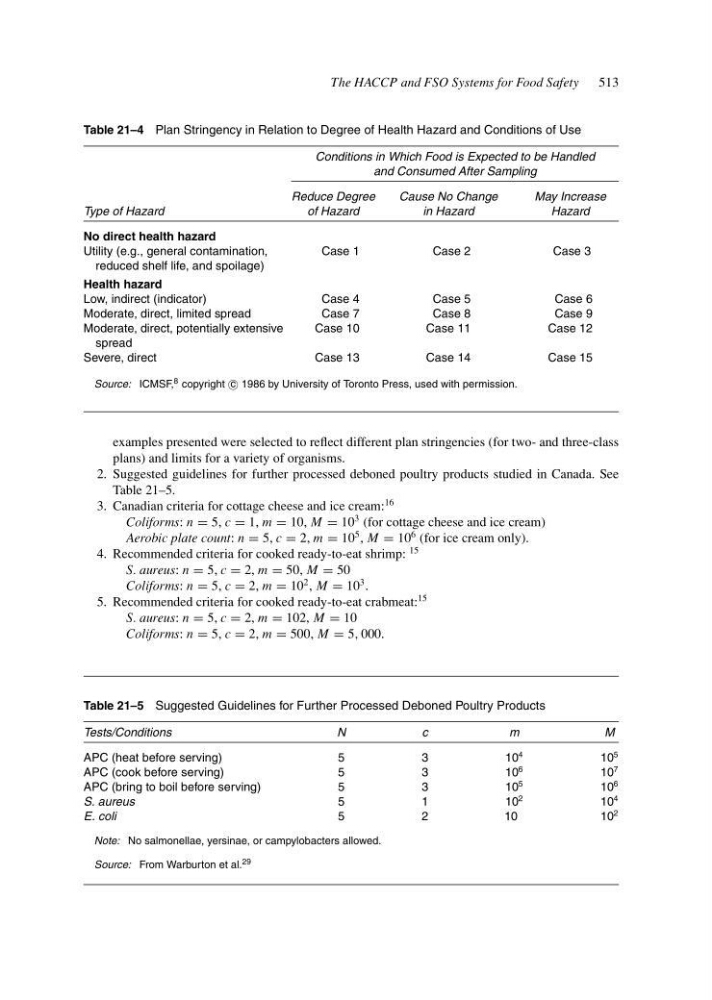
Table 21–4 Plan Stringency in Relation to Degree of Health Hazard and Conditions of Use
Conditions in Which Food is Expected to be Handled
and Consumed After Sampling
Reduce Degree
Cause No Change
May Increase
Type of Hazard
of Hazard
in Hazard
Hazard
No direct health hazard
Utility (e.g., general contamination,
reduced shelf life, and spoilage)
Case 1
Case 2
Case 3
Health hazard
Low, indirect (indicator)
Case 4
Case 5
Case 6
Moderate, direct, limited spread
Case 7
Case 8
Case 9
Moderate, direct, potentially extensive
spread
Case 10
Case 11
Case 12
Severe, direct
Case 13
Case 14
Case 15
Source: ICMSF, 8 copyright c
1986 by University of Toronto Press, used with permission.
examples presented were selected to reflect different plan stringencies (for two- and three-class
plans) and limits for a variety of organisms.
2. Suggested guidelines for further processed deboned poultry products studied in Canada. See
Table 21–5.
3. Canadian criteria for cottage cheese and ice cream:
16
Coliforms: n = 5, c = 1, m = 10, M = 10
3 (for cottage cheese and ice cream)
Aerobic plate count: n = 5, c = 2, m = 10
5 , M = 10
6 (for ice cream only).
4. Recommended criteria for cooked ready-to-eat shrimp:
15
S. aureus: n = 5, c = 2, m = 50, M = 50
Coliforms: n = 5, c = 2, m = 10
2 , M = 10
3 .
5. Recommended criteria for cooked ready-to-eat crabmeat:
15
S. aureus: n = 5, c = 2, m = 102, M = 10
Coliforms: n = 5, c = 2, m = 500, M = 5, 000.
Table 21–5 Suggested Guidelines for Further Processed Deboned Poultry Products
Tests/Conditions
N
c
m
M
APC (heat before serving)
5
3
10
4
10
5
APC (cook before serving)
5
3
10
6
10
7
APC (bring to boil before serving)
5
3
10
5
10
6
S. aureus
5
1
1 0
2
10
4
E. coli
5
2
10
10
2
Note: No salmonellae, yersinae, or campylobacters allowed.
Source: From Warburton et al. 29
513
Table 21–4 Plan Stringency in Relation to Degree of Health Hazard and Conditions of Use
Conditions in Which Food is Expected to be Handled
and Consumed After Sampling
Reduce Degree
Cause No Change
May Increase
Type of Hazard
of Hazard
in Hazard
Hazard
No direct health hazard
Utility (e.g., general contamination,
reduced shelf life, and spoilage)
Case 1
Case 2
Case 3
Health hazard
Low, indirect (indicator)
Case 4
Case 5
Case 6
Moderate, direct, limited spread
Case 7
Case 8
Case 9
Moderate, direct, potentially extensive
spread
Case 10
Case 11
Case 12
Severe, direct
Case 13
Case 14
Case 15
Source: ICMSF, 8 copyright c
1986 by University of Toronto Press, used with permission.
examples presented were selected to reflect different plan stringencies (for two- and three-class
plans) and limits for a variety of organisms.
2. Suggested guidelines for further processed deboned poultry products studied in Canada. See
Table 21–5.
3. Canadian criteria for cottage cheese and ice cream:
16
Coliforms: n = 5, c = 1, m = 10, M = 10
3 (for cottage cheese and ice cream)
Aerobic plate count: n = 5, c = 2, m = 10
5 , M = 10
6 (for ice cream only).
4. Recommended criteria for cooked ready-to-eat shrimp:
15
S. aureus: n = 5, c = 2, m = 50, M = 50
Coliforms: n = 5, c = 2, m = 10
2 , M = 10
3 .
5. Recommended criteria for cooked ready-to-eat crabmeat:
15
S. aureus: n = 5, c = 2, m = 102, M = 10
Coliforms: n = 5, c = 2, m = 500, M = 5, 000.
Table 21–5 Suggested Guidelines for Further Processed Deboned Poultry Products
Tests/Conditions
N
c
m
M
APC (heat before serving)
5
3
10
4
10
5
APC (cook before serving)
5
3
10
6
10
7
APC (bring to boil before serving)
5
3
10
5
10
6
S. aureus
5
1
1 0
2
10
4
E. coli
5
2
10
10
2
Note: No salmonellae, yersinae, or campylobacters allowed.
Source: From Warburton et al. 29