

The HACCP and FSO Systems for Food Safety 507
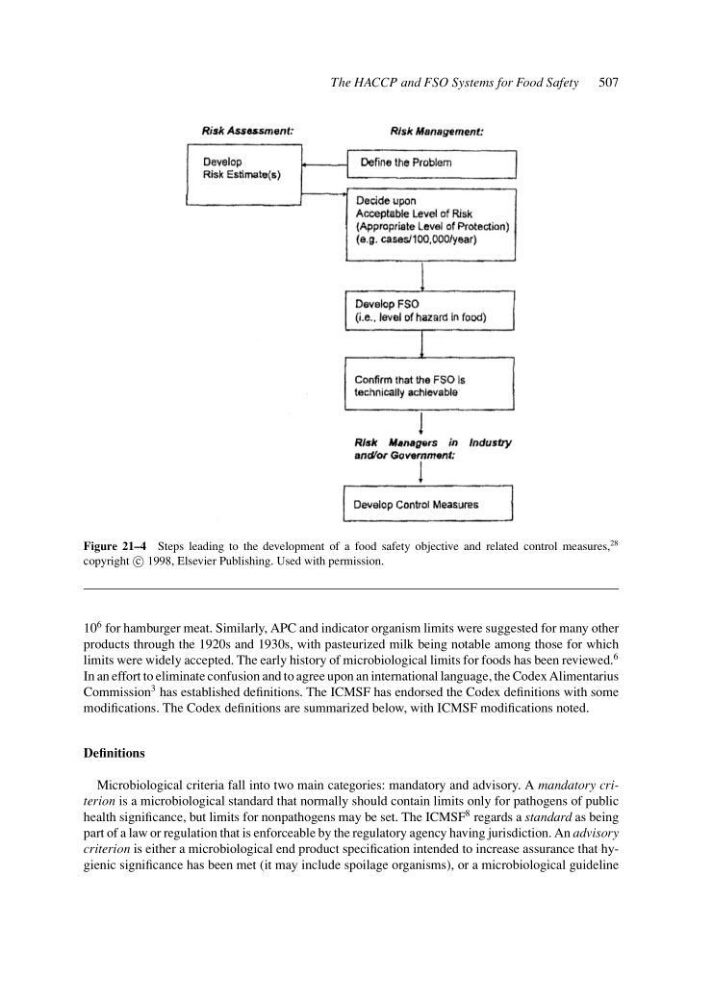
Figure 21–4 Steps leading to the development of a food safety objective and related control measures,
28
copyright c
1998, Elsevier Publishing. Used with permission.
10
6 for hamburger meat. Similarly, APC and indicator organism limits were suggested for many other
products through the 1920s and 1930s, with pasteurized milk being notable among those for which
limits were widely accepted. The early history of microbiological limits for foods has been reviewed.
6
In an effort to eliminate confusion and to agree upon an international language, the Codex Alimentarius
Commission
3 has established definitions. The ICMSF has endorsed the Codex definitions with some
modifications. The Codex definitions are summarized below, with ICMSF modifications noted.
Definitions
Microbiological criteria fall into two main categories: mandatory and advisory. A mandatory criterion is a microbiological standard that normally should contain limits only for pathogens of public
health significance, but limits for nonpathogens may be set. The ICMSF
8 regards a standard as being
part of a law or regulation that is enforceable by the regulatory agency having jurisdiction. An advisory
criterion is either a microbiological end product specification intended to increase assurance that hygienic significance has been met (it may include spoilage organisms), or a microbiological guideline
Figure 21–4 Steps leading to the development of a food safety objective and related control measures,
28
copyright c
1998, Elsevier Publishing. Used with permission.
10
6 for hamburger meat. Similarly, APC and indicator organism limits were suggested for many other
products through the 1920s and 1930s, with pasteurized milk being notable among those for which
limits were widely accepted. The early history of microbiological limits for foods has been reviewed.
6
In an effort to eliminate confusion and to agree upon an international language, the Codex Alimentarius
Commission
3 has established definitions. The ICMSF has endorsed the Codex definitions with some
modifications. The Codex definitions are summarized below, with ICMSF modifications noted.
Definitions
Microbiological criteria fall into two main categories: mandatory and advisory. A mandatory criterion is a microbiological standard that normally should contain limits only for pathogens of public
health significance, but limits for nonpathogens may be set. The ICMSF
8 regards a standard as being
part of a law or regulation that is enforceable by the regulatory agency having jurisdiction. An advisory
criterion is either a microbiological end product specification intended to increase assurance that hygienic significance has been met (it may include spoilage organisms), or a microbiological guideline