

480 Modern Food Microbiology
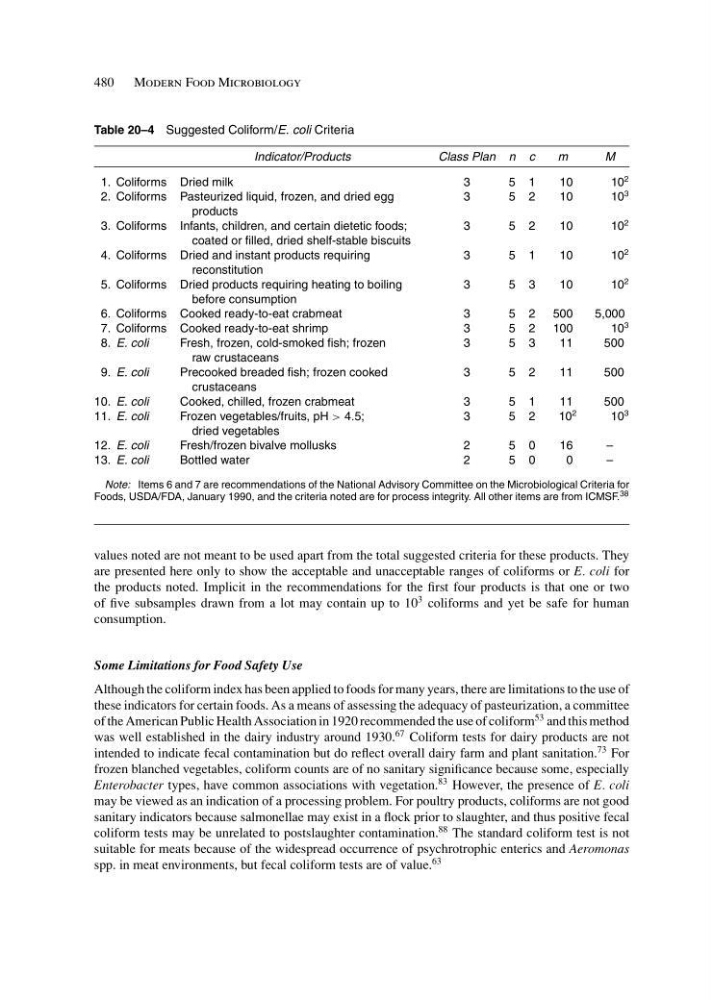
Table 20–4 Suggested Coliform/E. coli Criteria
Indicator/Products
Class Plan n c
m
M
1. Coliforms Dried milk
3
5 1
10
10
2
2. Coliforms Pasteurized liquid, frozen, and dried egg
products
3
5 2
1 0
1 0
3
3. Coliforms Infants, children, and certain dietetic foods;
coated or filled, dried shelf-stable biscuits
3
5 2
1 0
1 0
2
4. Coliforms Dried and instant products requiring
reconstitution
3
5 1
1 0
1 0
2
5. Coliforms Dried products requiring heating to boiling
before consumption
3
5 3
1 0
1 0
2
6. Coliforms Cooked ready-to-eat crabmeat
3
5 2 500
5,000
7. Coliforms Cooked ready-to-eat shrimp
3
5 2 100
10
3
8. E. coli
Fresh, frozen, cold-smoked fish; frozen
raw crustaceans
3
5 3
11
500
9. E. coli
Precooked breaded fish; frozen cooked
crustaceans
3
5 2
11
500
10. E. coli
Cooked, chilled, frozen crabmeat
3
5 1
11
500
11. E. coli
Frozen vegetables/fruits, pH > 4.5;
dried vegetables
3
5 2
1 0
2
10
3
12. E. coli
Fresh/frozen bivalve mollusks
2
5 0
16
–
13. E. coli
Bottled water
2
5 0
0
–
Note: Items 6 and 7 are recommendations of the National Advisory Committee on the Microbiological Criteria for
Foods, USDA/FDA, January 1990, and the criteria noted are for process integrity. All other items are from ICMSF. 38
values noted are not meant to be used apart from the total suggested criteria for these products. They
are presented here only to show the acceptable and unacceptable ranges of coliforms or E. coli for
the products noted. Implicit in the recommendations for the first four products is that one or two
of five subsamples drawn from a lot may contain up to 10
3 coliforms and yet be safe for human
consumption.
Some Limitations for Food Safety Use
Although the coliform index has been applied to foods for many years, there are limitations to the use of
these indicators for certain foods. As a means of assessing the adequacy of pasteurization, a committee
of the American Public Health Association in 1920 recommended the use of coliform
53 and this method
was well established in the dairy industry around 1930.
67 Coliform tests for dairy products are not
intended to indicate fecal contamination but do reflect overall dairy farm and plant sanitation.
73 For
frozen blanched vegetables, coliform counts are of no sanitary significance because some, especially
Enterobacter types, have common associations with vegetation.
83 However, the presence of E. coli
may be viewed as an indication of a processing problem. For poultry products, coliforms are not good
sanitary indicators because salmonellae may exist in a flock prior to slaughter, and thus positive fecal
coliform tests may be unrelated to postslaughter contamination.
88 The standard coliform test is not
suitable for meats because of the widespread occurrence of psychrotrophic enterics and Aeromonas
spp. in meat environments, but fecal coliform tests are of value.
63
Table 20–4 Suggested Coliform/E. coli Criteria
Indicator/Products
Class Plan n c
m
M
1. Coliforms Dried milk
3
5 1
10
10
2
2. Coliforms Pasteurized liquid, frozen, and dried egg
products
3
5 2
1 0
1 0
3
3. Coliforms Infants, children, and certain dietetic foods;
coated or filled, dried shelf-stable biscuits
3
5 2
1 0
1 0
2
4. Coliforms Dried and instant products requiring
reconstitution
3
5 1
1 0
1 0
2
5. Coliforms Dried products requiring heating to boiling
before consumption
3
5 3
1 0
1 0
2
6. Coliforms Cooked ready-to-eat crabmeat
3
5 2 500
5,000
7. Coliforms Cooked ready-to-eat shrimp
3
5 2 100
10
3
8. E. coli
Fresh, frozen, cold-smoked fish; frozen
raw crustaceans
3
5 3
11
500
9. E. coli
Precooked breaded fish; frozen cooked
crustaceans
3
5 2
11
500
10. E. coli
Cooked, chilled, frozen crabmeat
3
5 1
11
500
11. E. coli
Frozen vegetables/fruits, pH > 4.5;
dried vegetables
3
5 2
1 0
2
10
3
12. E. coli
Fresh/frozen bivalve mollusks
2
5 0
16
–
13. E. coli
Bottled water
2
5 0
0
–
Note: Items 6 and 7 are recommendations of the National Advisory Committee on the Microbiological Criteria for
Foods, USDA/FDA, January 1990, and the criteria noted are for process integrity. All other items are from ICMSF. 38
values noted are not meant to be used apart from the total suggested criteria for these products. They
are presented here only to show the acceptable and unacceptable ranges of coliforms or E. coli for
the products noted. Implicit in the recommendations for the first four products is that one or two
of five subsamples drawn from a lot may contain up to 10
3 coliforms and yet be safe for human
consumption.
Some Limitations for Food Safety Use
Although the coliform index has been applied to foods for many years, there are limitations to the use of
these indicators for certain foods. As a means of assessing the adequacy of pasteurization, a committee
of the American Public Health Association in 1920 recommended the use of coliform
53 and this method
was well established in the dairy industry around 1930.
67 Coliform tests for dairy products are not
intended to indicate fecal contamination but do reflect overall dairy farm and plant sanitation.
73 For
frozen blanched vegetables, coliform counts are of no sanitary significance because some, especially
Enterobacter types, have common associations with vegetation.
83 However, the presence of E. coli
may be viewed as an indication of a processing problem. For poultry products, coliforms are not good
sanitary indicators because salmonellae may exist in a flock prior to slaughter, and thus positive fecal
coliform tests may be unrelated to postslaughter contamination.
88 The standard coliform test is not
suitable for meats because of the widespread occurrence of psychrotrophic enterics and Aeromonas
spp. in meat environments, but fecal coliform tests are of value.
63