

386 Modern Food Microbiology
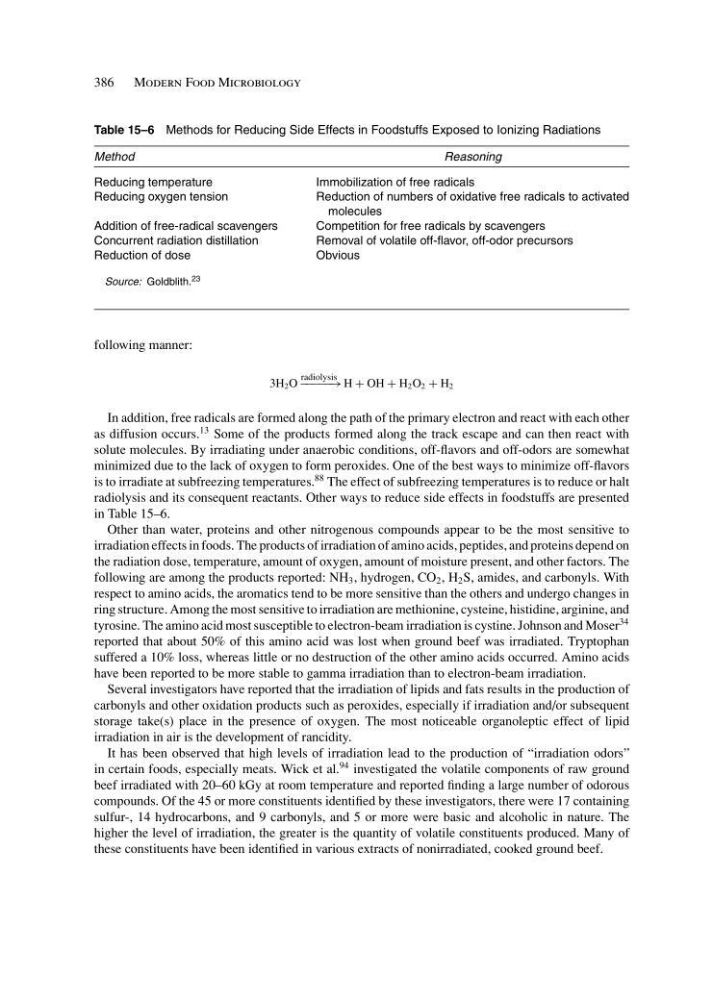
Table 15–6 Methods for Reducing Side Effects in Foodstuffs Exposed to Ionizing Radiations
Method
Reasoning
Reducing temperature
Immobilization of free radicals
Reducing oxygen tension
Reduction of numbers of oxidative free radicals to activated
molecules
Addition of free-radical scavengers
Competition for free radicals by scavengers
Concurrent radiation distillation
Removal of volatile off-flavor, off-odor precursors
Reduction of dose
Obvious
Source: Goldblith. 23
following manner:
3H 2 O − −−−− →
radiolysis H + OH + H 2 O 2 + H 2
In addition, free radicals are formed along the path of the primary electron and react with each other
as diffusion occurs.
13 Some of the products formed along the track escape and can then react with
solute molecules. By irradiating under anaerobic conditions, off-flavors and off-odors are somewhat
minimized due to the lack of oxygen to form peroxides. One of the best ways to minimize off-flavors
is to irradiate at subfreezing temperatures.
88 The effect of subfreezing temperatures is to reduce or halt
radiolysis and its consequent reactants. Other ways to reduce side effects in foodstuffs are presented
in Table 15–6.
Other than water, proteins and other nitrogenous compounds appear to be the most sensitive to
irradiation effects in foods. The products of irradiation of amino acids, peptides, and proteins depend on
the radiation dose, temperature, amount of oxygen, amount of moisture present, and other factors. The
following are among the products reported: NH 3 , hydrogen, CO 2 , H 2 S, amides, and carbonyls. With
respect to amino acids, the aromatics tend to be more sensitive than the others and undergo changes in
ring structure. Among the most sensitive to irradiation are methionine, cysteine, histidine, arginine, and
tyrosine. The amino acid most susceptible to electron-beam irradiation is cystine. Johnson and Moser
34
reported that about 50% of this amino acid was lost when ground beef was irradiated. Tryptophan
suffered a 10% loss, whereas little or no destruction of the other amino acids occurred. Amino acids
have been reported to be more stable to gamma irradiation than to electron-beam irradiation.
Several investigators have reported that the irradiation of lipids and fats results in the production of
carbonyls and other oxidation products such as peroxides, especially if irradiation and/or subsequent
storage take(s) place in the presence of oxygen. The most noticeable organoleptic effect of lipid
irradiation in air is the development of rancidity.
It has been observed that high levels of irradiation lead to the production of “irradiation odors”
in certain foods, especially meats. Wick et al.
94 investigated the volatile components of raw ground
beef irradiated with 20–60 kGy at room temperature and reported finding a large number of odorous
compounds. Of the 45 or more constituents identified by these investigators, there were 17 containing
sulfur-, 14 hydrocarbons, and 9 carbonyls, and 5 or more were basic and alcoholic in nature. The
higher the level of irradiation, the greater is the quantity of volatile constituents produced. Many of
these constituents have been identified in various extracts of nonirradiated, cooked ground beef.
Table 15–6 Methods for Reducing Side Effects in Foodstuffs Exposed to Ionizing Radiations
Method
Reasoning
Reducing temperature
Immobilization of free radicals
Reducing oxygen tension
Reduction of numbers of oxidative free radicals to activated
molecules
Addition of free-radical scavengers
Competition for free radicals by scavengers
Concurrent radiation distillation
Removal of volatile off-flavor, off-odor precursors
Reduction of dose
Obvious
Source: Goldblith. 23
following manner:
3H 2 O − −−−− →
radiolysis H + OH + H 2 O 2 + H 2
In addition, free radicals are formed along the path of the primary electron and react with each other
as diffusion occurs.
13 Some of the products formed along the track escape and can then react with
solute molecules. By irradiating under anaerobic conditions, off-flavors and off-odors are somewhat
minimized due to the lack of oxygen to form peroxides. One of the best ways to minimize off-flavors
is to irradiate at subfreezing temperatures.
88 The effect of subfreezing temperatures is to reduce or halt
radiolysis and its consequent reactants. Other ways to reduce side effects in foodstuffs are presented
in Table 15–6.
Other than water, proteins and other nitrogenous compounds appear to be the most sensitive to
irradiation effects in foods. The products of irradiation of amino acids, peptides, and proteins depend on
the radiation dose, temperature, amount of oxygen, amount of moisture present, and other factors. The
following are among the products reported: NH 3 , hydrogen, CO 2 , H 2 S, amides, and carbonyls. With
respect to amino acids, the aromatics tend to be more sensitive than the others and undergo changes in
ring structure. Among the most sensitive to irradiation are methionine, cysteine, histidine, arginine, and
tyrosine. The amino acid most susceptible to electron-beam irradiation is cystine. Johnson and Moser
34
reported that about 50% of this amino acid was lost when ground beef was irradiated. Tryptophan
suffered a 10% loss, whereas little or no destruction of the other amino acids occurred. Amino acids
have been reported to be more stable to gamma irradiation than to electron-beam irradiation.
Several investigators have reported that the irradiation of lipids and fats results in the production of
carbonyls and other oxidation products such as peroxides, especially if irradiation and/or subsequent
storage take(s) place in the presence of oxygen. The most noticeable organoleptic effect of lipid
irradiation in air is the development of rancidity.
It has been observed that high levels of irradiation lead to the production of “irradiation odors”
in certain foods, especially meats. Wick et al.
94 investigated the volatile components of raw ground
beef irradiated with 20–60 kGy at room temperature and reported finding a large number of odorous
compounds. Of the 45 or more constituents identified by these investigators, there were 17 containing
sulfur-, 14 hydrocarbons, and 9 carbonyls, and 5 or more were basic and alcoholic in nature. The
higher the level of irradiation, the greater is the quantity of volatile constituents produced. Many of
these constituents have been identified in various extracts of nonirradiated, cooked ground beef.