

Food Protection with Chemicals, and by Biocontrol 313
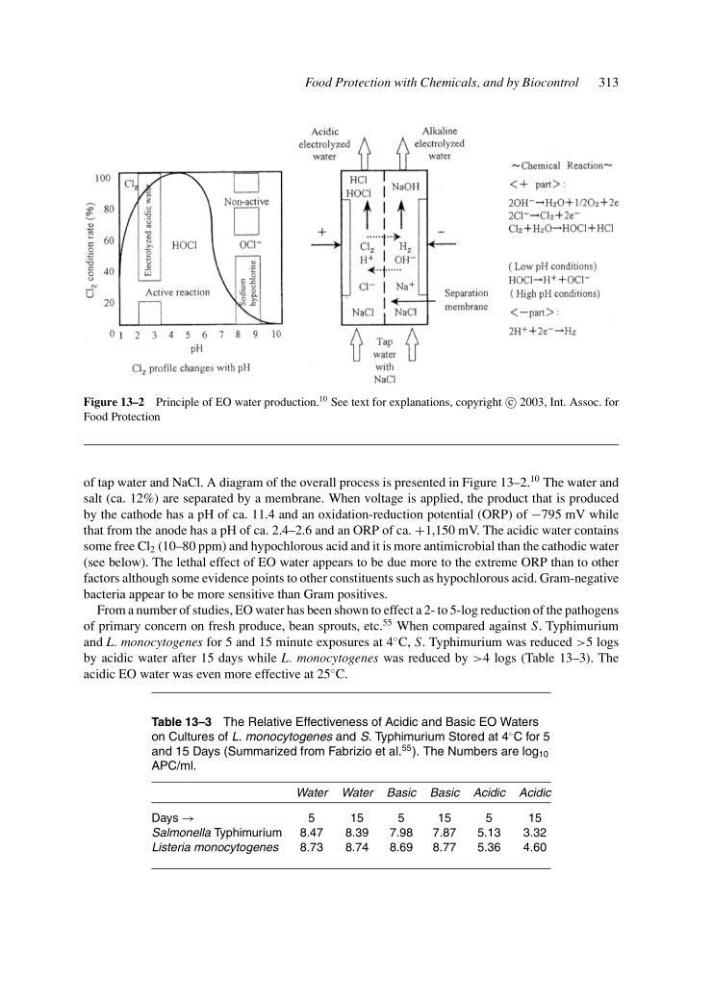
Figure 13–2 Principle of EO water production.
10 See text for explanations, copyright c
2003, Int. Assoc. for
Food Protection
of tap water and NaCl. A diagram of the overall process is presented in Figure 13–2.
10 The water and
salt (ca. 12%) are separated by a membrane. When voltage is applied, the product that is produced
by the cathode has a pH of ca. 11.4 and an oxidation-reduction potential (ORP) of −795 mV while
that from the anode has a pH of ca. 2.4–2.6 and an ORP of ca. +1,150 mV. The acidic water contains
some free Cl 2 (10–80 ppm) and hypochlorous acid and it is more antimicrobial than the cathodic water
(see below). The lethal effect of EO water appears to be due more to the extreme ORP than to other
factors although some evidence points to other constituents such as hypochlorous acid. Gram-negative
bacteria appear to be more sensitive than Gram positives.
From a number of studies, EO water has been shown to effect a 2- to 5-log reduction of the pathogens
of primary concern on fresh produce, bean sprouts, etc.
55 When compared against S. Typhimurium
and L. monocytogenes for 5 and 15 minute exposures at 4
◦ C, S. Typhimurium was reduced >5 logs
by acidic water after 15 days while L. monocytogenes was reduced by >4 logs (Table 13–3). The
acidic EO water was even more effective at 25
◦ C.
Table 13–3 The Relative Effectiveness of Acidic and Basic EO Waters
on Cultures of L. monocytogenes and S. Typhimurium Stored at 4
◦ C for 5
and 15 Days (Summarized from Fabrizio et al.
55 ). The Numbers are log 10
APC/ml.
Water Water Basic Basic Acidic Acidic
Days →
5
15
5
15
5
15
Salmonella Typhimurium
8.47
8.39
7.98
7.87
5.13
3.32
Listeria monocytogenes
8.73
8.74
8.69
8.77
5.36
4.60
Figure 13–2 Principle of EO water production.
10 See text for explanations, copyright c
2003, Int. Assoc. for
Food Protection
of tap water and NaCl. A diagram of the overall process is presented in Figure 13–2.
10 The water and
salt (ca. 12%) are separated by a membrane. When voltage is applied, the product that is produced
by the cathode has a pH of ca. 11.4 and an oxidation-reduction potential (ORP) of −795 mV while
that from the anode has a pH of ca. 2.4–2.6 and an ORP of ca. +1,150 mV. The acidic water contains
some free Cl 2 (10–80 ppm) and hypochlorous acid and it is more antimicrobial than the cathodic water
(see below). The lethal effect of EO water appears to be due more to the extreme ORP than to other
factors although some evidence points to other constituents such as hypochlorous acid. Gram-negative
bacteria appear to be more sensitive than Gram positives.
From a number of studies, EO water has been shown to effect a 2- to 5-log reduction of the pathogens
of primary concern on fresh produce, bean sprouts, etc.
55 When compared against S. Typhimurium
and L. monocytogenes for 5 and 15 minute exposures at 4
◦ C, S. Typhimurium was reduced >5 logs
by acidic water after 15 days while L. monocytogenes was reduced by >4 logs (Table 13–3). The
acidic EO water was even more effective at 25
◦ C.
Table 13–3 The Relative Effectiveness of Acidic and Basic EO Waters
on Cultures of L. monocytogenes and S. Typhimurium Stored at 4
◦ C for 5
and 15 Days (Summarized from Fabrizio et al.
55 ). The Numbers are log 10
APC/ml.
Water Water Basic Basic Acidic Acidic
Days →
5
15
5
15
5
15
Salmonella Typhimurium
8.47
8.39
7.98
7.87
5.13
3.32
Listeria monocytogenes
8.73
8.74
8.69
8.77
5.36
4.60