

310 Modern Food Microbiology
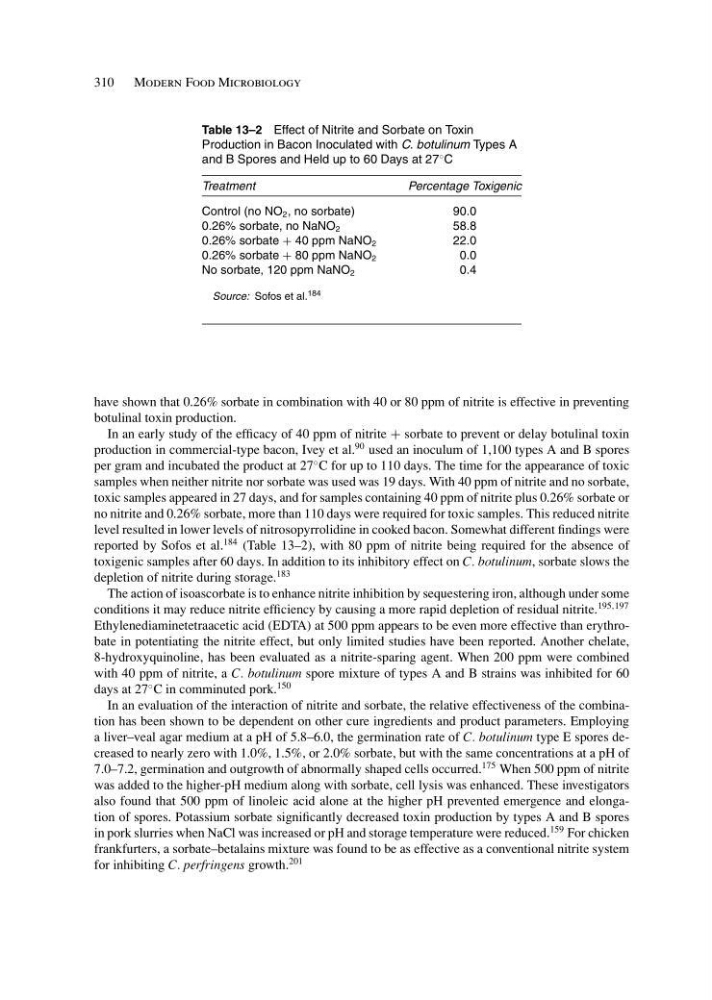
Table 13–2 Effect of Nitrite and Sorbate on Toxin
Production in Bacon Inoculated with C. botulinum Types A
and B Spores and Held up to 60 Days at 27
◦ C
Treatment
Percentage Toxigenic
Control (no NO 2 , no sorbate)
90.0
0.26% sorbate, no NaNO 2
58.8
0.26% sorbate + 40 ppm NaNO 2
22.0
0.26% sorbate + 80 ppm NaNO 2
0.0
No sorbate, 120 ppm NaNO 2
0.4
Source: Sofos et al. 184
have shown that 0.26% sorbate in combination with 40 or 80 ppm of nitrite is effective in preventing
botulinal toxin production.
In an early study of the efficacy of 40 ppm of nitrite + sorbate to prevent or delay botulinal toxin
production in commercial-type bacon, Ivey et al.
90 used an inoculum of 1,100 types A and B spores
per gram and incubated the product at 27
◦ C for up to 110 days. The time for the appearance of toxic
samples when neither nitrite nor sorbate was used was 19 days. With 40 ppm of nitrite and no sorbate,
toxic samples appeared in 27 days, and for samples containing 40 ppm of nitrite plus 0.26% sorbate or
no nitrite and 0.26% sorbate, more than 110 days were required for toxic samples. This reduced nitrite
level resulted in lower levels of nitrosopyrrolidine in cooked bacon. Somewhat different findings were
reported by Sofos et al.
184 (Table 13–2), with 80 ppm of nitrite being required for the absence of
toxigenic samples after 60 days. In addition to its inhibitory effect on C. botulinum, sorbate slows the
depletion of nitrite during storage.
183
The action of isoascorbate is to enhance nitrite inhibition by sequestering iron, although under some
conditions it may reduce nitrite efficiency by causing a more rapid depletion of residual nitrite.
195,197
Ethylenediaminetetraacetic acid (EDTA) at 500 ppm appears to be even more effective than erythrobate in potentiating the nitrite effect, but only limited studies have been reported. Another chelate,
8-hydroxyquinoline, has been evaluated as a nitrite-sparing agent. When 200 ppm were combined
with 40 ppm of nitrite, a C. botulinum spore mixture of types A and B strains was inhibited for 60
days at 27
◦ C in comminuted pork.
150
In an evaluation of the interaction of nitrite and sorbate, the relative effectiveness of the combination has been shown to be dependent on other cure ingredients and product parameters. Employing
a liver–veal agar medium at a pH of 5.8–6.0, the germination rate of C. botulinum type E spores decreased to nearly zero with 1.0%, 1.5%, or 2.0% sorbate, but with the same concentrations at a pH of
7.0–7.2, germination and outgrowth of abnormally shaped cells occurred.
175 When 500 ppm of nitrite
was added to the higher-pH medium along with sorbate, cell lysis was enhanced. These investigators
also found that 500 ppm of linoleic acid alone at the higher pH prevented emergence and elongation of spores. Potassium sorbate significantly decreased toxin production by types A and B spores
in pork slurries when NaCl was increased or pH and storage temperature were reduced.
159 For chicken
frankfurters, a sorbate–betalains mixture was found to be as effective as a conventional nitrite system
for inhibiting C. perfringens growth.
201
Table 13–2 Effect of Nitrite and Sorbate on Toxin
Production in Bacon Inoculated with C. botulinum Types A
and B Spores and Held up to 60 Days at 27
◦ C
Treatment
Percentage Toxigenic
Control (no NO 2 , no sorbate)
90.0
0.26% sorbate, no NaNO 2
58.8
0.26% sorbate + 40 ppm NaNO 2
22.0
0.26% sorbate + 80 ppm NaNO 2
0.0
No sorbate, 120 ppm NaNO 2
0.4
Source: Sofos et al. 184
have shown that 0.26% sorbate in combination with 40 or 80 ppm of nitrite is effective in preventing
botulinal toxin production.
In an early study of the efficacy of 40 ppm of nitrite + sorbate to prevent or delay botulinal toxin
production in commercial-type bacon, Ivey et al.
90 used an inoculum of 1,100 types A and B spores
per gram and incubated the product at 27
◦ C for up to 110 days. The time for the appearance of toxic
samples when neither nitrite nor sorbate was used was 19 days. With 40 ppm of nitrite and no sorbate,
toxic samples appeared in 27 days, and for samples containing 40 ppm of nitrite plus 0.26% sorbate or
no nitrite and 0.26% sorbate, more than 110 days were required for toxic samples. This reduced nitrite
level resulted in lower levels of nitrosopyrrolidine in cooked bacon. Somewhat different findings were
reported by Sofos et al.
184 (Table 13–2), with 80 ppm of nitrite being required for the absence of
toxigenic samples after 60 days. In addition to its inhibitory effect on C. botulinum, sorbate slows the
depletion of nitrite during storage.
183
The action of isoascorbate is to enhance nitrite inhibition by sequestering iron, although under some
conditions it may reduce nitrite efficiency by causing a more rapid depletion of residual nitrite.
195,197
Ethylenediaminetetraacetic acid (EDTA) at 500 ppm appears to be even more effective than erythrobate in potentiating the nitrite effect, but only limited studies have been reported. Another chelate,
8-hydroxyquinoline, has been evaluated as a nitrite-sparing agent. When 200 ppm were combined
with 40 ppm of nitrite, a C. botulinum spore mixture of types A and B strains was inhibited for 60
days at 27
◦ C in comminuted pork.
150
In an evaluation of the interaction of nitrite and sorbate, the relative effectiveness of the combination has been shown to be dependent on other cure ingredients and product parameters. Employing
a liver–veal agar medium at a pH of 5.8–6.0, the germination rate of C. botulinum type E spores decreased to nearly zero with 1.0%, 1.5%, or 2.0% sorbate, but with the same concentrations at a pH of
7.0–7.2, germination and outgrowth of abnormally shaped cells occurred.
175 When 500 ppm of nitrite
was added to the higher-pH medium along with sorbate, cell lysis was enhanced. These investigators
also found that 500 ppm of linoleic acid alone at the higher pH prevented emergence and elongation of spores. Potassium sorbate significantly decreased toxin production by types A and B spores
in pork slurries when NaCl was increased or pH and storage temperature were reduced.
159 For chicken
frankfurters, a sorbate–betalains mixture was found to be as effective as a conventional nitrite system
for inhibiting C. perfringens growth.
201