

Chemical, Biological, and Physical Methods
251
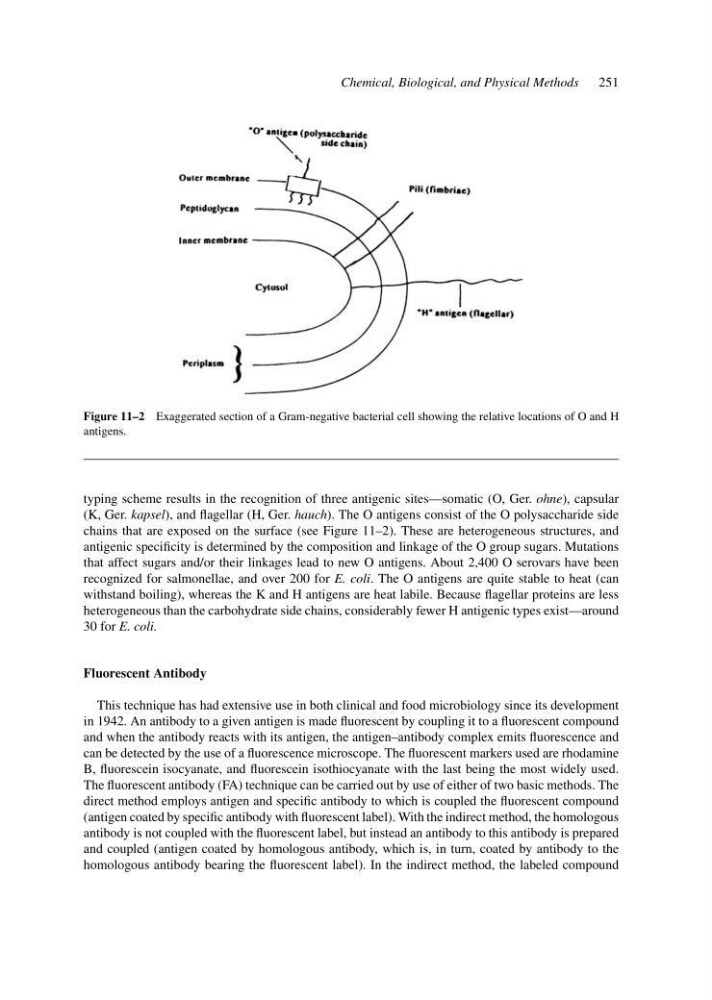
Figure 11–2 Exaggerated section of a Gram-negative bacterial cell showing the relative locations of O and H
antigens.
typing scheme results in the recognition of three antigenic sites—somatic (O, Ger. ohne), capsular
(K, Ger. kapsel), and flagellar (H, Ger. hauch). The O antigens consist of the O polysaccharide side
chains that are exposed on the surface (see Figure 11–2). These are heterogeneous structures, and
antigenic specificity is determined by the composition and linkage of the O group sugars. Mutations
that affect sugars and/or their linkages lead to new O antigens. About 2,400 O serovars have been
recognized for salmonellae, and over 200 for E. coli. The O antigens are quite stable to heat (can
withstand boiling), whereas the K and H antigens are heat labile. Because flagellar proteins are less
heterogeneous than the carbohydrate side chains, considerably fewer H antigenic types exist—around
30 for E. coli.
Fluorescent Antibody
This technique has had extensive use in both clinical and food microbiology since its development
in 1942. An antibody to a given antigen is made fluorescent by coupling it to a fluorescent compound
and when the antibody reacts with its antigen, the antigen–antibody complex emits fluorescence and
can be detected by the use of a fluorescence microscope. The fluorescent markers used are rhodamine
B, fluorescein isocyanate, and fluorescein isothiocyanate with the last being the most widely used.
The fluorescent antibody (FA) technique can be carried out by use of either of two basic methods. The
direct method employs antigen and specific antibody to which is coupled the fluorescent compound
(antigen coated by specific antibody with fluorescent label). With the indirect method, the homologous
antibody is not coupled with the fluorescent label, but instead an antibody to this antibody is prepared
and coupled (antigen coated by homologous antibody, which is, in turn, coated by antibody to the
homologous antibody bearing the fluorescent label). In the indirect method, the labeled compound
251
Figure 11–2 Exaggerated section of a Gram-negative bacterial cell showing the relative locations of O and H
antigens.
typing scheme results in the recognition of three antigenic sites—somatic (O, Ger. ohne), capsular
(K, Ger. kapsel), and flagellar (H, Ger. hauch). The O antigens consist of the O polysaccharide side
chains that are exposed on the surface (see Figure 11–2). These are heterogeneous structures, and
antigenic specificity is determined by the composition and linkage of the O group sugars. Mutations
that affect sugars and/or their linkages lead to new O antigens. About 2,400 O serovars have been
recognized for salmonellae, and over 200 for E. coli. The O antigens are quite stable to heat (can
withstand boiling), whereas the K and H antigens are heat labile. Because flagellar proteins are less
heterogeneous than the carbohydrate side chains, considerably fewer H antigenic types exist—around
30 for E. coli.
Fluorescent Antibody
This technique has had extensive use in both clinical and food microbiology since its development
in 1942. An antibody to a given antigen is made fluorescent by coupling it to a fluorescent compound
and when the antibody reacts with its antigen, the antigen–antibody complex emits fluorescence and
can be detected by the use of a fluorescence microscope. The fluorescent markers used are rhodamine
B, fluorescein isocyanate, and fluorescein isothiocyanate with the last being the most widely used.
The fluorescent antibody (FA) technique can be carried out by use of either of two basic methods. The
direct method employs antigen and specific antibody to which is coupled the fluorescent compound
(antigen coated by specific antibody with fluorescent label). With the indirect method, the homologous
antibody is not coupled with the fluorescent label, but instead an antibody to this antibody is prepared
and coupled (antigen coated by homologous antibody, which is, in turn, coated by antibody to the
homologous antibody bearing the fluorescent label). In the indirect method, the labeled compound