

242 Modern Food Microbiology
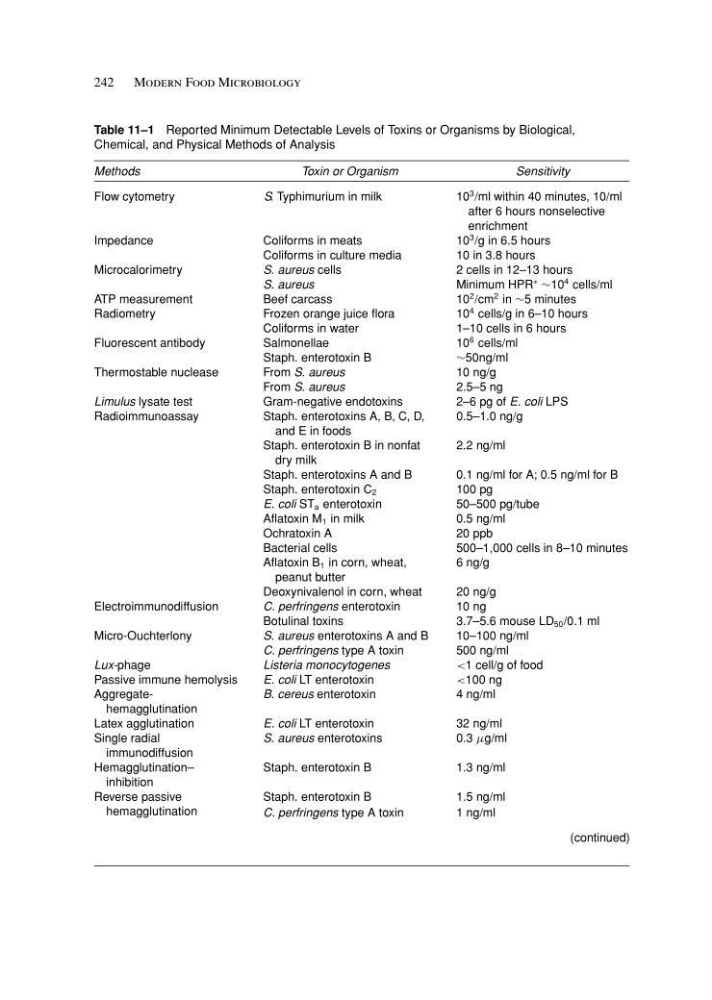
Table 11–1 Reported Minimum Detectable Levels of Toxins or Organisms by Biological,
Chemical, and Physical Methods of Analysis
Methods
Toxin or Organism
Sensitivity
Flow cytometry
S. Typhimurium in milk
10
3 /ml within 40 minutes, 10/ml
after 6 hours nonselective
enrichment
Impedance
Coliforms in meats
10
3 /g in 6.5 hours
Coliforms in culture media
10 in 3.8 hours
Microcalorimetry
S. aureus cells
2 cells in 12–13 hours
S. aureus
Minimum HPR
∗
∼10
4 cells/ml
ATP measurement
Beef carcass
10
2 /cm
2 in ∼5 minutes
Radiometry
Frozen orange juice flora
10
4 cells/g in 6–10 hours
Coliforms in water
1–10 cells in 6 hours
Fluorescent antibody
Salmonellae
10
6 cells/ml
Staph. enterotoxin B
∼50ng/ml
Thermostable nuclease
From S. aureus
10 ng/g
From S. aureus
2.5–5 ng
Limulus lysate test
Gram-negative endotoxins
2–6 pg of E. coli LPS
Radioimmunoassay
Staph. enterotoxins A, B, C, D,
and E in foods
0.5–1.0 ng/g
Staph. enterotoxin B in nonfat
dry milk
2.2 ng/ml
Staph. enterotoxins A and B
0.1 ng/ml for A; 0.5 ng/ml for B
Staph. enterotoxin C 2
100 pg
E. coli ST a enterotoxin
50–500 pg/tube
Aflatoxin M 1 in milk
0.5 ng/ml
Ochratoxin A
20 ppb
Bacterial cells
500–1,000 cells in 8–10 minutes
Aflatoxin B 1 in corn, wheat,
peanut butter
6 ng/g
Deoxynivalenol in corn, wheat
20 ng/g
Electroimmunodiffusion
C. perfringens enterotoxin
10 ng
Botulinal toxins
3.7–5.6 mouse LD 50 /0.1 ml
Micro-Ouchterlony
S. aureus enterotoxins A and B
10–100 ng/ml
C. perfringens type A toxin
500 ng/ml
Lux-phage
Listeria monocytogenes
<1 cell/g of food
Passive immune hemolysis
E. coli LT enterotoxin
<100 ng
Aggregatehemagglutination
B. cereus enterotoxin
4 ng/ml
Latex agglutination
E. coli LT enterotoxin
32 ng/ml
Single radial
immunodiffusion
S. aureus enterotoxins
0.3 µg/ml
Hemagglutination–
inhibition
Staph. enterotoxin B
1.3 ng/ml
Reverse passive
hemagglutination
Staph. enterotoxin B
1.5 ng/ml
C. perfringens type A toxin
1 ng/ml
(continued)
Table 11–1 Reported Minimum Detectable Levels of Toxins or Organisms by Biological,
Chemical, and Physical Methods of Analysis
Methods
Toxin or Organism
Sensitivity
Flow cytometry
S. Typhimurium in milk
10
3 /ml within 40 minutes, 10/ml
after 6 hours nonselective
enrichment
Impedance
Coliforms in meats
10
3 /g in 6.5 hours
Coliforms in culture media
10 in 3.8 hours
Microcalorimetry
S. aureus cells
2 cells in 12–13 hours
S. aureus
Minimum HPR
∗
∼10
4 cells/ml
ATP measurement
Beef carcass
10
2 /cm
2 in ∼5 minutes
Radiometry
Frozen orange juice flora
10
4 cells/g in 6–10 hours
Coliforms in water
1–10 cells in 6 hours
Fluorescent antibody
Salmonellae
10
6 cells/ml
Staph. enterotoxin B
∼50ng/ml
Thermostable nuclease
From S. aureus
10 ng/g
From S. aureus
2.5–5 ng
Limulus lysate test
Gram-negative endotoxins
2–6 pg of E. coli LPS
Radioimmunoassay
Staph. enterotoxins A, B, C, D,
and E in foods
0.5–1.0 ng/g
Staph. enterotoxin B in nonfat
dry milk
2.2 ng/ml
Staph. enterotoxins A and B
0.1 ng/ml for A; 0.5 ng/ml for B
Staph. enterotoxin C 2
100 pg
E. coli ST a enterotoxin
50–500 pg/tube
Aflatoxin M 1 in milk
0.5 ng/ml
Ochratoxin A
20 ppb
Bacterial cells
500–1,000 cells in 8–10 minutes
Aflatoxin B 1 in corn, wheat,
peanut butter
6 ng/g
Deoxynivalenol in corn, wheat
20 ng/g
Electroimmunodiffusion
C. perfringens enterotoxin
10 ng
Botulinal toxins
3.7–5.6 mouse LD 50 /0.1 ml
Micro-Ouchterlony
S. aureus enterotoxins A and B
10–100 ng/ml
C. perfringens type A toxin
500 ng/ml
Lux-phage
Listeria monocytogenes
<1 cell/g of food
Passive immune hemolysis
E. coli LT enterotoxin
<100 ng
Aggregatehemagglutination
B. cereus enterotoxin
4 ng/ml
Latex agglutination
E. coli LT enterotoxin
32 ng/ml
Single radial
immunodiffusion
S. aureus enterotoxins
0.3 µg/ml
Hemagglutination–
inhibition
Staph. enterotoxin B
1.3 ng/ml
Reverse passive
hemagglutination
Staph. enterotoxin B
1.5 ng/ml
C. perfringens type A toxin
1 ng/ml
(continued)