

218 Modern Food Microbiology
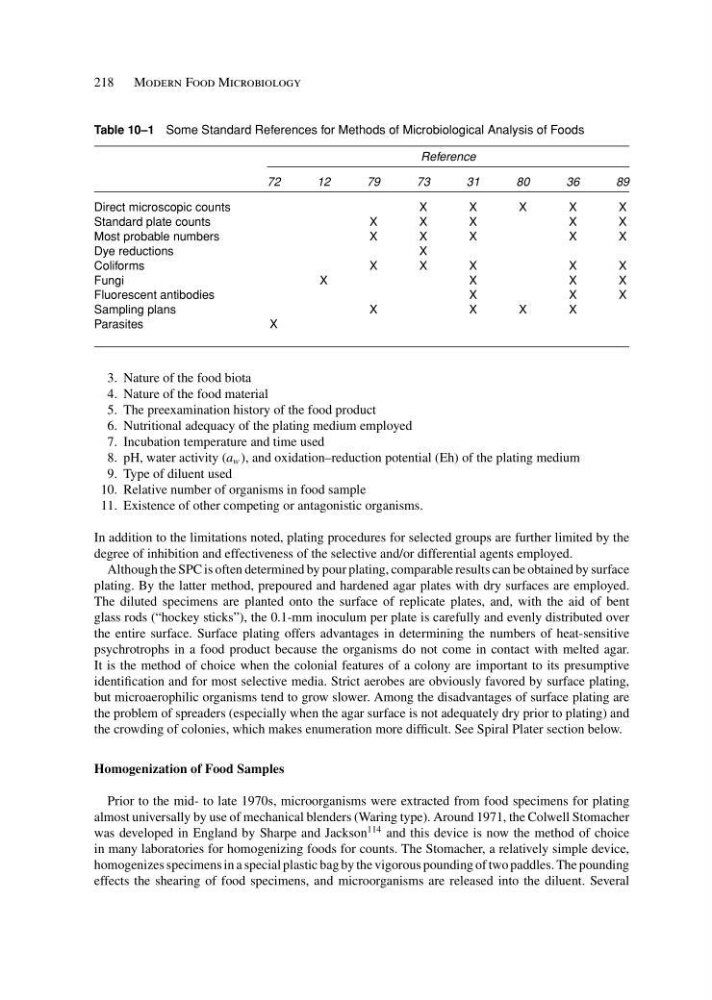
Table 10–1 Some Standard References for Methods of Microbiological Analysis of Foods
Reference
72
12
79
73
31
80
36
89
Direct microscopic counts
X
X
X
X
X
Standard plate counts
X
X
X
X
X
Most probable numbers
X
X
X
X
X
Dye reductions
X
Coliforms
X
X
X
X
X
Fungi
X
X
X
X
Fluorescent antibodies
X
X
X
Sampling plans
X
X
X
X
Parasites
X
3. Nature of the food biota
4. Nature of the food material
5. The preexamination history of the food product
6. Nutritional adequacy of the plating medium employed
7. Incubation temperature and time used
8. pH, water activity (a w ), and oxidation–reduction potential (Eh) of the plating medium
9. Type of diluent used
10. Relative number of organisms in food sample
11. Existence of other competing or antagonistic organisms.
In addition to the limitations noted, plating procedures for selected groups are further limited by the
degree of inhibition and effectiveness of the selective and/or differential agents employed.
Although the SPC is often determined by pour plating, comparable results can be obtained by surface
plating. By the latter method, prepoured and hardened agar plates with dry surfaces are employed.
The diluted specimens are planted onto the surface of replicate plates, and, with the aid of bent
glass rods (“hockey sticks”), the 0.1-mm inoculum per plate is carefully and evenly distributed over
the entire surface. Surface plating offers advantages in determining the numbers of heat-sensitive
psychrotrophs in a food product because the organisms do not come in contact with melted agar.
It is the method of choice when the colonial features of a colony are important to its presumptive
identification and for most selective media. Strict aerobes are obviously favored by surface plating,
but microaerophilic organisms tend to grow slower. Among the disadvantages of surface plating are
the problem of spreaders (especially when the agar surface is not adequately dry prior to plating) and
the crowding of colonies, which makes enumeration more difficult. See Spiral Plater section below.
Homogenization of Food Samples
Prior to the mid- to late 1970s, microorganisms were extracted from food specimens for plating
almost universally by use of mechanical blenders (Waring type). Around 1971, the Colwell Stomacher
was developed in England by Sharpe and Jackson
114 and this device is now the method of choice
in many laboratories for homogenizing foods for counts. The Stomacher, a relatively simple device,
homogenizes specimens in a special plastic bag by the vigorous pounding of two paddles. The pounding
effects the shearing of food specimens, and microorganisms are released into the diluent. Several
Table 10–1 Some Standard References for Methods of Microbiological Analysis of Foods
Reference
72
12
79
73
31
80
36
89
Direct microscopic counts
X
X
X
X
X
Standard plate counts
X
X
X
X
X
Most probable numbers
X
X
X
X
X
Dye reductions
X
Coliforms
X
X
X
X
X
Fungi
X
X
X
X
Fluorescent antibodies
X
X
X
Sampling plans
X
X
X
X
Parasites
X
3. Nature of the food biota
4. Nature of the food material
5. The preexamination history of the food product
6. Nutritional adequacy of the plating medium employed
7. Incubation temperature and time used
8. pH, water activity (a w ), and oxidation–reduction potential (Eh) of the plating medium
9. Type of diluent used
10. Relative number of organisms in food sample
11. Existence of other competing or antagonistic organisms.
In addition to the limitations noted, plating procedures for selected groups are further limited by the
degree of inhibition and effectiveness of the selective and/or differential agents employed.
Although the SPC is often determined by pour plating, comparable results can be obtained by surface
plating. By the latter method, prepoured and hardened agar plates with dry surfaces are employed.
The diluted specimens are planted onto the surface of replicate plates, and, with the aid of bent
glass rods (“hockey sticks”), the 0.1-mm inoculum per plate is carefully and evenly distributed over
the entire surface. Surface plating offers advantages in determining the numbers of heat-sensitive
psychrotrophs in a food product because the organisms do not come in contact with melted agar.
It is the method of choice when the colonial features of a colony are important to its presumptive
identification and for most selective media. Strict aerobes are obviously favored by surface plating,
but microaerophilic organisms tend to grow slower. Among the disadvantages of surface plating are
the problem of spreaders (especially when the agar surface is not adequately dry prior to plating) and
the crowding of colonies, which makes enumeration more difficult. See Spiral Plater section below.
Homogenization of Food Samples
Prior to the mid- to late 1970s, microorganisms were extracted from food specimens for plating
almost universally by use of mechanical blenders (Waring type). Around 1971, the Colwell Stomacher
was developed in England by Sharpe and Jackson
114 and this device is now the method of choice
in many laboratories for homogenizing foods for counts. The Stomacher, a relatively simple device,
homogenizes specimens in a special plastic bag by the vigorous pounding of two paddles. The pounding
effects the shearing of food specimens, and microorganisms are released into the diluent. Several