

182 Modern Food Microbiology
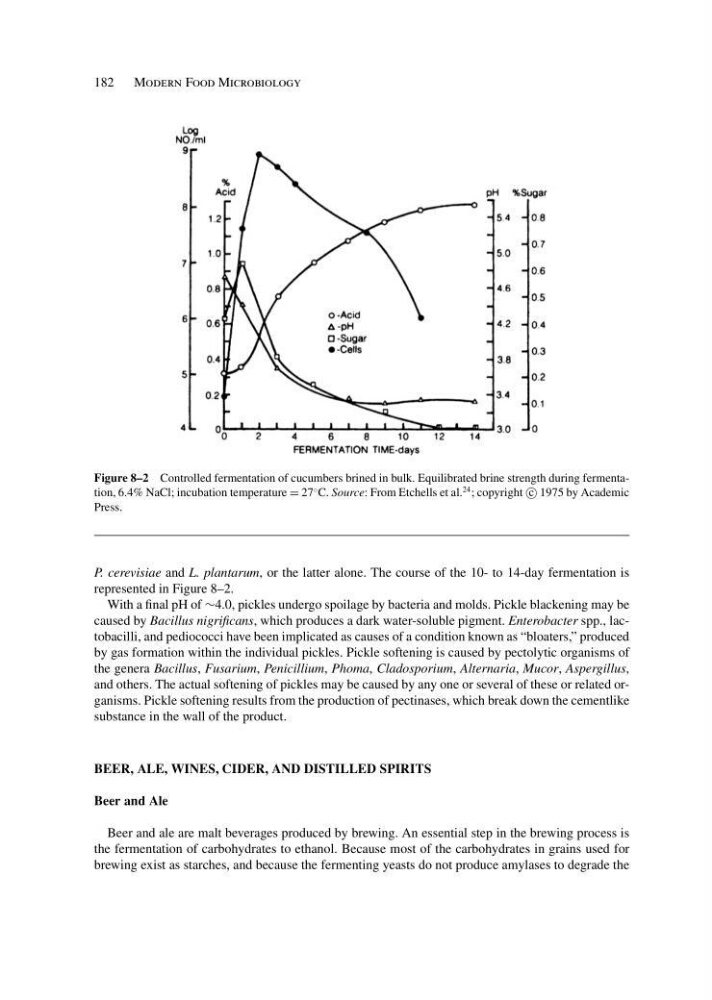
Figure 8–2 Controlled fermentation of cucumbers brined in bulk. Equilibrated brine strength during fermentation, 6.4% NaCl; incubation temperature = 27
◦ C. Source: From Etchells et al.
24 ; copyright c
1975 by Academic
Press.
P. cerevisiae and L. plantarum, or the latter alone. The course of the 10- to 14-day fermentation is
represented in Figure 8–2.
With a final pH of ∼4.0, pickles undergo spoilage by bacteria and molds. Pickle blackening may be
caused by Bacillus nigrificans, which produces a dark water-soluble pigment. Enterobacter spp., lactobacilli, and pediococci have been implicated as causes of a condition known as “bloaters,” produced
by gas formation within the individual pickles. Pickle softening is caused by pectolytic organisms of
the genera Bacillus, Fusarium, Penicillium, Phoma, Cladosporium, Alternaria, Mucor, Aspergillus,
and others. The actual softening of pickles may be caused by any one or several of these or related organisms. Pickle softening results from the production of pectinases, which break down the cementlike
substance in the wall of the product.
BEER, ALE, WINES, CIDER, AND DISTILLED SPIRITS
Beer and Ale
Beer and ale are malt beverages produced by brewing. An essential step in the brewing process is
the fermentation of carbohydrates to ethanol. Because most of the carbohydrates in grains used for
brewing exist as starches, and because the fermenting yeasts do not produce amylases to degrade the
Figure 8–2 Controlled fermentation of cucumbers brined in bulk. Equilibrated brine strength during fermentation, 6.4% NaCl; incubation temperature = 27
◦ C. Source: From Etchells et al.
24 ; copyright c
1975 by Academic
Press.
P. cerevisiae and L. plantarum, or the latter alone. The course of the 10- to 14-day fermentation is
represented in Figure 8–2.
With a final pH of ∼4.0, pickles undergo spoilage by bacteria and molds. Pickle blackening may be
caused by Bacillus nigrificans, which produces a dark water-soluble pigment. Enterobacter spp., lactobacilli, and pediococci have been implicated as causes of a condition known as “bloaters,” produced
by gas formation within the individual pickles. Pickle softening is caused by pectolytic organisms of
the genera Bacillus, Fusarium, Penicillium, Phoma, Cladosporium, Alternaria, Mucor, Aspergillus,
and others. The actual softening of pickles may be caused by any one or several of these or related organisms. Pickle softening results from the production of pectinases, which break down the cementlike
substance in the wall of the product.
BEER, ALE, WINES, CIDER, AND DISTILLED SPIRITS
Beer and Ale
Beer and ale are malt beverages produced by brewing. An essential step in the brewing process is
the fermentation of carbohydrates to ethanol. Because most of the carbohydrates in grains used for
brewing exist as starches, and because the fermenting yeasts do not produce amylases to degrade the