

Vegetable and Fruit Products
139
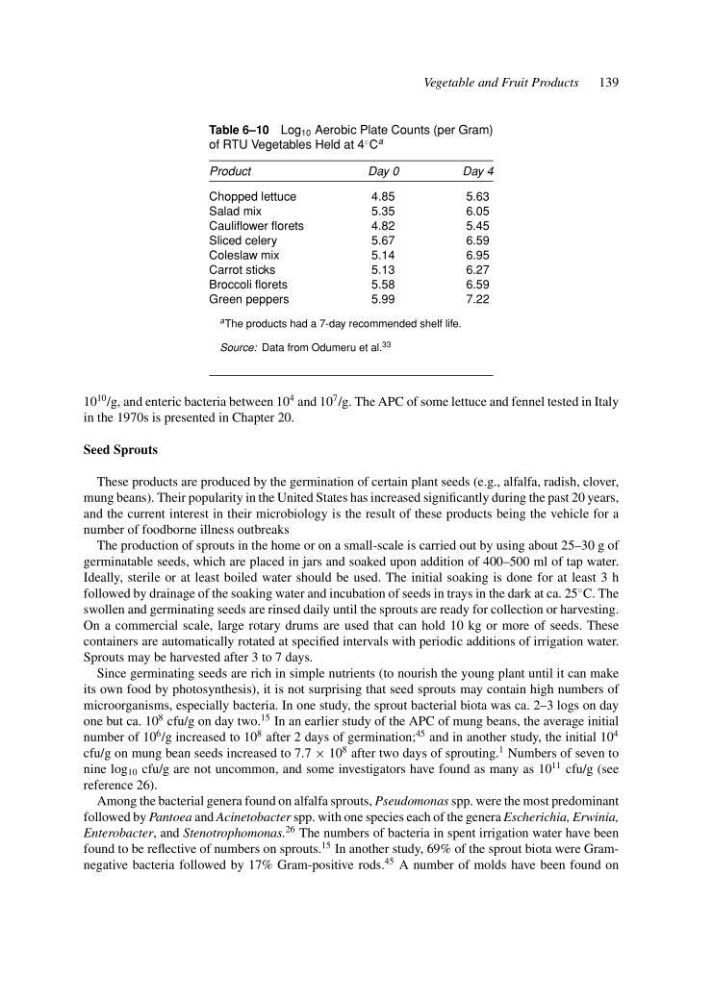
Table 6–10 Log 10 Aerobic Plate Counts (per Gram)
of RTU Vegetables Held at 4
◦ C
a
Product
Day 0
Day 4
Chopped lettuce
4.85
5.63
Salad mix
5.35
6.05
Cauliflower florets
4.82
5.45
Sliced celery
5.67
6.59
Coleslaw mix
5.14
6.95
Carrot sticks
5.13
6.27
Broccoli florets
5.58
6.59
Green peppers
5.99
7.22
a The products had a 7-day recommended shelf life.
Source: Data from Odumeru et al. 33
10
10 /g, and enteric bacteria between 10
4 and 10
7 /g. The APC of some lettuce and fennel tested in Italy
in the 1970s is presented in Chapter 20.
Seed Sprouts
These products are produced by the germination of certain plant seeds (e.g., alfalfa, radish, clover,
mung beans). Their popularity in the United States has increased significantly during the past 20 years,
and the current interest in their microbiology is the result of these products being the vehicle for a
number of foodborne illness outbreaks
The production of sprouts in the home or on a small-scale is carried out by using about 25–30 g of
germinatable seeds, which are placed in jars and soaked upon addition of 400–500 ml of tap water.
Ideally, sterile or at least boiled water should be used. The initial soaking is done for at least 3 h
followed by drainage of the soaking water and incubation of seeds in trays in the dark at ca. 25
◦ C. The
swollen and germinating seeds are rinsed daily until the sprouts are ready for collection or harvesting.
On a commercial scale, large rotary drums are used that can hold 10 kg or more of seeds. These
containers are automatically rotated at specified intervals with periodic additions of irrigation water.
Sprouts may be harvested after 3 to 7 days.
Since germinating seeds are rich in simple nutrients (to nourish the young plant until it can make
its own food by photosynthesis), it is not surprising that seed sprouts may contain high numbers of
microorganisms, especially bacteria. In one study, the sprout bacterial biota was ca. 2–3 logs on day
one but ca. 10
8 cfu/g on day two.
15 In an earlier study of the APC of mung beans, the average initial
number of 10
6 /g increased to 10
8 after 2 days of germination;
45 and in another study, the initial 10
4
cfu/g on mung bean seeds increased to 7.7 × 10
8 after two days of sprouting.
1 Numbers of seven to
nine log 10 cfu/g are not uncommon, and some investigators have found as many as 10
11 cfu/g (see
reference 26).
Among the bacterial genera found on alfalfa sprouts, Pseudomonas spp. were the most predominant
followed by Pantoea and Acinetobacter spp. with one species each of the genera Escherichia, Erwinia,
Enterobacter, and Stenotrophomonas.
26 The numbers of bacteria in spent irrigation water have been
found to be reflective of numbers on sprouts.
15 In another study, 69% of the sprout biota were Gramnegative bacteria followed by 17% Gram-positive rods.
45 A number of molds have been found on
139
Table 6–10 Log 10 Aerobic Plate Counts (per Gram)
of RTU Vegetables Held at 4
◦ C
a
Product
Day 0
Day 4
Chopped lettuce
4.85
5.63
Salad mix
5.35
6.05
Cauliflower florets
4.82
5.45
Sliced celery
5.67
6.59
Coleslaw mix
5.14
6.95
Carrot sticks
5.13
6.27
Broccoli florets
5.58
6.59
Green peppers
5.99
7.22
a The products had a 7-day recommended shelf life.
Source: Data from Odumeru et al. 33
10
10 /g, and enteric bacteria between 10
4 and 10
7 /g. The APC of some lettuce and fennel tested in Italy
in the 1970s is presented in Chapter 20.
Seed Sprouts
These products are produced by the germination of certain plant seeds (e.g., alfalfa, radish, clover,
mung beans). Their popularity in the United States has increased significantly during the past 20 years,
and the current interest in their microbiology is the result of these products being the vehicle for a
number of foodborne illness outbreaks
The production of sprouts in the home or on a small-scale is carried out by using about 25–30 g of
germinatable seeds, which are placed in jars and soaked upon addition of 400–500 ml of tap water.
Ideally, sterile or at least boiled water should be used. The initial soaking is done for at least 3 h
followed by drainage of the soaking water and incubation of seeds in trays in the dark at ca. 25
◦ C. The
swollen and germinating seeds are rinsed daily until the sprouts are ready for collection or harvesting.
On a commercial scale, large rotary drums are used that can hold 10 kg or more of seeds. These
containers are automatically rotated at specified intervals with periodic additions of irrigation water.
Sprouts may be harvested after 3 to 7 days.
Since germinating seeds are rich in simple nutrients (to nourish the young plant until it can make
its own food by photosynthesis), it is not surprising that seed sprouts may contain high numbers of
microorganisms, especially bacteria. In one study, the sprout bacterial biota was ca. 2–3 logs on day
one but ca. 10
8 cfu/g on day two.
15 In an earlier study of the APC of mung beans, the average initial
number of 10
6 /g increased to 10
8 after 2 days of germination;
45 and in another study, the initial 10
4
cfu/g on mung bean seeds increased to 7.7 × 10
8 after two days of sprouting.
1 Numbers of seven to
nine log 10 cfu/g are not uncommon, and some investigators have found as many as 10
11 cfu/g (see
reference 26).
Among the bacterial genera found on alfalfa sprouts, Pseudomonas spp. were the most predominant
followed by Pantoea and Acinetobacter spp. with one species each of the genera Escherichia, Erwinia,
Enterobacter, and Stenotrophomonas.
26 The numbers of bacteria in spent irrigation water have been
found to be reflective of numbers on sprouts.
15 In another study, 69% of the sprout biota were Gramnegative bacteria followed by 17% Gram-positive rods.
45 A number of molds have been found on