

130 Modern Food Microbiology
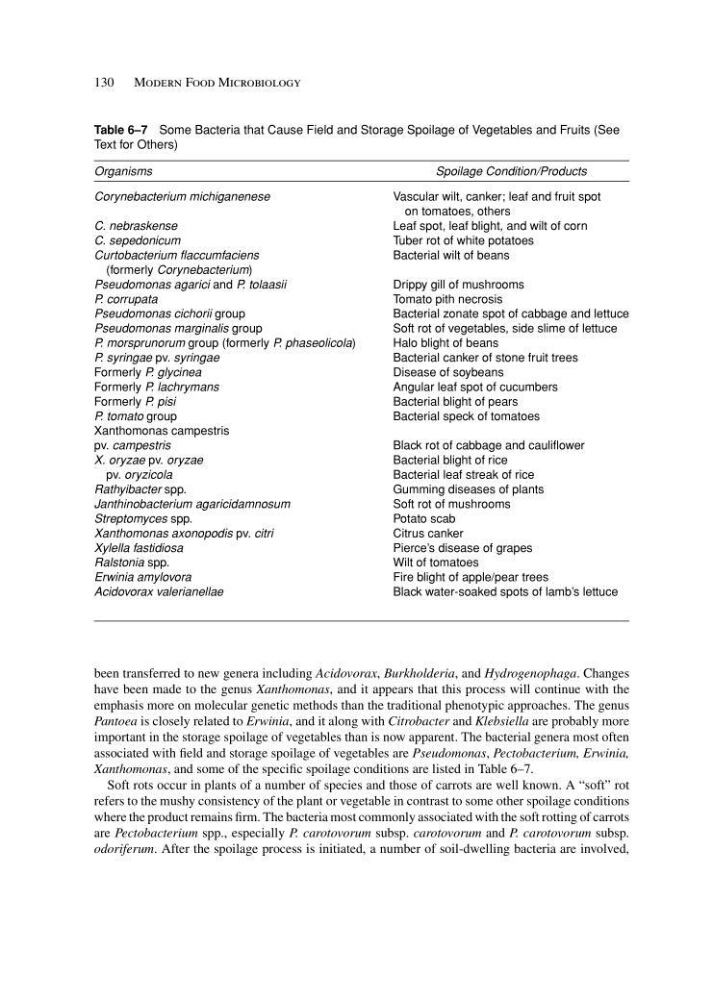
Table 6–7 Some Bacteria that Cause Field and Storage Spoilage of Vegetables and Fruits (See
Text for Others)
Organisms
Spoilage Condition/Products
Corynebacterium michiganenese
Vascular wilt, canker; leaf and fruit spot
on tomatoes, others
C. nebraskense
Leaf spot, leaf blight, and wilt of corn
C. sepedonicum
Tuber rot of white potatoes
Curtobacterium flaccumfaciens
Bacterial wilt of beans
(formerly Corynebacterium)
Pseudomonas agarici and P. tolaasii
Drippy gill of mushrooms
P. corrupata
Tomato pith necrosis
Pseudomonas cichorii group
Bacterial zonate spot of cabbage and lettuce
Pseudomonas marginalis group
Soft rot of vegetables, side slime of lettuce
P. morsprunorum group (formerly P. phaseolicola)
Halo blight of beans
P. syringae pv. syringae
Bacterial canker of stone fruit trees
Formerly P. glycinea
Disease of soybeans
Formerly P. lachrymans
Angular leaf spot of cucumbers
Formerly P. pisi
Bacterial blight of pears
P. tomato group
Bacterial speck of tomatoes
Xanthomonas campestris
pv. campestris
Black rot of cabbage and cauliflower
X. oryzae pv. oryzae
Bacterial blight of rice
pv. oryzicola
Bacterial leaf streak of rice
Rathyibacter spp.
Gumming diseases of plants
Janthinobacterium agaricidamnosum
Soft rot of mushrooms
Streptomyces spp.
Potato scab
Xanthomonas axonopodis pv. citri
Citrus canker
Xylella fastidiosa
Pierce’s disease of grapes
Ralstonia spp.
Wilt of tomatoes
Erwinia amylovora
Fire blight of apple/pear trees
Acidovorax valerianellae
Black water-soaked spots of lamb’s lettuce
been transferred to new genera including Acidovorax, Burkholderia, and Hydrogenophaga. Changes
have been made to the genus Xanthomonas, and it appears that this process will continue with the
emphasis more on molecular genetic methods than the traditional phenotypic approaches. The genus
Pantoea is closely related to Erwinia, and it along with Citrobacter and Klebsiella are probably more
important in the storage spoilage of vegetables than is now apparent. The bacterial genera most often
associated with field and storage spoilage of vegetables are Pseudomonas, Pectobacterium, Erwinia,
Xanthomonas, and some of the specific spoilage conditions are listed in Table 6–7.
Soft rots occur in plants of a number of species and those of carrots are well known. A “soft” rot
refers to the mushy consistency of the plant or vegetable in contrast to some other spoilage conditions
where the product remains firm. The bacteria most commonly associated with the soft rotting of carrots
are Pectobacterium spp., especially P. carotovorum subsp. carotovorum and P. carotovorum subsp.
odoriferum. After the spoilage process is initiated, a number of soil-dwelling bacteria are involved,
Table 6–7 Some Bacteria that Cause Field and Storage Spoilage of Vegetables and Fruits (See
Text for Others)
Organisms
Spoilage Condition/Products
Corynebacterium michiganenese
Vascular wilt, canker; leaf and fruit spot
on tomatoes, others
C. nebraskense
Leaf spot, leaf blight, and wilt of corn
C. sepedonicum
Tuber rot of white potatoes
Curtobacterium flaccumfaciens
Bacterial wilt of beans
(formerly Corynebacterium)
Pseudomonas agarici and P. tolaasii
Drippy gill of mushrooms
P. corrupata
Tomato pith necrosis
Pseudomonas cichorii group
Bacterial zonate spot of cabbage and lettuce
Pseudomonas marginalis group
Soft rot of vegetables, side slime of lettuce
P. morsprunorum group (formerly P. phaseolicola)
Halo blight of beans
P. syringae pv. syringae
Bacterial canker of stone fruit trees
Formerly P. glycinea
Disease of soybeans
Formerly P. lachrymans
Angular leaf spot of cucumbers
Formerly P. pisi
Bacterial blight of pears
P. tomato group
Bacterial speck of tomatoes
Xanthomonas campestris
pv. campestris
Black rot of cabbage and cauliflower
X. oryzae pv. oryzae
Bacterial blight of rice
pv. oryzicola
Bacterial leaf streak of rice
Rathyibacter spp.
Gumming diseases of plants
Janthinobacterium agaricidamnosum
Soft rot of mushrooms
Streptomyces spp.
Potato scab
Xanthomonas axonopodis pv. citri
Citrus canker
Xylella fastidiosa
Pierce’s disease of grapes
Ralstonia spp.
Wilt of tomatoes
Erwinia amylovora
Fire blight of apple/pear trees
Acidovorax valerianellae
Black water-soaked spots of lamb’s lettuce
been transferred to new genera including Acidovorax, Burkholderia, and Hydrogenophaga. Changes
have been made to the genus Xanthomonas, and it appears that this process will continue with the
emphasis more on molecular genetic methods than the traditional phenotypic approaches. The genus
Pantoea is closely related to Erwinia, and it along with Citrobacter and Klebsiella are probably more
important in the storage spoilage of vegetables than is now apparent. The bacterial genera most often
associated with field and storage spoilage of vegetables are Pseudomonas, Pectobacterium, Erwinia,
Xanthomonas, and some of the specific spoilage conditions are listed in Table 6–7.
Soft rots occur in plants of a number of species and those of carrots are well known. A “soft” rot
refers to the mushy consistency of the plant or vegetable in contrast to some other spoilage conditions
where the product remains firm. The bacteria most commonly associated with the soft rotting of carrots
are Pectobacterium spp., especially P. carotovorum subsp. carotovorum and P. carotovorum subsp.
odoriferum. After the spoilage process is initiated, a number of soil-dwelling bacteria are involved,