

42
A. Geethakarthi
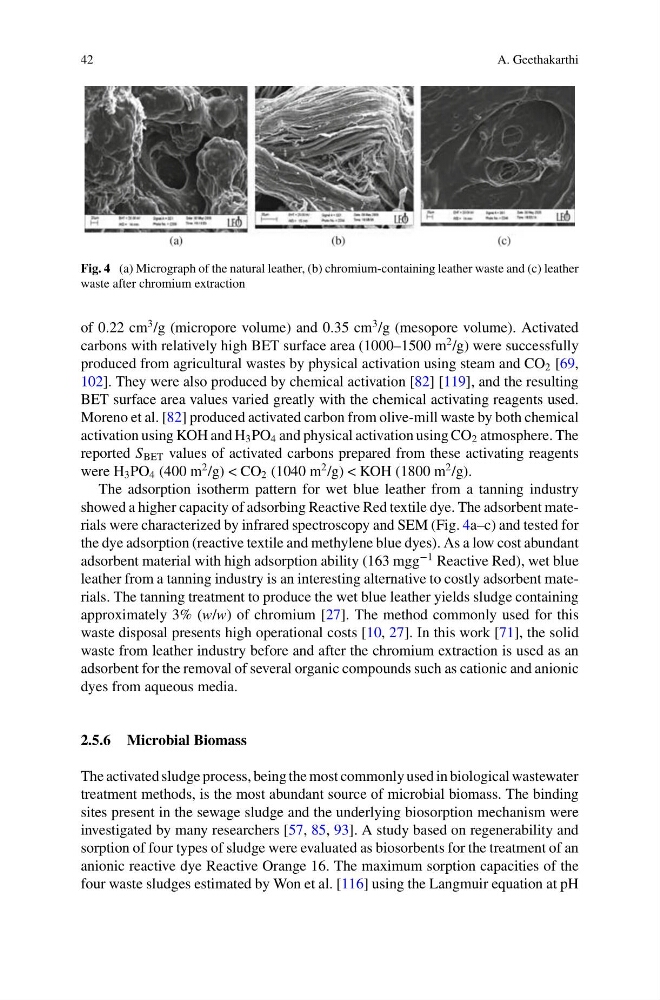
Fig. 4 (a) Micrograph of the natural leather, (b) chromium-containing leather waste and (c) leather
waste after chromium extraction
of 0.22 cm
3 /g (micropore volume) and 0.35 cm
3 /g (mesopore volume). Activated
carbons with relatively high BET surface area (1000–1500 m
2 /g) were successfully
produced from agricultural wastes by physical activation using steam and CO 2 [69,
102]. They were also produced by chemical activation [82] [119], and the resulting
BET surface area values varied greatly with the chemical activating reagents used.
Moreno et al. [82] produced activated carbon from olive-mill waste by both chemical
activation using KOH and H 3 PO 4 and physical activation using CO 2 atmosphere. The
reported S BET values of activated carbons prepared from these activating reagents
were H 3 PO 4 (400 m
2 /g) < CO 2 (1040 m
2 /g) < KOH (1800 m
2 /g).
The adsorption isotherm pattern for wet blue leather from a tanning industry
showed a higher capacity of adsorbing Reactive Red textile dye. The adsorbent materials were characterized by infrared spectroscopy and SEM (Fig. 4a–c) and tested for
the dye adsorption (reactive textile and methylene blue dyes). As a low cost abundant
adsorbent material with high adsorption ability (163 mgg
−1 Reactive Red), wet blue
leather from a tanning industry is an interesting alternative to costly adsorbent materials. The tanning treatment to produce the wet blue leather yields sludge containing
approximately 3% (w/w) of chromium [27]. The method commonly used for this
waste disposal presents high operational costs [10, 27]. In this work [71], the solid
waste from leather industry before and after the chromium extraction is used as an
adsorbent for the removal of several organic compounds such as cationic and anionic
dyes from aqueous media.
2.5.6 Microbial Biomass
The activated sludge process, being the most commonly used in biological wastewater
treatment methods, is the most abundant source of microbial biomass. The binding
sites present in the sewage sludge and the underlying biosorption mechanism were
investigated by many researchers [57, 85, 93]. A study based on regenerability and
sorption of four types of sludge were evaluated as biosorbents for the treatment of an
anionic reactive dye Reactive Orange 16. The maximum sorption capacities of the
four waste sludges estimated by Won et al. [116] using the Langmuir equation at pH
A. Geethakarthi
Fig. 4 (a) Micrograph of the natural leather, (b) chromium-containing leather waste and (c) leather
waste after chromium extraction
of 0.22 cm
3 /g (micropore volume) and 0.35 cm
3 /g (mesopore volume). Activated
carbons with relatively high BET surface area (1000–1500 m
2 /g) were successfully
produced from agricultural wastes by physical activation using steam and CO 2 [69,
102]. They were also produced by chemical activation [82] [119], and the resulting
BET surface area values varied greatly with the chemical activating reagents used.
Moreno et al. [82] produced activated carbon from olive-mill waste by both chemical
activation using KOH and H 3 PO 4 and physical activation using CO 2 atmosphere. The
reported S BET values of activated carbons prepared from these activating reagents
were H 3 PO 4 (400 m
2 /g) < CO 2 (1040 m
2 /g) < KOH (1800 m
2 /g).
The adsorption isotherm pattern for wet blue leather from a tanning industry
showed a higher capacity of adsorbing Reactive Red textile dye. The adsorbent materials were characterized by infrared spectroscopy and SEM (Fig. 4a–c) and tested for
the dye adsorption (reactive textile and methylene blue dyes). As a low cost abundant
adsorbent material with high adsorption ability (163 mgg
−1 Reactive Red), wet blue
leather from a tanning industry is an interesting alternative to costly adsorbent materials. The tanning treatment to produce the wet blue leather yields sludge containing
approximately 3% (w/w) of chromium [27]. The method commonly used for this
waste disposal presents high operational costs [10, 27]. In this work [71], the solid
waste from leather industry before and after the chromium extraction is used as an
adsorbent for the removal of several organic compounds such as cationic and anionic
dyes from aqueous media.
2.5.6 Microbial Biomass
The activated sludge process, being the most commonly used in biological wastewater
treatment methods, is the most abundant source of microbial biomass. The binding
sites present in the sewage sludge and the underlying biosorption mechanism were
investigated by many researchers [57, 85, 93]. A study based on regenerability and
sorption of four types of sludge were evaluated as biosorbents for the treatment of an
anionic reactive dye Reactive Orange 16. The maximum sorption capacities of the
four waste sludges estimated by Won et al. [116] using the Langmuir equation at pH