

Advanced Oxidation Processes (AOP)—Effective Innovative …
195
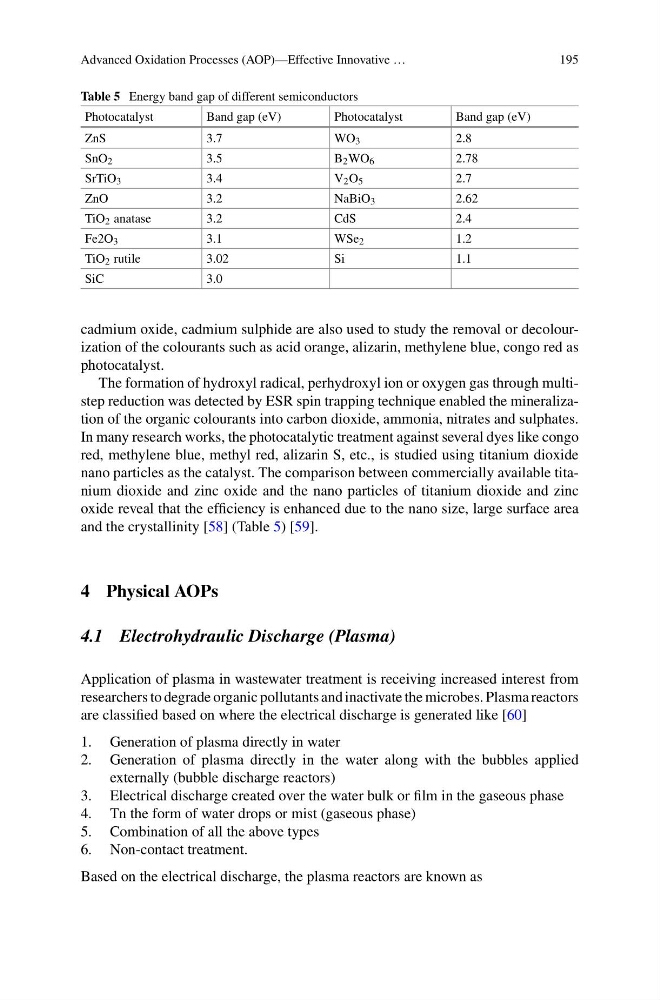
Table 5 Energy band gap of different semiconductors
Photocatalyst
Band gap (eV)
Photocatalyst
Band gap (eV)
ZnS
3.7
WO 3
2.8
SnO 2
3.5
B 2 WO 6
2.78
SrTiO 3
3.4
V 2 O 5
2.7
ZnO
3.2
NaBiO 3
2.62
TiO 2 anatase
3.2
CdS
2.4
Fe2O 3
3.1
WSe 2
1.2
TiO 2 rutile
3.02
Si
1.1
SiC
3.0
cadmium oxide, cadmium sulphide are also used to study the removal or decolourization of the colourants such as acid orange, alizarin, methylene blue, congo red as
photocatalyst.
The formation of hydroxyl radical, perhydroxyl ion or oxygen gas through multistep reduction was detected by ESR spin trapping technique enabled the mineralization of the organic colourants into carbon dioxide, ammonia, nitrates and sulphates.
In many research works, the photocatalytic treatment against several dyes like congo
red, methylene blue, methyl red, alizarin S, etc., is studied using titanium dioxide
nano particles as the catalyst. The comparison between commercially available titanium dioxide and zinc oxide and the nano particles of titanium dioxide and zinc
oxide reveal that the efficiency is enhanced due to the nano size, large surface area
and the crystallinity [58] (Table 5) [59].
4 Physical AOPs
4.1 Electrohydraulic Discharge (Plasma)
Application of plasma in wastewater treatment is receiving increased interest from
researchers to degrade organic pollutants and inactivate the microbes. Plasma reactors
are classified based on where the electrical discharge is generated like [60]
1. Generation of plasma directly in water
2. Generation of plasma directly in the water along with the bubbles applied
externally (bubble discharge reactors)
3. Electrical discharge created over the water bulk or film in the gaseous phase
4. Tn the form of water drops or mist (gaseous phase)
5. Combination of all the above types
6. Non-contact treatment.
Based on the electrical discharge, the plasma reactors are known as
195
Table 5 Energy band gap of different semiconductors
Photocatalyst
Band gap (eV)
Photocatalyst
Band gap (eV)
ZnS
3.7
WO 3
2.8
SnO 2
3.5
B 2 WO 6
2.78
SrTiO 3
3.4
V 2 O 5
2.7
ZnO
3.2
NaBiO 3
2.62
TiO 2 anatase
3.2
CdS
2.4
Fe2O 3
3.1
WSe 2
1.2
TiO 2 rutile
3.02
Si
1.1
SiC
3.0
cadmium oxide, cadmium sulphide are also used to study the removal or decolourization of the colourants such as acid orange, alizarin, methylene blue, congo red as
photocatalyst.
The formation of hydroxyl radical, perhydroxyl ion or oxygen gas through multistep reduction was detected by ESR spin trapping technique enabled the mineralization of the organic colourants into carbon dioxide, ammonia, nitrates and sulphates.
In many research works, the photocatalytic treatment against several dyes like congo
red, methylene blue, methyl red, alizarin S, etc., is studied using titanium dioxide
nano particles as the catalyst. The comparison between commercially available titanium dioxide and zinc oxide and the nano particles of titanium dioxide and zinc
oxide reveal that the efficiency is enhanced due to the nano size, large surface area
and the crystallinity [58] (Table 5) [59].
4 Physical AOPs
4.1 Electrohydraulic Discharge (Plasma)
Application of plasma in wastewater treatment is receiving increased interest from
researchers to degrade organic pollutants and inactivate the microbes. Plasma reactors
are classified based on where the electrical discharge is generated like [60]
1. Generation of plasma directly in water
2. Generation of plasma directly in the water along with the bubbles applied
externally (bubble discharge reactors)
3. Electrical discharge created over the water bulk or film in the gaseous phase
4. Tn the form of water drops or mist (gaseous phase)
5. Combination of all the above types
6. Non-contact treatment.
Based on the electrical discharge, the plasma reactors are known as