

7.2.3 Thiurum
Thiurum has been used as a dithiocarbamate-based sterilizer (pesticide) or a repellent
against birds. The vulcanized accelerants in the latex are cited as the main use of this
chemical other than as a sterilizer. The thiurum concentration added in the microcosm tests were set to 0.25, 0.5, 1, 2, 4, and 8 mg/L, and the methanol concentration
as the solvent was adjusted to 0.32%. Experiments involving the addition of thiurum
to the microcosm were conducted 16 days after the microcosm culture began (i.e.,
during the stationary phase).
As a result of exposure to thiurum, bacteria, Lecane sp., Philodina
erythrophthalma, and Aeolosoma hemprichi tended to multiply, which allowed
bacteria to uptake as a nutrient source the methanol from the organic substances
added as a solvent, and microanimals predated them. Microalgae, such as Chlorella
sp., were not affected by the addition of thiurum. Furthermore, the addition of 0.32%
of a methanol solvent did not affect the microcosm. Cyclidium glaucoma and
Aeolosoma hemprichi decreased in their populations with the addition of 1.0 mg/L
of thiurum. From the single-species culture test, it was made clear that Aeolosoma
1
2
3
4 5
6 7 8
9
1 0
1 1
1 2
1 3
1 4
control
mancozeb 0.3mg/L
1
2
3
4
5
6 7
8
9
1 0
1 1
1 2
1 3
1 4
mancozeb 3 mg/L
Production (mgO
2 /200mL)
Respiration(mgO 2 /200mL)
9
6
3
0
9
6
3
0
9
6
3
0
9
6
3
0
9
6
3
0
9
6
3
0
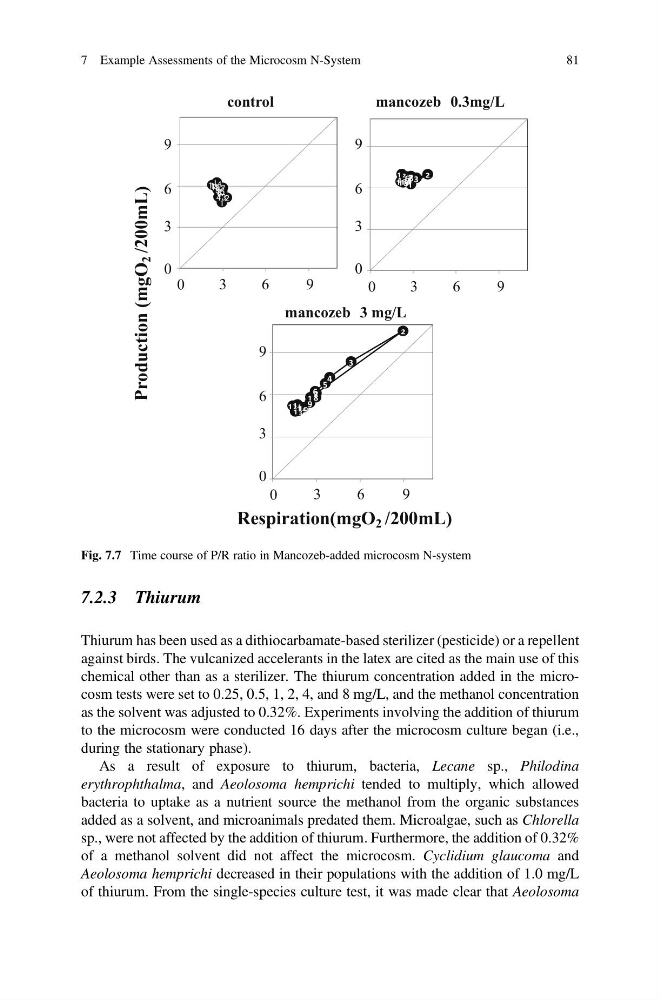
Fig. 7.7 Time course of P/R ratio in Mancozeb-added microcosm N-system
7 Example Assessments of the Microcosm N-System
81
Thiurum has been used as a dithiocarbamate-based sterilizer (pesticide) or a repellent
against birds. The vulcanized accelerants in the latex are cited as the main use of this
chemical other than as a sterilizer. The thiurum concentration added in the microcosm tests were set to 0.25, 0.5, 1, 2, 4, and 8 mg/L, and the methanol concentration
as the solvent was adjusted to 0.32%. Experiments involving the addition of thiurum
to the microcosm were conducted 16 days after the microcosm culture began (i.e.,
during the stationary phase).
As a result of exposure to thiurum, bacteria, Lecane sp., Philodina
erythrophthalma, and Aeolosoma hemprichi tended to multiply, which allowed
bacteria to uptake as a nutrient source the methanol from the organic substances
added as a solvent, and microanimals predated them. Microalgae, such as Chlorella
sp., were not affected by the addition of thiurum. Furthermore, the addition of 0.32%
of a methanol solvent did not affect the microcosm. Cyclidium glaucoma and
Aeolosoma hemprichi decreased in their populations with the addition of 1.0 mg/L
of thiurum. From the single-species culture test, it was made clear that Aeolosoma
1
2
3
4 5
6 7 8
9
1 0
1 1
1 2
1 3
1 4
control
mancozeb 0.3mg/L
1
2
3
4
5
6 7
8
9
1 0
1 1
1 2
1 3
1 4
mancozeb 3 mg/L
Production (mgO
2 /200mL)
Respiration(mgO 2 /200mL)
9
6
3
0
9
6
3
0
9
6
3
0
9
6
3
0
9
6
3
0
9
6
3
0
Fig. 7.7 Time course of P/R ratio in Mancozeb-added microcosm N-system
7 Example Assessments of the Microcosm N-System
81