

NOECeco of the mesocosm test and the m-NOEC of the microcosm test. The
applicable range of the microcosm, a method for determining the coefficient of
assessment, taking into consideration the dispersion of each chemical substance
from the correlation matrix, and the difference in susceptibility for each ecosystem
were established. Further, the limitations of the microcosm test proposed in this
study are based on the assessment of chemical properties. At the same time, the
conceptual underpinning of extrapolating to natural ecosystems to establish a verified technique and database, which is the basis of the analysis in this book, were
further expanded upon.
Expansion of the applicable range of the microcosm test methods and optimization of such methods are examined in this manual, and an OECD international
standardization test method of this microcosm test method was established by
expanding the database necessary for determining the coefficient of assessment. In
the future, further examination of the properties of the chemical substances used, as
well as grouping and promoting additional research and verification, will be needed
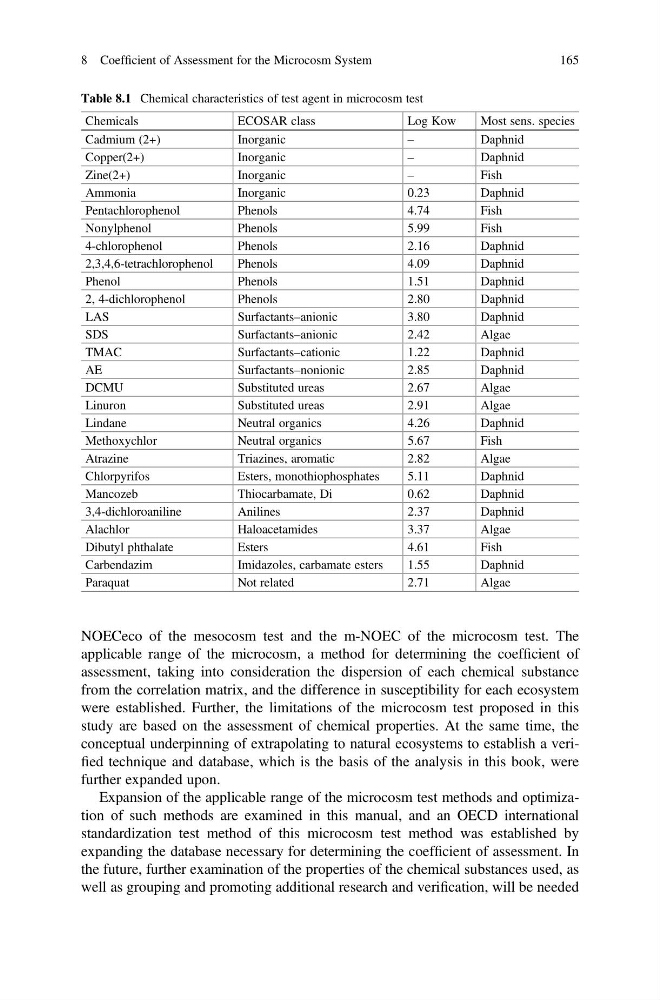
Table 8.1 Chemical characteristics of test agent in microcosm test
Chemicals
ECOSAR class
Log Kow
Most sens. species
Cadmium (2+)
Inorganic
–
Daphnid
Copper(2+)
Inorganic
–
Daphnid
Zine(2+)
Inorganic
–
Fish
Ammonia
Inorganic
0.23
Daphnid
Pentachlorophenol
Phenols
4.74
Fish
Nonylphenol
Phenols
5.99
Fish
4-chlorophenol
Phenols
2.16
Daphnid
2,3,4,6-tetrachlorophenol
Phenols
4.09
Daphnid
Phenol
Phenols
1.51
Daphnid
2, 4-dichlorophenol
Phenols
2.80
Daphnid
LAS
Surfactants–anionic
3.80
Daphnid
SDS
Surfactants–anionic
2.42
Algae
TMAC
Surfactants–cationic
1.22
Daphnid
AE
Surfactants–nonionic
2.85
Daphnid
DCMU
Substituted ureas
2.67
Algae
Linuron
Substituted ureas
2.91
Algae
Lindane
Neutral organics
4.26
Daphnid
Methoxychlor
Neutral organics
5.67
Fish
Atrazine
Triazines, aromatic
2.82
Algae
Chlorpyrifos
Esters, monothiophosphates
5.11
Daphnid
Mancozeb
Thiocarbamate, Di
0.62
Daphnid
3,4-dichloroaniline
Anilines
2.37
Daphnid
Alachlor
Haloacetamides
3.37
Algae
Dibutyl phthalate
Esters
4.61
Fish
Carbendazim
Imidazoles, carbamate esters
1.55
Daphnid
Paraquat
Not related
2.71
Algae
8 Coefficient of Assessment for the Microcosm System
165
applicable range of the microcosm, a method for determining the coefficient of
assessment, taking into consideration the dispersion of each chemical substance
from the correlation matrix, and the difference in susceptibility for each ecosystem
were established. Further, the limitations of the microcosm test proposed in this
study are based on the assessment of chemical properties. At the same time, the
conceptual underpinning of extrapolating to natural ecosystems to establish a verified technique and database, which is the basis of the analysis in this book, were
further expanded upon.
Expansion of the applicable range of the microcosm test methods and optimization of such methods are examined in this manual, and an OECD international
standardization test method of this microcosm test method was established by
expanding the database necessary for determining the coefficient of assessment. In
the future, further examination of the properties of the chemical substances used, as
well as grouping and promoting additional research and verification, will be needed
Table 8.1 Chemical characteristics of test agent in microcosm test
Chemicals
ECOSAR class
Log Kow
Most sens. species
Cadmium (2+)
Inorganic
–
Daphnid
Copper(2+)
Inorganic
–
Daphnid
Zine(2+)
Inorganic
–
Fish
Ammonia
Inorganic
0.23
Daphnid
Pentachlorophenol
Phenols
4.74
Fish
Nonylphenol
Phenols
5.99
Fish
4-chlorophenol
Phenols
2.16
Daphnid
2,3,4,6-tetrachlorophenol
Phenols
4.09
Daphnid
Phenol
Phenols
1.51
Daphnid
2, 4-dichlorophenol
Phenols
2.80
Daphnid
LAS
Surfactants–anionic
3.80
Daphnid
SDS
Surfactants–anionic
2.42
Algae
TMAC
Surfactants–cationic
1.22
Daphnid
AE
Surfactants–nonionic
2.85
Daphnid
DCMU
Substituted ureas
2.67
Algae
Linuron
Substituted ureas
2.91
Algae
Lindane
Neutral organics
4.26
Daphnid
Methoxychlor
Neutral organics
5.67
Fish
Atrazine
Triazines, aromatic
2.82
Algae
Chlorpyrifos
Esters, monothiophosphates
5.11
Daphnid
Mancozeb
Thiocarbamate, Di
0.62
Daphnid
3,4-dichloroaniline
Anilines
2.37
Daphnid
Alachlor
Haloacetamides
3.37
Algae
Dibutyl phthalate
Esters
4.61
Fish
Carbendazim
Imidazoles, carbamate esters
1.55
Daphnid
Paraquat
Not related
2.71
Algae
8 Coefficient of Assessment for the Microcosm System
165