

l
Can acidify glucose (no gas), mannose, maltose, N-acetylglucosamine, D-fructose, ribose, trehalose, and glycerol in API CHE
medium.
l
Phase I generates antimicrobial factors, adsorbs neutral red from
MacConkey agar and, for most strains, bromothymol blue from
agar media; almost they are always lecithinase positive. Phase II
cells are less pleiomorphic than those in Phase I.
l
Phase I colonies are either mucoid or problematic to disperse in
liquid. Phase II is not mucoid and is effortlessly dispersed in
liquid; it does not adsorb neutral red or bromothymol blue and
does not yield lecithinase.
l
The G + C content of the DNA is 43–48 mol%.
Characters of the Species
of Xenorhabdus
Xenorhabdus beddingii
l
Light brown shade.
l
Neutral red absorption by Phase I colonies, forming brown
colonies on MacConkey agar, and bromothymol blue, yields
lecithinase.
l
Negative for catalase and urease test.
l
Positive for phosphatase.
l
Hydrolyzes aesculin.
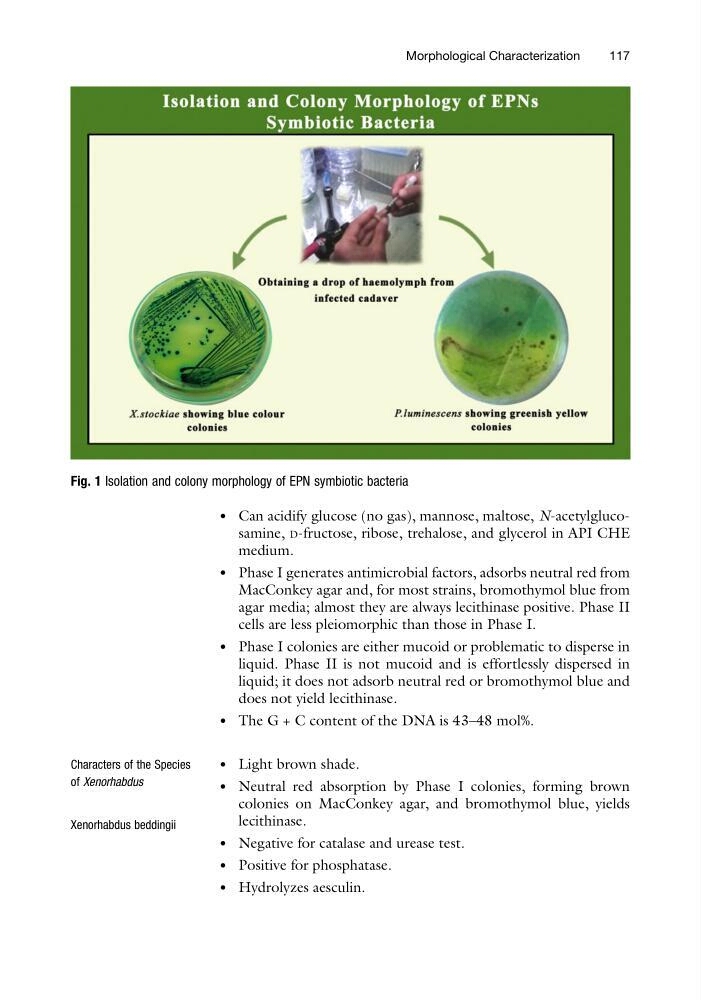
Fig. 1 Isolation and colony morphology of EPN symbiotic bacteria
Morphological Characterization
117
Can acidify glucose (no gas), mannose, maltose, N-acetylglucosamine, D-fructose, ribose, trehalose, and glycerol in API CHE
medium.
l
Phase I generates antimicrobial factors, adsorbs neutral red from
MacConkey agar and, for most strains, bromothymol blue from
agar media; almost they are always lecithinase positive. Phase II
cells are less pleiomorphic than those in Phase I.
l
Phase I colonies are either mucoid or problematic to disperse in
liquid. Phase II is not mucoid and is effortlessly dispersed in
liquid; it does not adsorb neutral red or bromothymol blue and
does not yield lecithinase.
l
The G + C content of the DNA is 43–48 mol%.
Characters of the Species
of Xenorhabdus
Xenorhabdus beddingii
l
Light brown shade.
l
Neutral red absorption by Phase I colonies, forming brown
colonies on MacConkey agar, and bromothymol blue, yields
lecithinase.
l
Negative for catalase and urease test.
l
Positive for phosphatase.
l
Hydrolyzes aesculin.
Fig. 1 Isolation and colony morphology of EPN symbiotic bacteria
Morphological Characterization
117