

extracted via mechanical crushing to separate oil from the non-oil biomass. It can be
achieved by drying the algal biomass followed by pressing it in an oil press. The
disruption vessels are used for commercial scale extraction process (Richmond
2004; Shuba and Kifle 2018). These vessels are designed in such a way that they
consist of a stream of target materials which are in a continuous flow (Shuba and
Kifle 2018). The method employed for the extraction of algal biomass relies on the
algal strain (cell wall type) and the nature of target product (Patel et al. 2017).
8.4.2 Extraction of Algal Oil by Chemical Method
In this process, after mechanically disrupting the algal cells, chemical extraction of
oil follows, employing various solvents such as hexane, benzene, ether, hexane–
ethanol, methanol–chloroform, etc. The solvent to be utilized depends on the algal
biomass type and the purity of the final product (Richmond 2004; Patel et al. 2017;
Shuba and Kifle 2018). Extraction solvents should be cheap, nonpolar, poor extractor of undesired cellular components, and volatile in nature. The basic principle
underlying the chemical extraction process using organic solvents depends on “like
dissolves like” (polar molecules dissolves in polar solvents whereas non-polar
dissolves in non-polar solvents). (Geciova et al. 2002; Bahadar and Khan 2013;
Patel et al. 2017). Five basic steps are followed in the extraction process: first, the
microalgal cells are subjected to organic solvents, followed by penetration of cell
membranes by the solvents and their subsequent entry into the cytoplasm of the cells.
A solvent–lipid complex is produced due to the interaction between the solvents and
the neutral lipids through the van der Waals forces. This phenomenon is followed by
the diffusion of solvent–lipid complex across the cell membrane which further
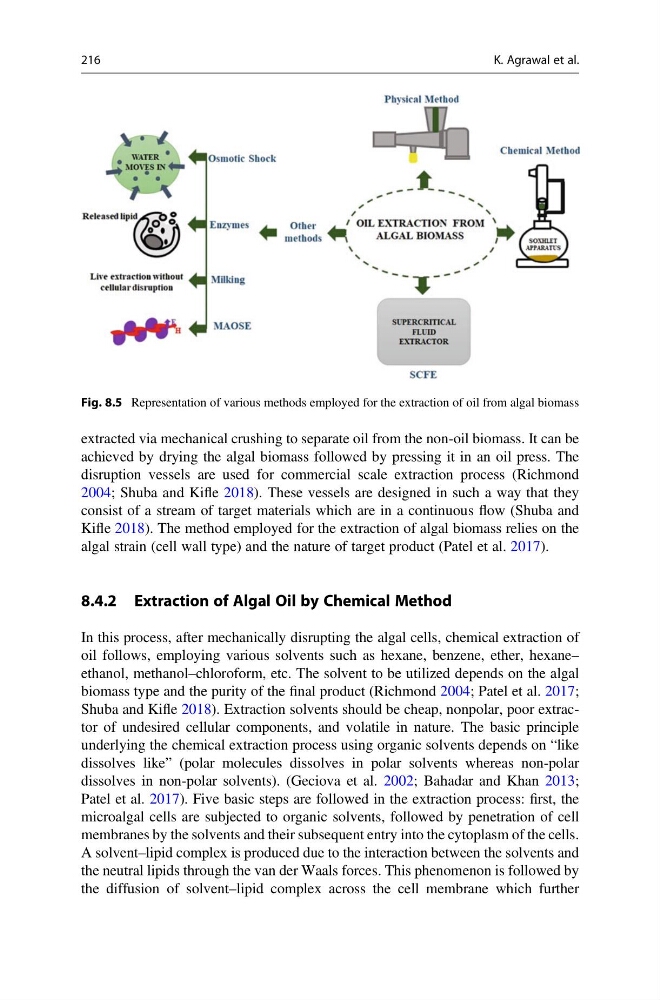
Fig. 8.5 Representation of various methods employed for the extraction of oil from algal biomass
216
K. Agrawal et al.
achieved by drying the algal biomass followed by pressing it in an oil press. The
disruption vessels are used for commercial scale extraction process (Richmond
2004; Shuba and Kifle 2018). These vessels are designed in such a way that they
consist of a stream of target materials which are in a continuous flow (Shuba and
Kifle 2018). The method employed for the extraction of algal biomass relies on the
algal strain (cell wall type) and the nature of target product (Patel et al. 2017).
8.4.2 Extraction of Algal Oil by Chemical Method
In this process, after mechanically disrupting the algal cells, chemical extraction of
oil follows, employing various solvents such as hexane, benzene, ether, hexane–
ethanol, methanol–chloroform, etc. The solvent to be utilized depends on the algal
biomass type and the purity of the final product (Richmond 2004; Patel et al. 2017;
Shuba and Kifle 2018). Extraction solvents should be cheap, nonpolar, poor extractor of undesired cellular components, and volatile in nature. The basic principle
underlying the chemical extraction process using organic solvents depends on “like
dissolves like” (polar molecules dissolves in polar solvents whereas non-polar
dissolves in non-polar solvents). (Geciova et al. 2002; Bahadar and Khan 2013;
Patel et al. 2017). Five basic steps are followed in the extraction process: first, the
microalgal cells are subjected to organic solvents, followed by penetration of cell
membranes by the solvents and their subsequent entry into the cytoplasm of the cells.
A solvent–lipid complex is produced due to the interaction between the solvents and
the neutral lipids through the van der Waals forces. This phenomenon is followed by
the diffusion of solvent–lipid complex across the cell membrane which further
Fig. 8.5 Representation of various methods employed for the extraction of oil from algal biomass
216
K. Agrawal et al.