

524
C. J. Li et al.
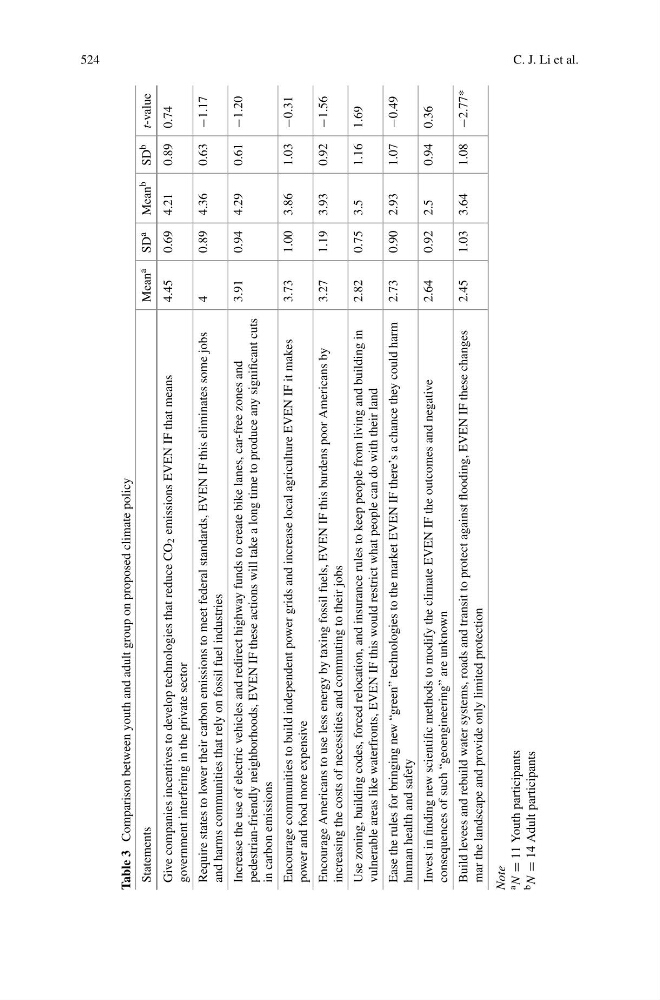
Table 3
Comparison between youth and adult group on proposed climate policy
Statements
Mean a
SD a
Mean b
SD b
t-value
Give companies incentives to develop technologies that reduce CO
2 emissions EVEN IF that means
government interfering in the private sector
4.45
0.69 4.21
0.89 0.74
Require states to lower their carbon emissions to meet federal standards, EVEN IF this eliminates some jobs
and harms communities that rely on fossil fuel industries
4
0.89 4.36
0.63
−1.17
Increase the use of electric vehicles and redirect highway funds to create bike lanes, car-free zones and
pedestrian-friendly neighborhoods, EVEN IF these actions will take a long time to produce any significant cuts
in carbon emissions
3.91
0.94 4.29
0.61
−1.20
Encourage communities to build independent power grids and increase local agriculture EVEN IF it makes
power and food more expensive
3.73
1.00 3.86
1.03
−0.31
Encourage Americans to use less energy by taxing fossil fuels, EVEN IF this burdens poor Americans by
increasing the costs of necessities and commuting to their jobs
3.27
1.19 3.93
0.92
−1.56
Use zoning, building codes, forced relocation, and insurance rules to keep people from living and building in
vulnerable areas like waterfronts, EVEN IF this would restrict what people can do with their land
2.82
0.75 3.5
1.16 1.69
Ease the rules for bringing new “green” technologies to the market EVEN IF there’s a chance they could harm
human health and safety
2.73
0.90 2.93
1.07
−0.49
Invest in finding new scientific methods to modify the climate EVEN IF the outcomes and negative
consequences of such “geoengineering” are unknown
2.64
0.92 2.5
0.94 0.36
Build levees and rebuild water systems, roads and transit to protect against flooding, EVEN IF these changes
mar the landscape and provide only limited protection
2.45
1.03 3.64
1.08
−2.77*
Note
a
N
= 11 Youth participants
b
N
= 14 Adult participants
C. J. Li et al.
Table 3
Comparison between youth and adult group on proposed climate policy
Statements
Mean a
SD a
Mean b
SD b
t-value
Give companies incentives to develop technologies that reduce CO
2 emissions EVEN IF that means
government interfering in the private sector
4.45
0.69 4.21
0.89 0.74
Require states to lower their carbon emissions to meet federal standards, EVEN IF this eliminates some jobs
and harms communities that rely on fossil fuel industries
4
0.89 4.36
0.63
−1.17
Increase the use of electric vehicles and redirect highway funds to create bike lanes, car-free zones and
pedestrian-friendly neighborhoods, EVEN IF these actions will take a long time to produce any significant cuts
in carbon emissions
3.91
0.94 4.29
0.61
−1.20
Encourage communities to build independent power grids and increase local agriculture EVEN IF it makes
power and food more expensive
3.73
1.00 3.86
1.03
−0.31
Encourage Americans to use less energy by taxing fossil fuels, EVEN IF this burdens poor Americans by
increasing the costs of necessities and commuting to their jobs
3.27
1.19 3.93
0.92
−1.56
Use zoning, building codes, forced relocation, and insurance rules to keep people from living and building in
vulnerable areas like waterfronts, EVEN IF this would restrict what people can do with their land
2.82
0.75 3.5
1.16 1.69
Ease the rules for bringing new “green” technologies to the market EVEN IF there’s a chance they could harm
human health and safety
2.73
0.90 2.93
1.07
−0.49
Invest in finding new scientific methods to modify the climate EVEN IF the outcomes and negative
consequences of such “geoengineering” are unknown
2.64
0.92 2.5
0.94 0.36
Build levees and rebuild water systems, roads and transit to protect against flooding, EVEN IF these changes
mar the landscape and provide only limited protection
2.45
1.03 3.64
1.08
−2.77*
Note
a
N
= 11 Youth participants
b
N
= 14 Adult participants