

Green Practices in the Fashion Supply Chain: A Literature Review
119
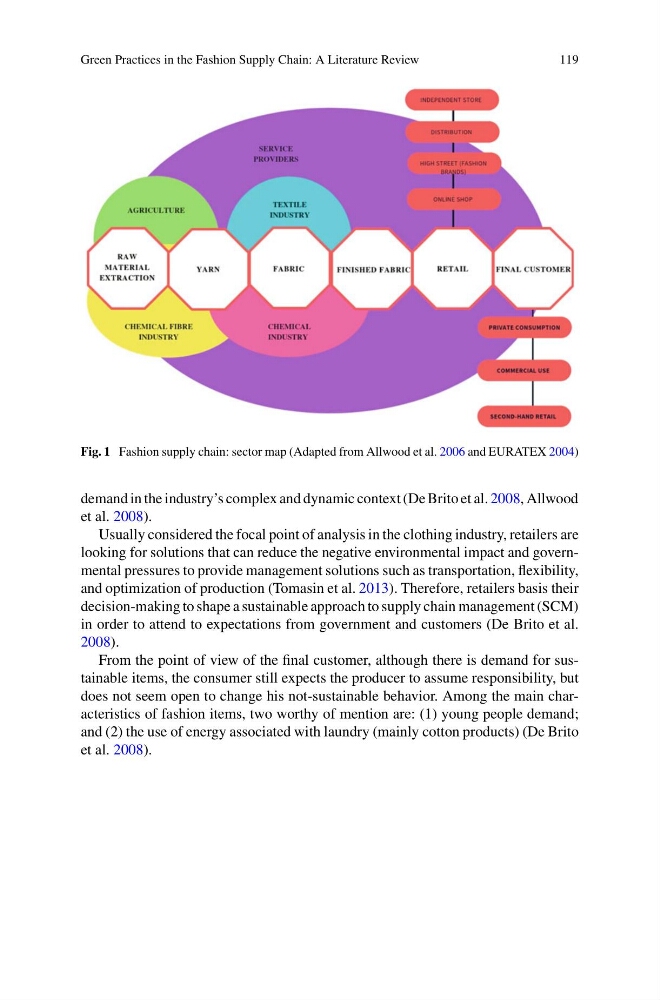
Fig. 1 Fashion supply chain: sector map (Adapted from Allwood et al. 2006 and EURATEX 2004)
demand in the industry’s complex and dynamic context (De Brito et al. 2008, Allwood
et al. 2008).
Usually considered the focal point of analysis in the clothing industry, retailers are
looking for solutions that can reduce the negative environmental impact and governmental pressures to provide management solutions such as transportation, flexibility,
and optimization of production (Tomasin et al. 2013). Therefore, retailers basis their
decision-making to shape a sustainable approach to supply chain management (SCM)
in order to attend to expectations from government and customers (De Brito et al.
2008).
From the point of view of the final customer, although there is demand for sustainable items, the consumer still expects the producer to assume responsibility, but
does not seem open to change his not-sustainable behavior. Among the main characteristics of fashion items, two worthy of mention are: (1) young people demand;
and (2) the use of energy associated with laundry (mainly cotton products) (De Brito
et al. 2008).
119
Fig. 1 Fashion supply chain: sector map (Adapted from Allwood et al. 2006 and EURATEX 2004)
demand in the industry’s complex and dynamic context (De Brito et al. 2008, Allwood
et al. 2008).
Usually considered the focal point of analysis in the clothing industry, retailers are
looking for solutions that can reduce the negative environmental impact and governmental pressures to provide management solutions such as transportation, flexibility,
and optimization of production (Tomasin et al. 2013). Therefore, retailers basis their
decision-making to shape a sustainable approach to supply chain management (SCM)
in order to attend to expectations from government and customers (De Brito et al.
2008).
From the point of view of the final customer, although there is demand for sustainable items, the consumer still expects the producer to assume responsibility, but
does not seem open to change his not-sustainable behavior. Among the main characteristics of fashion items, two worthy of mention are: (1) young people demand;
and (2) the use of energy associated with laundry (mainly cotton products) (De Brito
et al. 2008).