

38
reclaimed lands are viewed as an opportunity for increasing agricultural production
and ensuring food security in the country. Groundwater is the source of irrigation
water in these areas, where sprinkler and drip irrigation are practiced.
The rain fed areas include approximately 0.13 million hectares of land located in
the north coastal areas. About 70% of such area lies in the North Western coastal
sub-zone of the country in Marsa Matrouh governorate, while the rest lies in the
eastern one in North Sinai. Although these areas may not appear significant in relation to the total agricultural land, they are important for local communities. Finally,
the oases are characterized by alluvial, sandy and calcareous soils. They cover a
total area of 40,000 hectares. Groundwater is the main source for irrigation.
3.5 Population Impacts on Per Capita Water and Land
Egypt has a total population of 95.2 million inhabitants in 2017 mainly concentrated
in the Nile Delta and Valley (CAPMAS 2018). The Egyptian population almost
doubled during the last three decades, between 1986 and 2016 (CAPMAS 2017).
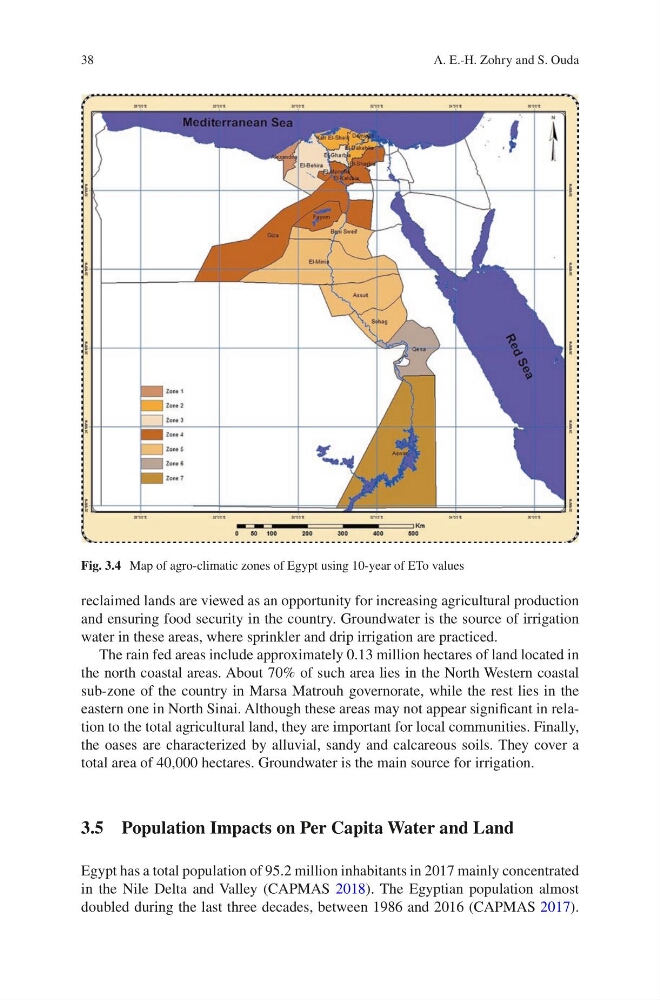
Fig. 3.4 Map of agro-climatic zones of Egypt using 10-year of ETo values
A. E.-H. Zohry and S. Ouda
reclaimed lands are viewed as an opportunity for increasing agricultural production
and ensuring food security in the country. Groundwater is the source of irrigation
water in these areas, where sprinkler and drip irrigation are practiced.
The rain fed areas include approximately 0.13 million hectares of land located in
the north coastal areas. About 70% of such area lies in the North Western coastal
sub-zone of the country in Marsa Matrouh governorate, while the rest lies in the
eastern one in North Sinai. Although these areas may not appear significant in relation to the total agricultural land, they are important for local communities. Finally,
the oases are characterized by alluvial, sandy and calcareous soils. They cover a
total area of 40,000 hectares. Groundwater is the main source for irrigation.
3.5 Population Impacts on Per Capita Water and Land
Egypt has a total population of 95.2 million inhabitants in 2017 mainly concentrated
in the Nile Delta and Valley (CAPMAS 2018). The Egyptian population almost
doubled during the last three decades, between 1986 and 2016 (CAPMAS 2017).
Fig. 3.4 Map of agro-climatic zones of Egypt using 10-year of ETo values
A. E.-H. Zohry and S. Ouda