

125
only during the second phase. Furthermore, Zhang et al. (2008) stated that the
N-uptake of cotton was diminished during the intercropping phase, but recovered
partially during later growth stages, with low effect on final cotton yield. They also
stated that intercrops used more nitrogen per unit production than mono crops,
which can reduce environmental risks of nitrogen leaching to groundwater.
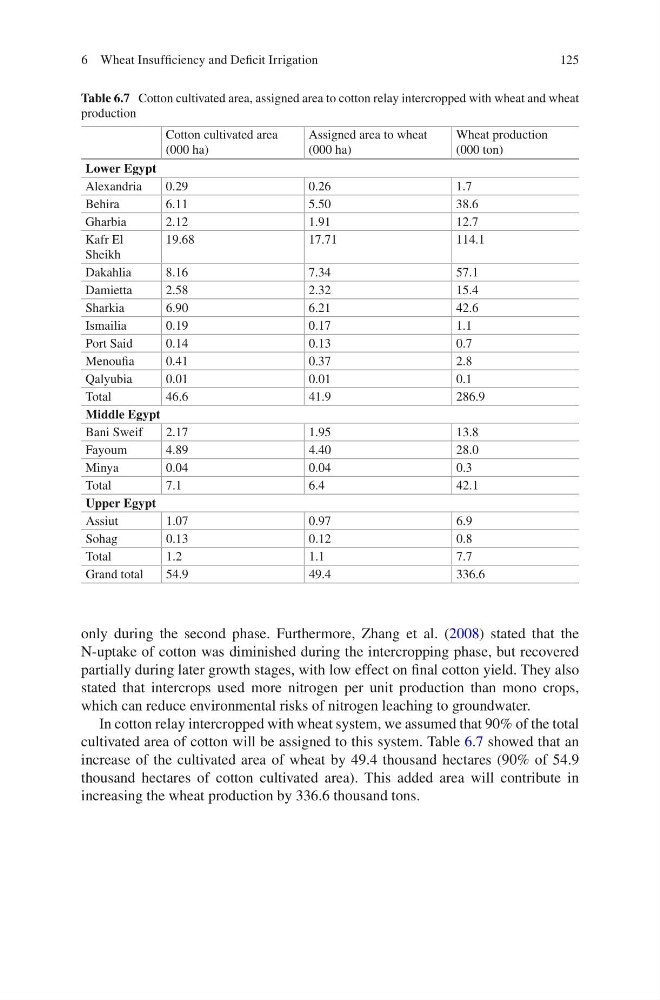
In cotton relay intercropped with wheat system, we assumed that 90% of the total
cultivated area of cotton will be assigned to this system. Table 6.7 showed that an
increase of the cultivated area of wheat by 49.4 thousand hectares (90% of 54.9
thousand hectares of cotton cultivated area). This added area will contribute in
increasing the wheat production by 336.6 thousand tons.
Table 6.7 Cotton cultivated area, assigned area to cotton relay intercropped with wheat and wheat
production
Cotton cultivated area
(000 ha)
Assigned area to wheat
(000 ha)
Wheat production
(000 ton)
Lower Egypt
Alexandria
0.29
0.26
1.7
Behira
6.11
5.50
38.6
Gharbia
2.12
1.91
12.7
Kafr El
Sheikh
19.68
17.71
114.1
Dakahlia
8.16
7.34
57.1
Damietta
2.58
2.32
15.4
Sharkia
6.90
6.21
42.6
Ismailia
0.19
0.17
1.1
Port Said
0.14
0.13
0.7
Menoufia
0.41
0.37
2.8
Qalyubia
0.01
0.01
0.1
Total
46.6
41.9
286.9
Middle Egypt
Bani Sweif
2.17
1.95
13.8
Fayoum
4.89
4.40
28.0
Minya
0.04
0.04
0.3
Total
7.1
6.4
42.1
Upper Egypt
Assiut
1.07
0.97
6.9
Sohag
0.13
0.12
0.8
Total
1.2
1.1
7.7
Grand total
54.9
49.4
336.6
6 Wheat Insufficiency and Deficit Irrigation
only during the second phase. Furthermore, Zhang et al. (2008) stated that the
N-uptake of cotton was diminished during the intercropping phase, but recovered
partially during later growth stages, with low effect on final cotton yield. They also
stated that intercrops used more nitrogen per unit production than mono crops,
which can reduce environmental risks of nitrogen leaching to groundwater.
In cotton relay intercropped with wheat system, we assumed that 90% of the total
cultivated area of cotton will be assigned to this system. Table 6.7 showed that an
increase of the cultivated area of wheat by 49.4 thousand hectares (90% of 54.9
thousand hectares of cotton cultivated area). This added area will contribute in
increasing the wheat production by 336.6 thousand tons.
Table 6.7 Cotton cultivated area, assigned area to cotton relay intercropped with wheat and wheat
production
Cotton cultivated area
(000 ha)
Assigned area to wheat
(000 ha)
Wheat production
(000 ton)
Lower Egypt
Alexandria
0.29
0.26
1.7
Behira
6.11
5.50
38.6
Gharbia
2.12
1.91
12.7
Kafr El
Sheikh
19.68
17.71
114.1
Dakahlia
8.16
7.34
57.1
Damietta
2.58
2.32
15.4
Sharkia
6.90
6.21
42.6
Ismailia
0.19
0.17
1.1
Port Said
0.14
0.13
0.7
Menoufia
0.41
0.37
2.8
Qalyubia
0.01
0.01
0.1
Total
46.6
41.9
286.9
Middle Egypt
Bani Sweif
2.17
1.95
13.8
Fayoum
4.89
4.40
28.0
Minya
0.04
0.04
0.3
Total
7.1
6.4
42.1
Upper Egypt
Assiut
1.07
0.97
6.9
Sohag
0.13
0.12
0.8
Total
1.2
1.1
7.7
Grand total
54.9
49.4
336.6
6 Wheat Insufficiency and Deficit Irrigation