

is prepared for the remediation process; in this particular case, it is excavation and
direct-push application of remediation agents.
Despite a number of advantages, the MIP technology has several limitations. MIP
is a semiquantitative tool and therefore not supposed to replace traditional soil bores
and monitoring wells. It is a suitable solution for delineation of contamination
plume, defining source zones, and a better understanding of the relation between
contamination and lithology. The other limitation is the actual depth level which the
probe is capable of reaching. It depends on the power of the drilling rig and
geological conditions. Detection limits of each detector are also an important
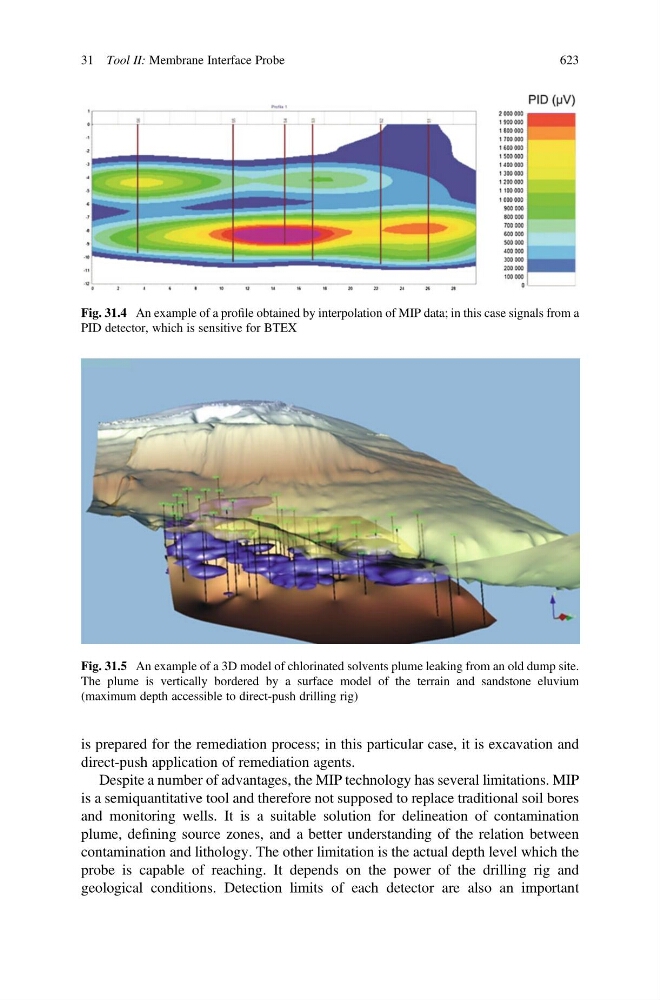
Fig. 31.4 An example of a profile obtained by interpolation of MIP data; in this case signals from a
PID detector, which is sensitive for BTEX
Fig. 31.5 An example of a 3D model of chlorinated solvents plume leaking from an old dump site.
The plume is vertically bordered by a surface model of the terrain and sandstone eluvium
(maximum depth accessible to direct-push drilling rig)
31 Tool II: Membrane Interface Probe
623