

representative of the equilibrium release conditions, and the remaining slowly
released portion is considered to be kinetically rate-limited. Therefore, the
F-fraction represents the bioaccessible portion of the target chemical that is available
for biotransformation processes in the soil (Covino et al. 2016).
25.3 Results
25.3.1 Treatment 1
The biodegradability of 13 PAHs out of the 16 compounds according to the
U.S. EPA Method 610 was investigated in Treatment 1. Naphthalene,
acenaphthylene, and acenaphthene were below the detection limit in all soils A–D.
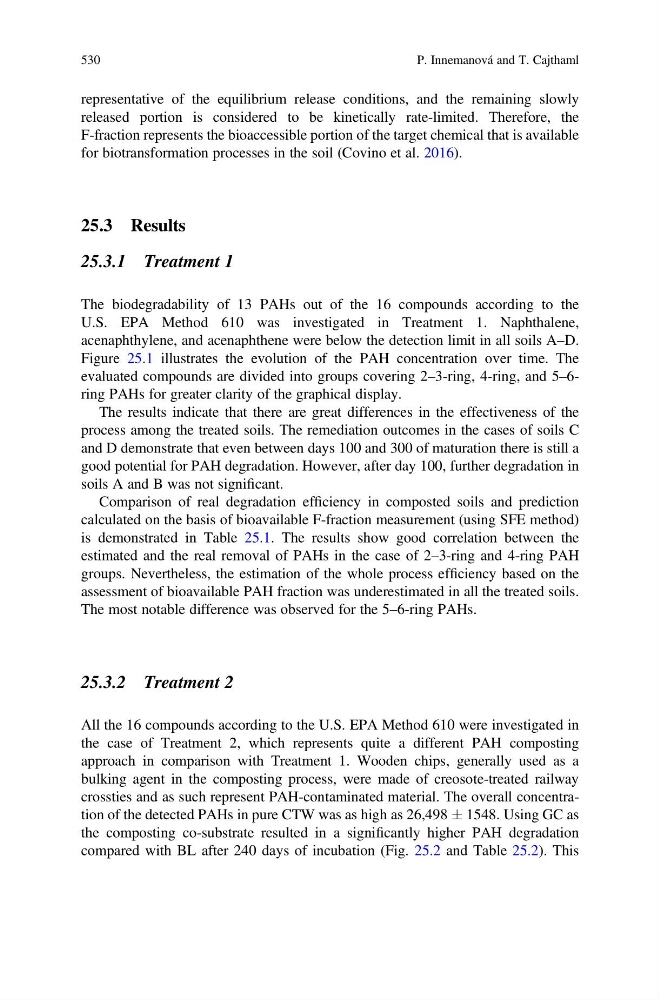
Figure 25.1 illustrates the evolution of the PAH concentration over time. The
evaluated compounds are divided into groups covering 2–3-ring, 4-ring, and 5–6ring PAHs for greater clarity of the graphical display.
The results indicate that there are great differences in the effectiveness of the
process among the treated soils. The remediation outcomes in the cases of soils C
and D demonstrate that even between days 100 and 300 of maturation there is still a
good potential for PAH degradation. However, after day 100, further degradation in
soils A and B was not significant.
Comparison of real degradation efficiency in composted soils and prediction
calculated on the basis of bioavailable F-fraction measurement (using SFE method)
is demonstrated in Table 25.1. The results show good correlation between the
estimated and the real removal of PAHs in the case of 2–3-ring and 4-ring PAH
groups. Nevertheless, the estimation of the whole process efficiency based on the
assessment of bioavailable PAH fraction was underestimated in all the treated soils.
The most notable difference was observed for the 5–6-ring PAHs.
25.3.2 Treatment 2
All the 16 compounds according to the U.S. EPA Method 610 were investigated in
the case of Treatment 2, which represents quite a different PAH composting
approach in comparison with Treatment 1. Wooden chips, generally used as a
bulking agent in the composting process, were made of creosote-treated railway
crossties and as such represent PAH-contaminated material. The overall concentration of the detected PAHs in pure CTW was as high as 26,498 Æ 1548. Using GC as
the composting co-substrate resulted in a significantly higher PAH degradation
compared with BL after 240 days of incubation (Fig. 25.2 and Table 25.2). This
530
P. Innemanová and T. Cajthaml
released portion is considered to be kinetically rate-limited. Therefore, the
F-fraction represents the bioaccessible portion of the target chemical that is available
for biotransformation processes in the soil (Covino et al. 2016).
25.3 Results
25.3.1 Treatment 1
The biodegradability of 13 PAHs out of the 16 compounds according to the
U.S. EPA Method 610 was investigated in Treatment 1. Naphthalene,
acenaphthylene, and acenaphthene were below the detection limit in all soils A–D.
Figure 25.1 illustrates the evolution of the PAH concentration over time. The
evaluated compounds are divided into groups covering 2–3-ring, 4-ring, and 5–6ring PAHs for greater clarity of the graphical display.
The results indicate that there are great differences in the effectiveness of the
process among the treated soils. The remediation outcomes in the cases of soils C
and D demonstrate that even between days 100 and 300 of maturation there is still a
good potential for PAH degradation. However, after day 100, further degradation in
soils A and B was not significant.
Comparison of real degradation efficiency in composted soils and prediction
calculated on the basis of bioavailable F-fraction measurement (using SFE method)
is demonstrated in Table 25.1. The results show good correlation between the
estimated and the real removal of PAHs in the case of 2–3-ring and 4-ring PAH
groups. Nevertheless, the estimation of the whole process efficiency based on the
assessment of bioavailable PAH fraction was underestimated in all the treated soils.
The most notable difference was observed for the 5–6-ring PAHs.
25.3.2 Treatment 2
All the 16 compounds according to the U.S. EPA Method 610 were investigated in
the case of Treatment 2, which represents quite a different PAH composting
approach in comparison with Treatment 1. Wooden chips, generally used as a
bulking agent in the composting process, were made of creosote-treated railway
crossties and as such represent PAH-contaminated material. The overall concentration of the detected PAHs in pure CTW was as high as 26,498 Æ 1548. Using GC as
the composting co-substrate resulted in a significantly higher PAH degradation
compared with BL after 240 days of incubation (Fig. 25.2 and Table 25.2). This
530
P. Innemanová and T. Cajthaml