

24.3.1 Specifics of the Use of Enzymes for Soil
Bioremediation
The efficiency of enzymes’ application, similarly to biosurfactants, strongly depends
on the soil composition and the physical properties. Thus the porosity and composition
of both mineral and biotic fractions as well as grain fraction distribution, inhomogeneities, pH, and pollutant availability must be evaluated on the contaminated site to
choose the best strategy for application of enzymes, which are still considered
expensive bioagents (Tuomela and Hatakka 2011; Quiquampoix et al. 2002).
Soil is a multiphase time-variable system consisting of mineral matter, organic
matter, water, soil air/gas, and organisms—both invertebrates and microorganisms.
Many physical, chemical, and biological interactions occur in soil on several levels of
soil structure. In addition, inhomogeneities in both structure and composition as well
as local specific processes may further hinder precise soil characterization and application of enzyme-based bioremediation procedures (Zimmerman and Ahn 2010).
Enzymes as protein-based molecules are naturally susceptible to interactions with
mineral and organic soil matter (Quiquampoix et al. 2002). Several mechanisms,
e.g., covalent attachment, physical entrapment, nonpolar and electrostatic interactions, hydrogen and ionic bonding, result in the formation of enzyme–humus or
enzyme–clay complexes (Quiquampoix et al. 2002; Zimmerman and Ahn 2010).
Sorption on soil components protects enzymes against inhibitory factors in the
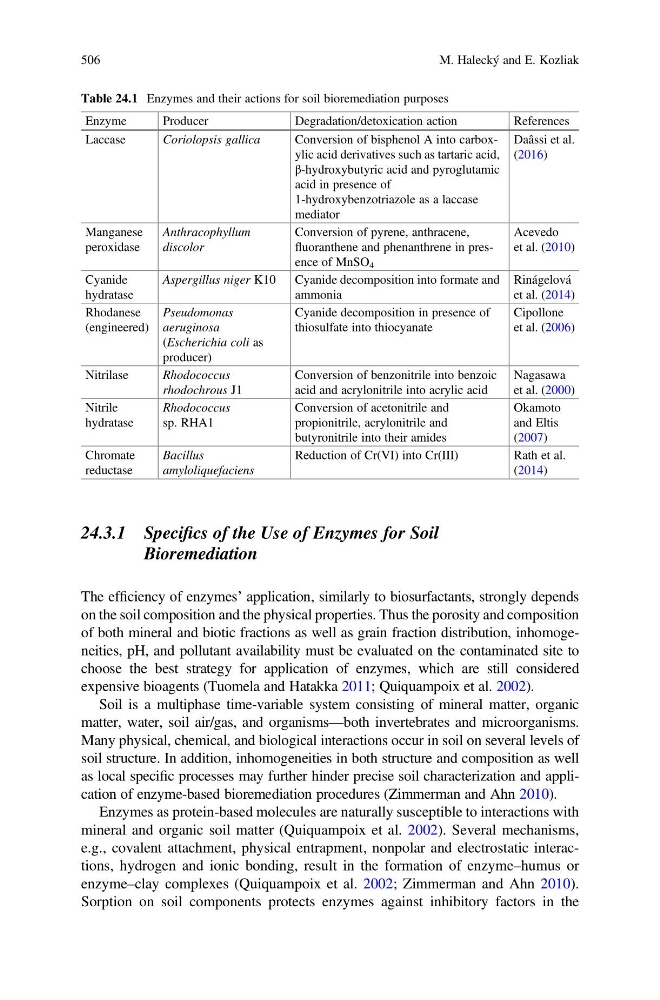
Table 24.1 Enzymes and their actions for soil bioremediation purposes
Enzyme
Producer
Degradation/detoxication action
References
Laccase
Coriolopsis gallica
Conversion of bisphenol A into carboxylic acid derivatives such as tartaric acid,
β-hydroxybutyric acid and pyroglutamic
acid in presence of
1-hydroxybenzotriazole as a laccase
mediator
Daâssi et al.
(2016)
Manganese
peroxidase
Anthracophyllum
discolor
Conversion of pyrene, anthracene,
fluoranthene and phenanthrene in presence of MnSO 4
Acevedo
et al. (2010)
Cyanide
hydratase
Aspergillus niger K10
Cyanide decomposition into formate and
ammonia
Rinágelová
et al. (2014)
Rhodanese
(engineered)
Pseudomonas
aeruginosa
(Escherichia coli as
producer)
Cyanide decomposition in presence of
thiosulfate into thiocyanate
Cipollone
et al. (2006)
Nitrilase
Rhodococcus
rhodochrous J1
Conversion of benzonitrile into benzoic
acid and acrylonitrile into acrylic acid
Nagasawa
et al. (2000)
Nitrile
hydratase
Rhodococcus
sp. RHA1
Conversion of acetonitrile and
propionitrile, acrylonitrile and
butyronitrile into their amides
Okamoto
and Eltis
(2007)
Chromate
reductase
Bacillus
amyloliquefaciens
Reduction of Cr(VI) into Cr(III)
Rath et al.
(2014)
506
M. Halecký and E. Kozliak
Bioremediation
The efficiency of enzymes’ application, similarly to biosurfactants, strongly depends
on the soil composition and the physical properties. Thus the porosity and composition
of both mineral and biotic fractions as well as grain fraction distribution, inhomogeneities, pH, and pollutant availability must be evaluated on the contaminated site to
choose the best strategy for application of enzymes, which are still considered
expensive bioagents (Tuomela and Hatakka 2011; Quiquampoix et al. 2002).
Soil is a multiphase time-variable system consisting of mineral matter, organic
matter, water, soil air/gas, and organisms—both invertebrates and microorganisms.
Many physical, chemical, and biological interactions occur in soil on several levels of
soil structure. In addition, inhomogeneities in both structure and composition as well
as local specific processes may further hinder precise soil characterization and application of enzyme-based bioremediation procedures (Zimmerman and Ahn 2010).
Enzymes as protein-based molecules are naturally susceptible to interactions with
mineral and organic soil matter (Quiquampoix et al. 2002). Several mechanisms,
e.g., covalent attachment, physical entrapment, nonpolar and electrostatic interactions, hydrogen and ionic bonding, result in the formation of enzyme–humus or
enzyme–clay complexes (Quiquampoix et al. 2002; Zimmerman and Ahn 2010).
Sorption on soil components protects enzymes against inhibitory factors in the
Table 24.1 Enzymes and their actions for soil bioremediation purposes
Enzyme
Producer
Degradation/detoxication action
References
Laccase
Coriolopsis gallica
Conversion of bisphenol A into carboxylic acid derivatives such as tartaric acid,
β-hydroxybutyric acid and pyroglutamic
acid in presence of
1-hydroxybenzotriazole as a laccase
mediator
Daâssi et al.
(2016)
Manganese
peroxidase
Anthracophyllum
discolor
Conversion of pyrene, anthracene,
fluoranthene and phenanthrene in presence of MnSO 4
Acevedo
et al. (2010)
Cyanide
hydratase
Aspergillus niger K10
Cyanide decomposition into formate and
ammonia
Rinágelová
et al. (2014)
Rhodanese
(engineered)
Pseudomonas
aeruginosa
(Escherichia coli as
producer)
Cyanide decomposition in presence of
thiosulfate into thiocyanate
Cipollone
et al. (2006)
Nitrilase
Rhodococcus
rhodochrous J1
Conversion of benzonitrile into benzoic
acid and acrylonitrile into acrylic acid
Nagasawa
et al. (2000)
Nitrile
hydratase
Rhodococcus
sp. RHA1
Conversion of acetonitrile and
propionitrile, acrylonitrile and
butyronitrile into their amides
Okamoto
and Eltis
(2007)
Chromate
reductase
Bacillus
amyloliquefaciens
Reduction of Cr(VI) into Cr(III)
Rath et al.
(2014)
506
M. Halecký and E. Kozliak