

2017), similarly to the Fenton chemistry discussed in the previous sections. In order
to activate persulfates, several approaches that are homogeneous (catalyst is in the
same phase as PS, e.g., dissolved cation) and heterogeneous (catalyst is in a different
phase than PS, e.g., solid metal particles) can be adopted.
The homogeneous (as well as homolytic) activation of persulfates was critically
reviewed and discussed by almost all the above-mentioned reviews (Ghanbari and
Moradi 2017; Matzek and Carter 2016; Wacławek et al. 2017; Wang and Wang
2018; T. Zhang et al. 2014) and book (Siegrist et al. 2011). Because of this fact, only
small part of this chapter will be devoted to these types of reaction. Persulfates can be
activated by UV (Yang et al. 2010), heat (Ghauch et al. 2012; Yang et al. 2010),
ultrasounds (Wei et al. 2017), and by homogeneous (B.-T. Zhang et al. 2015) and
heterogeneous (Hu and Long 2016; Oh et al. 2016) approaches, whereas an example
of a chemical element that can be used as a persulfates activator either as homogeneous and heterogeneous catalyst is iron (Fränzle et al. 2010; Fu et al. 2014; Hrabák
et al. 2016; Kang et al. 2018; Wacławek et al. 2015).
A very good comparison of various homogeneous activators of PDS was provided by Anipsitakis and Dionysiou who determined Ag(I) as the best activator for
PDS compared to other commonly available transition metals (Anipsitakis and
Dionysiou 2004); however, there have been more reports published on persulfates
catalysed by iron in its various valence states. Iron overall was identified as one of
the best catalytic materials for persulfates activation, especially for PDS; as for PMS,
divalent cobalt was determined to be the most efficient catalyst according to
Anipsitakis and Dionysiou (2003) and Fernandez et al. (2004). The different reasons
to explain the dominance of iron may include its price, biocompatibility, and
capability of activating PS efficiently.
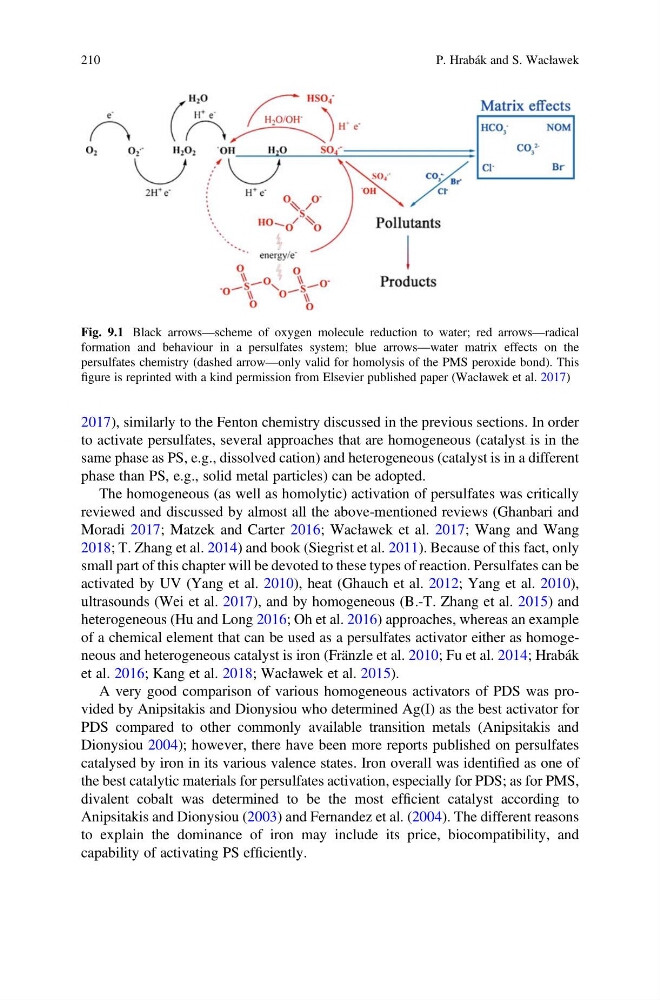
Fig. 9.1 Black arrows—scheme of oxygen molecule reduction to water; red arrows—radical
formation and behaviour in a persulfates system; blue arrows—water matrix effects on the
persulfates chemistry (dashed arrow—only valid for homolysis of the PMS peroxide bond). This
figure is reprinted with a kind permission from Elsevier published paper (Wacławek et al. 2017)
210
P. Hrabák and S. Wacławek
to activate persulfates, several approaches that are homogeneous (catalyst is in the
same phase as PS, e.g., dissolved cation) and heterogeneous (catalyst is in a different
phase than PS, e.g., solid metal particles) can be adopted.
The homogeneous (as well as homolytic) activation of persulfates was critically
reviewed and discussed by almost all the above-mentioned reviews (Ghanbari and
Moradi 2017; Matzek and Carter 2016; Wacławek et al. 2017; Wang and Wang
2018; T. Zhang et al. 2014) and book (Siegrist et al. 2011). Because of this fact, only
small part of this chapter will be devoted to these types of reaction. Persulfates can be
activated by UV (Yang et al. 2010), heat (Ghauch et al. 2012; Yang et al. 2010),
ultrasounds (Wei et al. 2017), and by homogeneous (B.-T. Zhang et al. 2015) and
heterogeneous (Hu and Long 2016; Oh et al. 2016) approaches, whereas an example
of a chemical element that can be used as a persulfates activator either as homogeneous and heterogeneous catalyst is iron (Fränzle et al. 2010; Fu et al. 2014; Hrabák
et al. 2016; Kang et al. 2018; Wacławek et al. 2015).
A very good comparison of various homogeneous activators of PDS was provided by Anipsitakis and Dionysiou who determined Ag(I) as the best activator for
PDS compared to other commonly available transition metals (Anipsitakis and
Dionysiou 2004); however, there have been more reports published on persulfates
catalysed by iron in its various valence states. Iron overall was identified as one of
the best catalytic materials for persulfates activation, especially for PDS; as for PMS,
divalent cobalt was determined to be the most efficient catalyst according to
Anipsitakis and Dionysiou (2003) and Fernandez et al. (2004). The different reasons
to explain the dominance of iron may include its price, biocompatibility, and
capability of activating PS efficiently.
Fig. 9.1 Black arrows—scheme of oxygen molecule reduction to water; red arrows—radical
formation and behaviour in a persulfates system; blue arrows—water matrix effects on the
persulfates chemistry (dashed arrow—only valid for homolysis of the PMS peroxide bond). This
figure is reprinted with a kind permission from Elsevier published paper (Wacławek et al. 2017)
210
P. Hrabák and S. Wacławek