

At present, UV/H 2 O 2 is a commercial technology and it has already been installed
in large-scale drinking water applications (Kruithof et al. 2007; Sichel et al. 2011).
The main drawback of the technology is the relatively high consumption of electrical
energy leading to considerable treatment costs.
The combination with US or a pretreatment with O 3 highly improve the UV/H 2 O 2
(Fung et al. 1999; Arslan and Balcioglu 2001). The combination UV/H 2 O 2 /O 3 is
another alternative and will be described later.
Full-scale UV/H 2 O 2 AOP installations have been described using Trojan technology (Stefan 2018b).
Recently, the concept of Electrical Energy per Order (E EO ), a figure of merit for
evaluating the energy requirements of UV AOPs in the degradation of contaminants
has been evaluated for the proper application at bench-, pilot-, and full-scale, using
sucralose as a standard substance for reactor comparison (Keen et al. 2018). E EO was
proposed as a new figure of merit (a numeric descriptor of process efficiency and a
valuable design parameter) for UV reactors to replace or complement more ambiguous performance parameters, such as cost per unit volume. E EO was introduced in
1996 to evaluate AOPs (Bolton et al. 1996), later published as a report by the IUPAC
Photochemistry Commission (Bolton et al. 2001) and in a recently published book
(Collins and Bolton 2016). The E EO is the electrical energy necessary to reduce the
concentration of a contaminant by one order of magnitude (90% reduction) in a unit
volume of water. The E EO involves only the electrical energy input to the process in
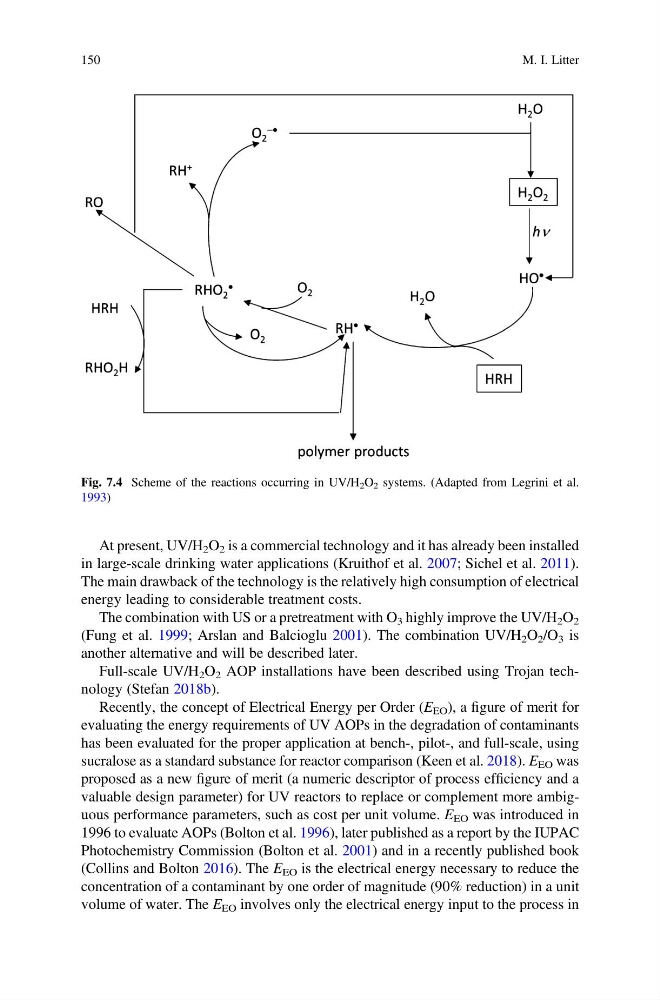
Fig. 7.4 Scheme of the reactions occurring in UV/H 2 O 2 systems. (Adapted from Legrini et al.
1993)
150
M. I. Litter
in large-scale drinking water applications (Kruithof et al. 2007; Sichel et al. 2011).
The main drawback of the technology is the relatively high consumption of electrical
energy leading to considerable treatment costs.
The combination with US or a pretreatment with O 3 highly improve the UV/H 2 O 2
(Fung et al. 1999; Arslan and Balcioglu 2001). The combination UV/H 2 O 2 /O 3 is
another alternative and will be described later.
Full-scale UV/H 2 O 2 AOP installations have been described using Trojan technology (Stefan 2018b).
Recently, the concept of Electrical Energy per Order (E EO ), a figure of merit for
evaluating the energy requirements of UV AOPs in the degradation of contaminants
has been evaluated for the proper application at bench-, pilot-, and full-scale, using
sucralose as a standard substance for reactor comparison (Keen et al. 2018). E EO was
proposed as a new figure of merit (a numeric descriptor of process efficiency and a
valuable design parameter) for UV reactors to replace or complement more ambiguous performance parameters, such as cost per unit volume. E EO was introduced in
1996 to evaluate AOPs (Bolton et al. 1996), later published as a report by the IUPAC
Photochemistry Commission (Bolton et al. 2001) and in a recently published book
(Collins and Bolton 2016). The E EO is the electrical energy necessary to reduce the
concentration of a contaminant by one order of magnitude (90% reduction) in a unit
volume of water. The E EO involves only the electrical energy input to the process in
Fig. 7.4 Scheme of the reactions occurring in UV/H 2 O 2 systems. (Adapted from Legrini et al.
1993)
150
M. I. Litter