

aliphatics, polychlorinated aliphatic compounds and aromatic hydrocarbons (toluene, pyrene, and substituted aromatics) can be destroyed. The method is excellent for
destruction of carbohydrates. In contrast with the incineration, there is little interaction with the environment and the process can be easily coupled with a biological
treatment.
It should be mentioned that mineralization is generally incomplete because of the
formation of carboxylic acids, alcohols, aldehydes, or ketones of low molecular
weight, which represents a disadvantage. Acetic and propionic acids are very
resistant and require catalysts for their destruction, and the same occurs with
halogenated aromatic compounds (1,2-dihalobenzenes, PCBs, perchlorophenols).
The low solubility of O 2 in water generates mass transfer problems, which can
limit the efficiency. The main disadvantage is the necessity of employing very
expensive construction materials.
The process known as catalyzed wet air oxidation (CWAO) (Zhang and Chuang
1999) uses homogeneous and heterogeneous catalysts to improve WAO efficiency. As
catalysts, homogeneously dissolved Cu(II) salts, Cu/activated carbon, Cu supported in
γ-alumina, Mn(V) and activated Cr compounds, Co/Bi, Mn/Cu, MnO 2 , CuO, Fe 2 O 3 ,
and Zn oxides have been used. The best results have been obtained with Pd-Pt-Ce/
alumina catalysts. The main problem of this technology is the final separation of the
catalyst. The method can be improved by Fe
2+
/H 2 O 2 injection (Zhang and Chuang
1999; Mantzavinos et al. 1996; Martino and Savage 1999). CWAO has been applied
to many different model effluents, but relatively few studies have been devoted to real
and complex industrial wastes (Tungler et al. 2015).
The oxidation with supercritical water (SCWO) (Domènech et al. 2004; Martino
and Savage 1999; Vadillo et al. 2013) uses water in supercritical conditions of
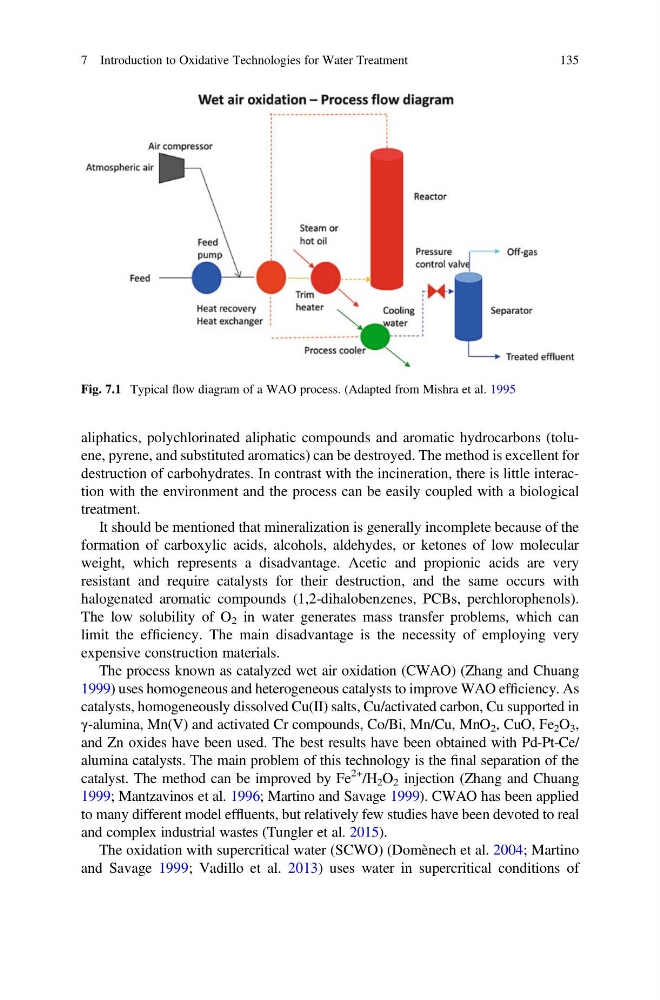
Fig. 7.1 Typical flow diagram of a WAO process. (Adapted from Mishra et al. 1995
7 Introduction to Oxidative Technologies for Water Treatment
135
destruction of carbohydrates. In contrast with the incineration, there is little interaction with the environment and the process can be easily coupled with a biological
treatment.
It should be mentioned that mineralization is generally incomplete because of the
formation of carboxylic acids, alcohols, aldehydes, or ketones of low molecular
weight, which represents a disadvantage. Acetic and propionic acids are very
resistant and require catalysts for their destruction, and the same occurs with
halogenated aromatic compounds (1,2-dihalobenzenes, PCBs, perchlorophenols).
The low solubility of O 2 in water generates mass transfer problems, which can
limit the efficiency. The main disadvantage is the necessity of employing very
expensive construction materials.
The process known as catalyzed wet air oxidation (CWAO) (Zhang and Chuang
1999) uses homogeneous and heterogeneous catalysts to improve WAO efficiency. As
catalysts, homogeneously dissolved Cu(II) salts, Cu/activated carbon, Cu supported in
γ-alumina, Mn(V) and activated Cr compounds, Co/Bi, Mn/Cu, MnO 2 , CuO, Fe 2 O 3 ,
and Zn oxides have been used. The best results have been obtained with Pd-Pt-Ce/
alumina catalysts. The main problem of this technology is the final separation of the
catalyst. The method can be improved by Fe
2+
/H 2 O 2 injection (Zhang and Chuang
1999; Mantzavinos et al. 1996; Martino and Savage 1999). CWAO has been applied
to many different model effluents, but relatively few studies have been devoted to real
and complex industrial wastes (Tungler et al. 2015).
The oxidation with supercritical water (SCWO) (Domènech et al. 2004; Martino
and Savage 1999; Vadillo et al. 2013) uses water in supercritical conditions of
Fig. 7.1 Typical flow diagram of a WAO process. (Adapted from Mishra et al. 1995
7 Introduction to Oxidative Technologies for Water Treatment
135