

gave the model QUAL I in 1970. These models are suitable for both dendritic and
non-point source pollution and are either a one-dimensional stable-state or dynamic
model. USEPA developed a WASP model in 1983, and these models are appropriate for water simulation in lakes, rivers, coastal wetlands, estuaries, and reservoirs including one, two, and three-dimensional models. Whitehead provides model
QUASAR in 1977 and is suitable for dissolving simulation of oxygen in larger
rivers and is a one-dimensional dynamic model such as modes PC QUA SAR,
QUESTOR and HERMES. The MIKE model has been developed by the Denmark
Hydrology Institute that is suitable for simulating water quality in lakes, rivers, tidal
wetlands, estuaries and is one, two or three-dimensional. In 1996, USEPA developed the BASINS model and these models are a multi-purpose environmental
analysis system and are suitable for watershed-scale analysis of water quality and
can also integrate non-point and point source pollution. Virginia Institute of Marine
Science developed the EFDC model. USEPA listed this model as a water quality
management tool in 1997 and these models are suitable for simulating water quality
in estuaries, lakes, rivers, reservoirs and wetlands [24].
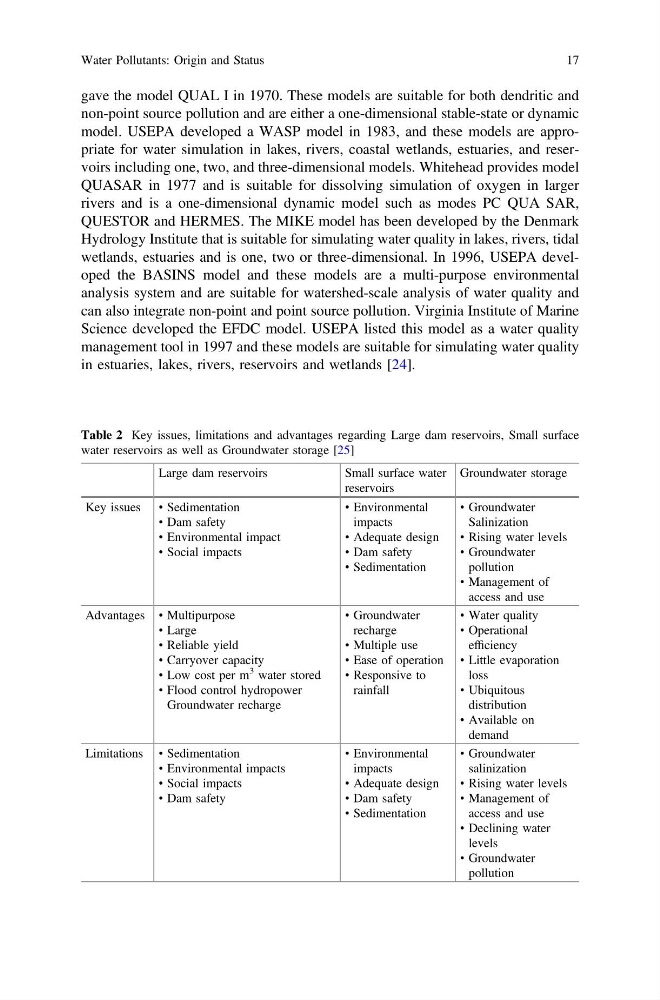
Table 2 Key issues, limitations and advantages regarding Large dam reservoirs, Small surface
water reservoirs as well as Groundwater storage [25]
Large dam reservoirs
Small surface water
reservoirs
Groundwater storage
Key issues • Sedimentation
• Dam safety
• Environmental impact
• Social impacts
• Environmental
impacts
• Adequate design
• Dam safety
• Sedimentation
• Groundwater
Salinization
• Rising water levels
• Groundwater
pollution
• Management of
access and use
Advantages • Multipurpose
• Large
• Reliable yield
• Carryover capacity
• Low cost per m
3 water stored
• Flood control hydropower
Groundwater recharge
• Groundwater
recharge
• Multiple use
• Ease of operation
• Responsive to
rainfall
• Water quality
• Operational
efficiency
• Little evaporation
loss
• Ubiquitous
distribution
• Available on
demand
Limitations • Sedimentation
• Environmental impacts
• Social impacts
• Dam safety
• Environmental
impacts
• Adequate design
• Dam safety
• Sedimentation
• Groundwater
salinization
• Rising water levels
• Management of
access and use
• Declining water
levels
• Groundwater
pollution
Water Pollutants: Origin and Status
17
non-point source pollution and are either a one-dimensional stable-state or dynamic
model. USEPA developed a WASP model in 1983, and these models are appropriate for water simulation in lakes, rivers, coastal wetlands, estuaries, and reservoirs including one, two, and three-dimensional models. Whitehead provides model
QUASAR in 1977 and is suitable for dissolving simulation of oxygen in larger
rivers and is a one-dimensional dynamic model such as modes PC QUA SAR,
QUESTOR and HERMES. The MIKE model has been developed by the Denmark
Hydrology Institute that is suitable for simulating water quality in lakes, rivers, tidal
wetlands, estuaries and is one, two or three-dimensional. In 1996, USEPA developed the BASINS model and these models are a multi-purpose environmental
analysis system and are suitable for watershed-scale analysis of water quality and
can also integrate non-point and point source pollution. Virginia Institute of Marine
Science developed the EFDC model. USEPA listed this model as a water quality
management tool in 1997 and these models are suitable for simulating water quality
in estuaries, lakes, rivers, reservoirs and wetlands [24].
Table 2 Key issues, limitations and advantages regarding Large dam reservoirs, Small surface
water reservoirs as well as Groundwater storage [25]
Large dam reservoirs
Small surface water
reservoirs
Groundwater storage
Key issues • Sedimentation
• Dam safety
• Environmental impact
• Social impacts
• Environmental
impacts
• Adequate design
• Dam safety
• Sedimentation
• Groundwater
Salinization
• Rising water levels
• Groundwater
pollution
• Management of
access and use
Advantages • Multipurpose
• Large
• Reliable yield
• Carryover capacity
• Low cost per m
3 water stored
• Flood control hydropower
Groundwater recharge
• Groundwater
recharge
• Multiple use
• Ease of operation
• Responsive to
rainfall
• Water quality
• Operational
efficiency
• Little evaporation
loss
• Ubiquitous
distribution
• Available on
demand
Limitations • Sedimentation
• Environmental impacts
• Social impacts
• Dam safety
• Environmental
impacts
• Adequate design
• Dam safety
• Sedimentation
• Groundwater
salinization
• Rising water levels
• Management of
access and use
• Declining water
levels
• Groundwater
pollution
Water Pollutants: Origin and Status
17