

55
lung damage; eye, nose, and throat irritation; headaches; nausea; fatigue; and dizziness (WHO 2010; Capelli et al. 2011).
Concerning ecophysiological studies, microalgae have shown the natural production of several VOCs (Steinke et al. 2002; Durme et al. 2013). These compounds
commonly occur as part of secondary metabolism, which plays important roles in
chemical communications (Amavizca et al. 2017). Curiously, they also act as sex
pheromones, in the chemical defense against herbivores, and suppressors of competitive neighbors (López-Pérez et al. 2017).
Microalgae in their natural habitat have been recognized as significant factories
of VOCs, including sulfates, isoprenes, and monoterpenes (Achyuthan et al. 2017).
These VOCs can be released by microalgae intracellularly and extracellularly with
the potential to cause multiple problems in water quality, such as the generation of
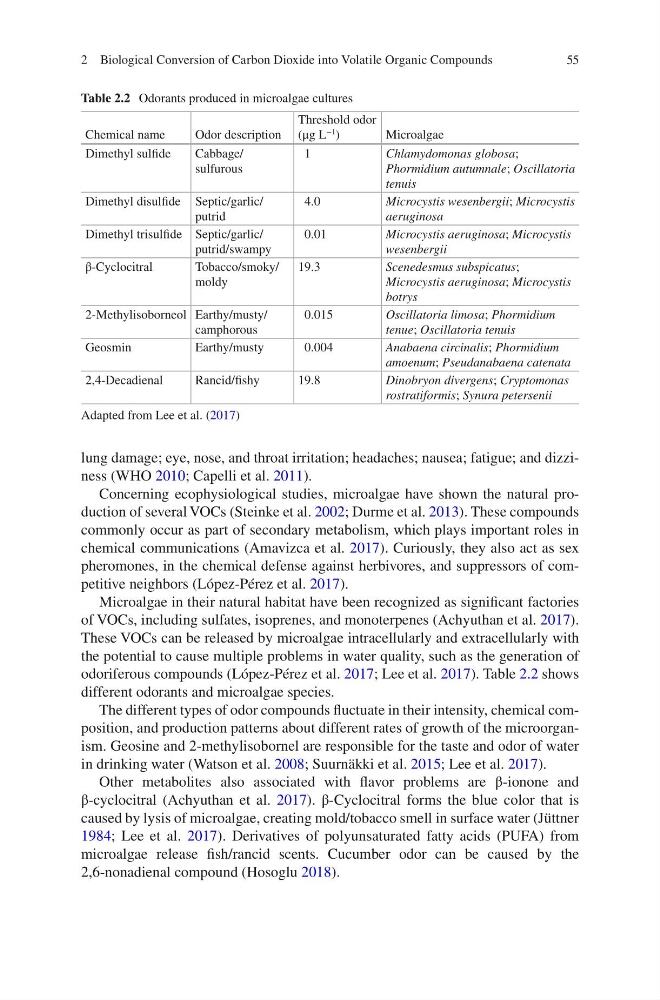
odoriferous compounds (López-Pérez et al. 2017; Lee et al. 2017). Table 2.2 shows
different odorants and microalgae species.
The different types of odor compounds fluctuate in their intensity, chemical composition, and production patterns about different rates of growth of the microorganism. Geosine and 2-methylisobornel are responsible for the taste and odor of water
in drinking water (Watson et al. 2008; Suurnäkki et al. 2015; Lee et al. 2017).
Other metabolites also associated with flavor problems are β-ionone and
β-cyclocitral (Achyuthan et al. 2017). β-Cyclocitral forms the blue color that is
caused by lysis of microalgae, creating mold/tobacco smell in surface water (Jüttner
1984; Lee et al. 2017). Derivatives of polyunsaturated fatty acids (PUFA) from
microalgae release fish/rancid scents. Cucumber odor can be caused by the
2,6- nonadienal compound (Hosoglu 2018).
Table 2.2 Odorants produced in microalgae cultures
Chemical name
Odor description
Threshold odor
(μg L
−1
)
Microalgae
Dimethyl sulfide
Cabbage/
sulfurous
1
Chlamydomonas globosa;
Phormidium autumnale; Oscillatoria
tenuis
Dimethyl disulfide Septic/garlic/
putrid
4.0
Microcystis wesenbergii; Microcystis
aeruginosa
Dimethyl trisulfide Septic/garlic/
putrid/swampy
0.01
Microcystis aeruginosa; Microcystis
wesenbergii
β-Cyclocitral
Tobacco/smoky/
moldy
19.3
Scenedesmus subspicatus;
Microcystis aeruginosa; Microcystis
botrys
2-Methylisoborneol Earthy/musty/
camphorous
0.015
Oscillatoria limosa; Phormidium
tenue; Oscillatoria tenuis
Geosmin
Earthy/musty
0.004
Anabaena circinalis; Phormidium
amoenum; Pseudanabaena catenata
2,4-Decadienal
Rancid/fishy
19.8
Dinobryon divergens; Cryptomonas
rostratiformis; Synura petersenii
Adapted from Lee et al. (2017)
2 Biological Conversion of Carbon Dioxide into Volatile Organic Compounds
lung damage; eye, nose, and throat irritation; headaches; nausea; fatigue; and dizziness (WHO 2010; Capelli et al. 2011).
Concerning ecophysiological studies, microalgae have shown the natural production of several VOCs (Steinke et al. 2002; Durme et al. 2013). These compounds
commonly occur as part of secondary metabolism, which plays important roles in
chemical communications (Amavizca et al. 2017). Curiously, they also act as sex
pheromones, in the chemical defense against herbivores, and suppressors of competitive neighbors (López-Pérez et al. 2017).
Microalgae in their natural habitat have been recognized as significant factories
of VOCs, including sulfates, isoprenes, and monoterpenes (Achyuthan et al. 2017).
These VOCs can be released by microalgae intracellularly and extracellularly with
the potential to cause multiple problems in water quality, such as the generation of
odoriferous compounds (López-Pérez et al. 2017; Lee et al. 2017). Table 2.2 shows
different odorants and microalgae species.
The different types of odor compounds fluctuate in their intensity, chemical composition, and production patterns about different rates of growth of the microorganism. Geosine and 2-methylisobornel are responsible for the taste and odor of water
in drinking water (Watson et al. 2008; Suurnäkki et al. 2015; Lee et al. 2017).
Other metabolites also associated with flavor problems are β-ionone and
β-cyclocitral (Achyuthan et al. 2017). β-Cyclocitral forms the blue color that is
caused by lysis of microalgae, creating mold/tobacco smell in surface water (Jüttner
1984; Lee et al. 2017). Derivatives of polyunsaturated fatty acids (PUFA) from
microalgae release fish/rancid scents. Cucumber odor can be caused by the
2,6- nonadienal compound (Hosoglu 2018).
Table 2.2 Odorants produced in microalgae cultures
Chemical name
Odor description
Threshold odor
(μg L
−1
)
Microalgae
Dimethyl sulfide
Cabbage/
sulfurous
1
Chlamydomonas globosa;
Phormidium autumnale; Oscillatoria
tenuis
Dimethyl disulfide Septic/garlic/
putrid
4.0
Microcystis wesenbergii; Microcystis
aeruginosa
Dimethyl trisulfide Septic/garlic/
putrid/swampy
0.01
Microcystis aeruginosa; Microcystis
wesenbergii
β-Cyclocitral
Tobacco/smoky/
moldy
19.3
Scenedesmus subspicatus;
Microcystis aeruginosa; Microcystis
botrys
2-Methylisoborneol Earthy/musty/
camphorous
0.015
Oscillatoria limosa; Phormidium
tenue; Oscillatoria tenuis
Geosmin
Earthy/musty
0.004
Anabaena circinalis; Phormidium
amoenum; Pseudanabaena catenata
2,4-Decadienal
Rancid/fishy
19.8
Dinobryon divergens; Cryptomonas
rostratiformis; Synura petersenii
Adapted from Lee et al. (2017)
2 Biological Conversion of Carbon Dioxide into Volatile Organic Compounds