

17
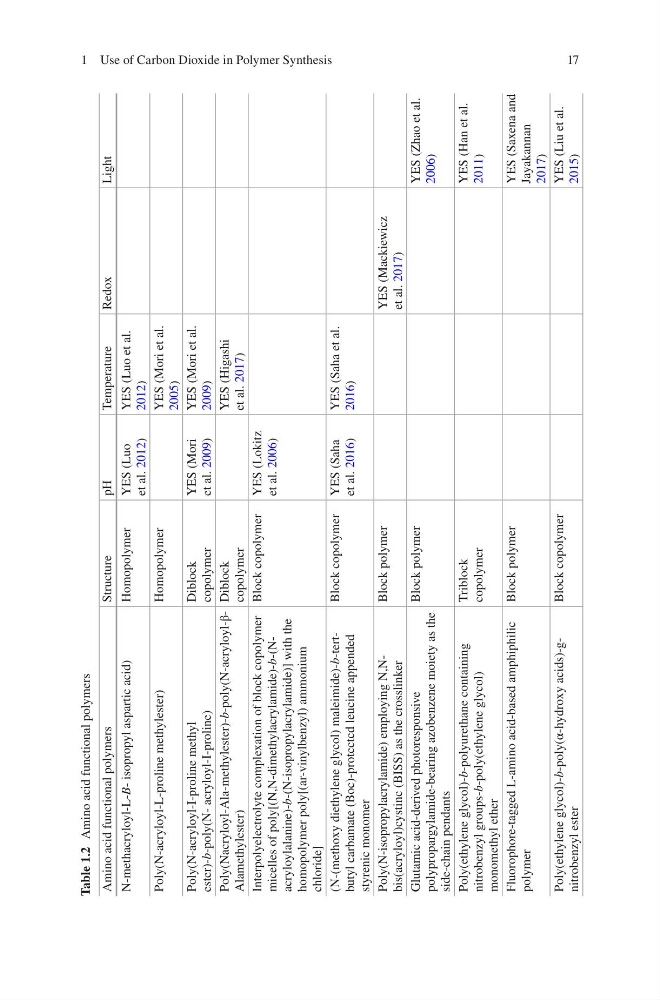
Table 1.2 Amino acid functional polymers
Amino acid functional polymers
Structure
pH
Temperature
Redox
Light
N-methacryloyl-L-B- isopropyl aspartic acid)
Homopolymer
YES (Luo
et al. 2012)
YES (Luo et al.
2012)
Poly(N-acryloyl-L-proline methylester)
Homopolymer
YES (Mori et al.
2005)
Poly(N-acryloyl-I-proline methyl
ester)-b-poly(N- acryloyl-I-proline)
Diblock
copolymer
YES (Mori
et al. 2009)
YES (Mori et al.
2009)
Poly(Nacryloyl-Ala-methylester)-b-poly(N-acryloyl-βAlamethylester)
Diblock
copolymer
YES (Higashi
et al. 2017)
Interpolyelectrolyte complexation of block copolymer
micelles of poly[(N,N-dimethylacrylamide)-b-(Nacryloylalanine)-b-(N-isopropylacrylamide)] with the
homopolymer poly[(ar-vinylbenzyl) ammonium
chloride]
Block copolymer YES (Lokitz
et al. 2006)
(N-(methoxy diethylene glycol) maleimide)-b-tertbutyl carbamate (Boc)-protcctcd leucine appended
styrenic monomer
Block copolymer YES (Saha
et al. 2016)
YES (Saha et al.
2016)
Poly(N-isopropylacrylamide) employing N,Nbis(acryloyl)cystinc (BISS) as the crosslinker
Block polymer
YES (Mackiewicz
et al. 2017)
Glutamic acid-derived photoresponsive
polypropargylamide-bearing azobenzene moiety as the
side-chain pendants
Block polymer
YES (Zhao et al.
2006)
Poly(ethylene glycol)-b-polyurethane containing
nitrobenzyl groups-b-poly(ethylene glycol)
monomethyl ether
Triblock
copolymer
YES (Han et al.
2011)
Fluorophore-tagged L-amino acid-based amphiphilic
polymer
Block polymer
YES (Saxena and
Jayakannan
2017)
Poly(ethylene glycol)-b-poly(α-hydroxy acids)-gnitrobenzyl ester
Block copolymer
YES (Liu et al.
2015)
1 Use of Carbon Dioxide in Polymer Synthesis
Table 1.2 Amino acid functional polymers
Amino acid functional polymers
Structure
pH
Temperature
Redox
Light
N-methacryloyl-L-B- isopropyl aspartic acid)
Homopolymer
YES (Luo
et al. 2012)
YES (Luo et al.
2012)
Poly(N-acryloyl-L-proline methylester)
Homopolymer
YES (Mori et al.
2005)
Poly(N-acryloyl-I-proline methyl
ester)-b-poly(N- acryloyl-I-proline)
Diblock
copolymer
YES (Mori
et al. 2009)
YES (Mori et al.
2009)
Poly(Nacryloyl-Ala-methylester)-b-poly(N-acryloyl-βAlamethylester)
Diblock
copolymer
YES (Higashi
et al. 2017)
Interpolyelectrolyte complexation of block copolymer
micelles of poly[(N,N-dimethylacrylamide)-b-(Nacryloylalanine)-b-(N-isopropylacrylamide)] with the
homopolymer poly[(ar-vinylbenzyl) ammonium
chloride]
Block copolymer YES (Lokitz
et al. 2006)
(N-(methoxy diethylene glycol) maleimide)-b-tertbutyl carbamate (Boc)-protcctcd leucine appended
styrenic monomer
Block copolymer YES (Saha
et al. 2016)
YES (Saha et al.
2016)
Poly(N-isopropylacrylamide) employing N,Nbis(acryloyl)cystinc (BISS) as the crosslinker
Block polymer
YES (Mackiewicz
et al. 2017)
Glutamic acid-derived photoresponsive
polypropargylamide-bearing azobenzene moiety as the
side-chain pendants
Block polymer
YES (Zhao et al.
2006)
Poly(ethylene glycol)-b-polyurethane containing
nitrobenzyl groups-b-poly(ethylene glycol)
monomethyl ether
Triblock
copolymer
YES (Han et al.
2011)
Fluorophore-tagged L-amino acid-based amphiphilic
polymer
Block polymer
YES (Saxena and
Jayakannan
2017)
Poly(ethylene glycol)-b-poly(α-hydroxy acids)-gnitrobenzyl ester
Block copolymer
YES (Liu et al.
2015)
1 Use of Carbon Dioxide in Polymer Synthesis