

178
Recently, the direct catalytic CO 2 hydrogenation to formaldehyde in an aqueous
media was investigated for the first time by Chan et al. (2018) using Pt/Ru promoted
on Ni and Cu catalysts supported on γ-Al 2 O 3 . Unlike CO hydrogenation to formaldehyde via a single step, the formaldehyde generation from CO 2 hydrogenation in
liquid media was hypothesized to proceed via two different pathways. As seen in
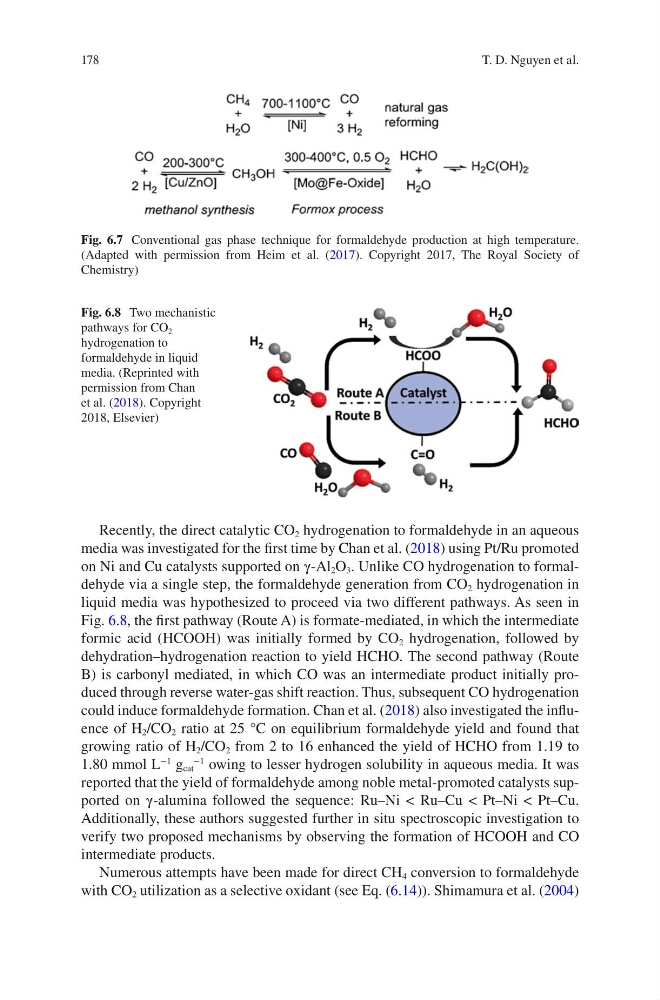
Fig. 6.8, the first pathway (Route A) is formate-mediated, in which the intermediate
formic acid (HCOOH) was initially formed by CO 2 hydrogenation, followed by
dehydration–hydrogenation reaction to yield HCHO. The second pathway (Route
B) is carbonyl mediated, in which CO was an intermediate product initially produced through reverse water-gas shift reaction. Thus, subsequent CO hydrogenation
could induce formaldehyde formation. Chan et al. (2018) also investigated the influence of H 2 /CO 2 ratio at 25 °C on equilibrium formaldehyde yield and found that
growing ratio of H 2 /CO 2 from 2 to 16 enhanced the yield of HCHO from 1.19 to
1.80 mmol L
−1
g cat
−1
owing to lesser hydrogen solubility in aqueous media. It was
reported that the yield of formaldehyde among noble metal-promoted catalysts supported on γ-alumina followed the sequence: Ru–Ni < Ru–Cu < Pt–Ni < Pt–Cu.
Additionally, these authors suggested further in situ spectroscopic investigation to
verify two proposed mechanisms by observing the formation of HCOOH and CO
intermediate products.
Numerous attempts have been made for direct CH 4 conversion to formaldehyde
with CO 2 utilization as a selective oxidant (see Eq. (6.14)). Shimamura et al. (2004)
Fig. 6.7 Conventional gas phase technique for formaldehyde production at high temperature.
(Adapted with permission from Heim et al. (2017). Copyright 2017, The Royal Society of
Chemistry)
Fig. 6.8 Two mechanistic
pathways for CO 2
hydrogenation to
formaldehyde in liquid
media. (Reprinted with
permission from Chan
et al. (2018). Copyright
2018, Elsevier)
T. D. Nguyen et al.
Recently, the direct catalytic CO 2 hydrogenation to formaldehyde in an aqueous
media was investigated for the first time by Chan et al. (2018) using Pt/Ru promoted
on Ni and Cu catalysts supported on γ-Al 2 O 3 . Unlike CO hydrogenation to formaldehyde via a single step, the formaldehyde generation from CO 2 hydrogenation in
liquid media was hypothesized to proceed via two different pathways. As seen in
Fig. 6.8, the first pathway (Route A) is formate-mediated, in which the intermediate
formic acid (HCOOH) was initially formed by CO 2 hydrogenation, followed by
dehydration–hydrogenation reaction to yield HCHO. The second pathway (Route
B) is carbonyl mediated, in which CO was an intermediate product initially produced through reverse water-gas shift reaction. Thus, subsequent CO hydrogenation
could induce formaldehyde formation. Chan et al. (2018) also investigated the influence of H 2 /CO 2 ratio at 25 °C on equilibrium formaldehyde yield and found that
growing ratio of H 2 /CO 2 from 2 to 16 enhanced the yield of HCHO from 1.19 to
1.80 mmol L
−1
g cat
−1
owing to lesser hydrogen solubility in aqueous media. It was
reported that the yield of formaldehyde among noble metal-promoted catalysts supported on γ-alumina followed the sequence: Ru–Ni < Ru–Cu < Pt–Ni < Pt–Cu.
Additionally, these authors suggested further in situ spectroscopic investigation to
verify two proposed mechanisms by observing the formation of HCOOH and CO
intermediate products.
Numerous attempts have been made for direct CH 4 conversion to formaldehyde
with CO 2 utilization as a selective oxidant (see Eq. (6.14)). Shimamura et al. (2004)
Fig. 6.7 Conventional gas phase technique for formaldehyde production at high temperature.
(Adapted with permission from Heim et al. (2017). Copyright 2017, The Royal Society of
Chemistry)
Fig. 6.8 Two mechanistic
pathways for CO 2
hydrogenation to
formaldehyde in liquid
media. (Reprinted with
permission from Chan
et al. (2018). Copyright
2018, Elsevier)
T. D. Nguyen et al.