

68
G. Murtaza et al.
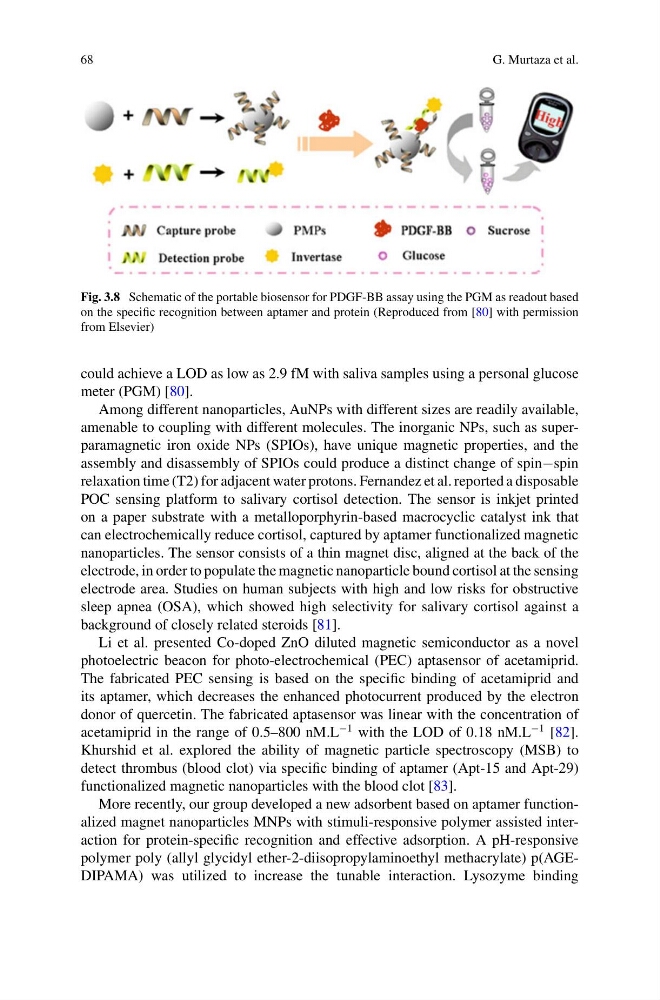
Fig. 3.8 Schematic of the portable biosensor for PDGF-BB assay using the PGM as readout based
on the specific recognition between aptamer and protein (Reproduced from [80] with permission
from Elsevier)
could achieve a LOD as low as 2.9 fM with saliva samples using a personal glucose
meter (PGM) [80].
Among different nanoparticles, AuNPs with different sizes are readily available,
amenable to coupling with different molecules. The inorganic NPs, such as superparamagnetic iron oxide NPs (SPIOs), have unique magnetic properties, and the
assembly and disassembly of SPIOs could produce a distinct change of spin−spin
relaxation time (T2) for adjacent water protons. Fernandez et al. reported a disposable
POC sensing platform to salivary cortisol detection. The sensor is inkjet printed
on a paper substrate with a metalloporphyrin-based macrocyclic catalyst ink that
can electrochemically reduce cortisol, captured by aptamer functionalized magnetic
nanoparticles. The sensor consists of a thin magnet disc, aligned at the back of the
electrode, in order to populate the magnetic nanoparticle bound cortisol at the sensing
electrode area. Studies on human subjects with high and low risks for obstructive
sleep apnea (OSA), which showed high selectivity for salivary cortisol against a
background of closely related steroids [81].
Li et al. presented Co-doped ZnO diluted magnetic semiconductor as a novel
photoelectric beacon for photo-electrochemical (PEC) aptasensor of acetamiprid.
The fabricated PEC sensing is based on the specific binding of acetamiprid and
its aptamer, which decreases the enhanced photocurrent produced by the electron
donor of quercetin. The fabricated aptasensor was linear with the concentration of
acetamiprid in the range of 0.5–800 nM.L
−1 with the LOD of 0.18 nM.L
−1 [82].
Khurshid et al. explored the ability of magnetic particle spectroscopy (MSB) to
detect thrombus (blood clot) via specific binding of aptamer (Apt-15 and Apt-29)
functionalized magnetic nanoparticles with the blood clot [83].
More recently, our group developed a new adsorbent based on aptamer functionalized magnet nanoparticles MNPs with stimuli-responsive polymer assisted interaction for protein-specific recognition and effective adsorption. A pH-responsive
polymer poly (allyl glycidyl ether-2-diisopropylaminoethyl methacrylate) p(AGEDIPAMA) was utilized to increase the tunable interaction. Lysozyme binding
G. Murtaza et al.
Fig. 3.8 Schematic of the portable biosensor for PDGF-BB assay using the PGM as readout based
on the specific recognition between aptamer and protein (Reproduced from [80] with permission
from Elsevier)
could achieve a LOD as low as 2.9 fM with saliva samples using a personal glucose
meter (PGM) [80].
Among different nanoparticles, AuNPs with different sizes are readily available,
amenable to coupling with different molecules. The inorganic NPs, such as superparamagnetic iron oxide NPs (SPIOs), have unique magnetic properties, and the
assembly and disassembly of SPIOs could produce a distinct change of spin−spin
relaxation time (T2) for adjacent water protons. Fernandez et al. reported a disposable
POC sensing platform to salivary cortisol detection. The sensor is inkjet printed
on a paper substrate with a metalloporphyrin-based macrocyclic catalyst ink that
can electrochemically reduce cortisol, captured by aptamer functionalized magnetic
nanoparticles. The sensor consists of a thin magnet disc, aligned at the back of the
electrode, in order to populate the magnetic nanoparticle bound cortisol at the sensing
electrode area. Studies on human subjects with high and low risks for obstructive
sleep apnea (OSA), which showed high selectivity for salivary cortisol against a
background of closely related steroids [81].
Li et al. presented Co-doped ZnO diluted magnetic semiconductor as a novel
photoelectric beacon for photo-electrochemical (PEC) aptasensor of acetamiprid.
The fabricated PEC sensing is based on the specific binding of acetamiprid and
its aptamer, which decreases the enhanced photocurrent produced by the electron
donor of quercetin. The fabricated aptasensor was linear with the concentration of
acetamiprid in the range of 0.5–800 nM.L
−1 with the LOD of 0.18 nM.L
−1 [82].
Khurshid et al. explored the ability of magnetic particle spectroscopy (MSB) to
detect thrombus (blood clot) via specific binding of aptamer (Apt-15 and Apt-29)
functionalized magnetic nanoparticles with the blood clot [83].
More recently, our group developed a new adsorbent based on aptamer functionalized magnet nanoparticles MNPs with stimuli-responsive polymer assisted interaction for protein-specific recognition and effective adsorption. A pH-responsive
polymer poly (allyl glycidyl ether-2-diisopropylaminoethyl methacrylate) p(AGEDIPAMA) was utilized to increase the tunable interaction. Lysozyme binding