

14 Perspectives of Aptamers for Medical Applications
441
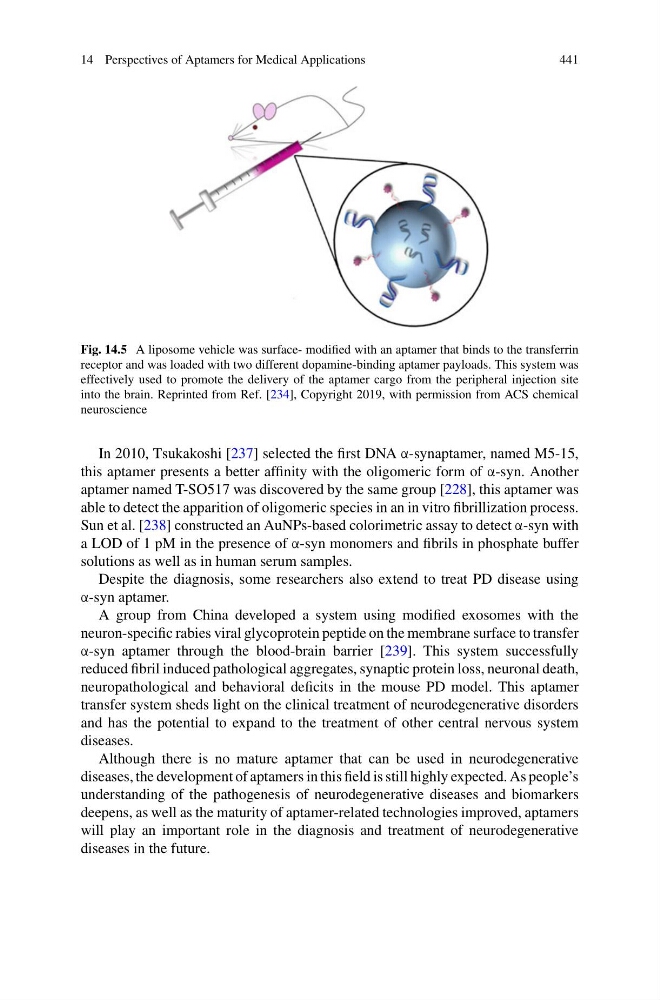
Fig. 14.5 A liposome vehicle was surface- modified with an aptamer that binds to the transferrin
receptor and was loaded with two different dopamine-binding aptamer payloads. This system was
effectively used to promote the delivery of the aptamer cargo from the peripheral injection site
into the brain. Reprinted from Ref. [234], Copyright 2019, with permission from ACS chemical
neuroscience
In 2010, Tsukakoshi [237] selected the first DNA α-synaptamer, named M5-15,
this aptamer presents a better affinity with the oligomeric form of α-syn. Another
aptamer named T-SO517 was discovered by the same group [228], this aptamer was
able to detect the apparition of oligomeric species in an in vitro fibrillization process.
Sun et al. [238] constructed an AuNPs-based colorimetric assay to detect α-syn with
a LOD of 1 pM in the presence of α-syn monomers and fibrils in phosphate buffer
solutions as well as in human serum samples.
Despite the diagnosis, some researchers also extend to treat PD disease using
α-syn aptamer.
A group from China developed a system using modified exosomes with the
neuron-specific rabies viral glycoprotein peptide on the membrane surface to transfer
α-syn aptamer through the blood-brain barrier [239]. This system successfully
reduced fibril induced pathological aggregates, synaptic protein loss, neuronal death,
neuropathological and behavioral deficits in the mouse PD model. This aptamer
transfer system sheds light on the clinical treatment of neurodegenerative disorders
and has the potential to expand to the treatment of other central nervous system
diseases.
Although there is no mature aptamer that can be used in neurodegenerative
diseases, the development of aptamers in this field is still highly expected. As people’s
understanding of the pathogenesis of neurodegenerative diseases and biomarkers
deepens, as well as the maturity of aptamer-related technologies improved, aptamers
will play an important role in the diagnosis and treatment of neurodegenerative
diseases in the future.
441
Fig. 14.5 A liposome vehicle was surface- modified with an aptamer that binds to the transferrin
receptor and was loaded with two different dopamine-binding aptamer payloads. This system was
effectively used to promote the delivery of the aptamer cargo from the peripheral injection site
into the brain. Reprinted from Ref. [234], Copyright 2019, with permission from ACS chemical
neuroscience
In 2010, Tsukakoshi [237] selected the first DNA α-synaptamer, named M5-15,
this aptamer presents a better affinity with the oligomeric form of α-syn. Another
aptamer named T-SO517 was discovered by the same group [228], this aptamer was
able to detect the apparition of oligomeric species in an in vitro fibrillization process.
Sun et al. [238] constructed an AuNPs-based colorimetric assay to detect α-syn with
a LOD of 1 pM in the presence of α-syn monomers and fibrils in phosphate buffer
solutions as well as in human serum samples.
Despite the diagnosis, some researchers also extend to treat PD disease using
α-syn aptamer.
A group from China developed a system using modified exosomes with the
neuron-specific rabies viral glycoprotein peptide on the membrane surface to transfer
α-syn aptamer through the blood-brain barrier [239]. This system successfully
reduced fibril induced pathological aggregates, synaptic protein loss, neuronal death,
neuropathological and behavioral deficits in the mouse PD model. This aptamer
transfer system sheds light on the clinical treatment of neurodegenerative disorders
and has the potential to expand to the treatment of other central nervous system
diseases.
Although there is no mature aptamer that can be used in neurodegenerative
diseases, the development of aptamers in this field is still highly expected. As people’s
understanding of the pathogenesis of neurodegenerative diseases and biomarkers
deepens, as well as the maturity of aptamer-related technologies improved, aptamers
will play an important role in the diagnosis and treatment of neurodegenerative
diseases in the future.