

11 Hormone Aptamers in Endocrine-Related Diseases
341
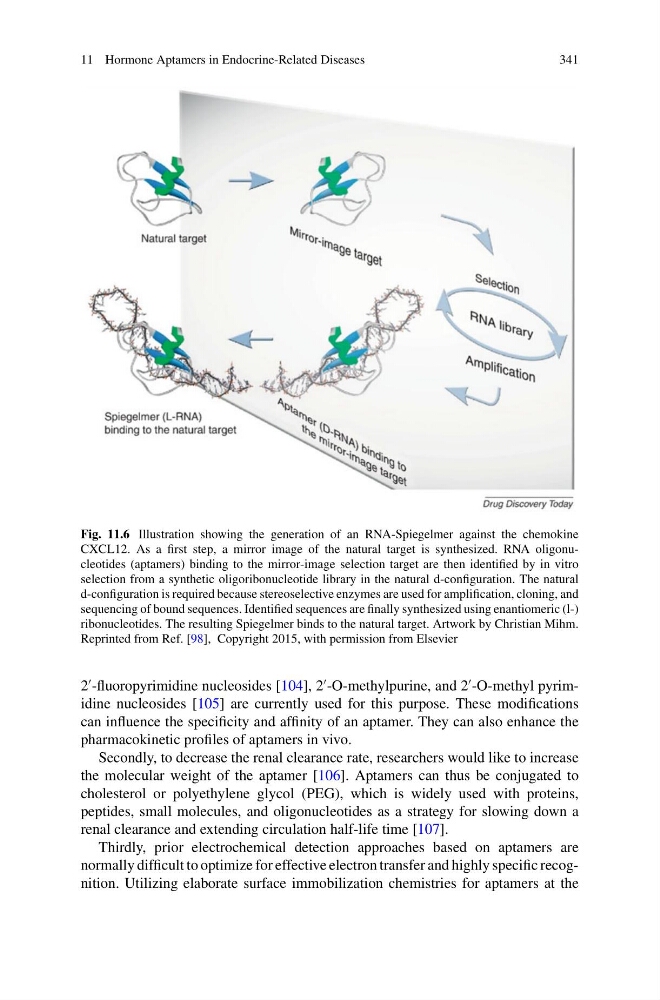
Fig. 11.6 Illustration showing the generation of an RNA-Spiegelmer against the chemokine
CXCL12. As a first step, a mirror image of the natural target is synthesized. RNA oligonucleotides (aptamers) binding to the mirror-image selection target are then identified by in vitro
selection from a synthetic oligoribonucleotide library in the natural d-configuration. The natural
d-configuration is required because stereoselective enzymes are used for amplification, cloning, and
sequencing of bound sequences. Identified sequences are finally synthesized using enantiomeric (l-)
ribonucleotides. The resulting Spiegelmer binds to the natural target. Artwork by Christian Mihm.
Reprinted from Ref. [98], Copyright 2015, with permission from Elsevier
2
-fluoropyrimidine nucleosides [104], 2
-O-methylpurine, and 2
-O-methyl pyrimidine nucleosides [105] are currently used for this purpose. These modifications
can influence the specificity and affinity of an aptamer. They can also enhance the
pharmacokinetic profiles of aptamers in vivo.
Secondly, to decrease the renal clearance rate, researchers would like to increase
the molecular weight of the aptamer [106]. Aptamers can thus be conjugated to
cholesterol or polyethylene glycol (PEG), which is widely used with proteins,
peptides, small molecules, and oligonucleotides as a strategy for slowing down a
renal clearance and extending circulation half-life time [107].
Thirdly, prior electrochemical detection approaches based on aptamers are
normally difficult to optimize for effective electron transfer and highly specific recognition. Utilizing elaborate surface immobilization chemistries for aptamers at the
341
Fig. 11.6 Illustration showing the generation of an RNA-Spiegelmer against the chemokine
CXCL12. As a first step, a mirror image of the natural target is synthesized. RNA oligonucleotides (aptamers) binding to the mirror-image selection target are then identified by in vitro
selection from a synthetic oligoribonucleotide library in the natural d-configuration. The natural
d-configuration is required because stereoselective enzymes are used for amplification, cloning, and
sequencing of bound sequences. Identified sequences are finally synthesized using enantiomeric (l-)
ribonucleotides. The resulting Spiegelmer binds to the natural target. Artwork by Christian Mihm.
Reprinted from Ref. [98], Copyright 2015, with permission from Elsevier
2
-fluoropyrimidine nucleosides [104], 2
-O-methylpurine, and 2
-O-methyl pyrimidine nucleosides [105] are currently used for this purpose. These modifications
can influence the specificity and affinity of an aptamer. They can also enhance the
pharmacokinetic profiles of aptamers in vivo.
Secondly, to decrease the renal clearance rate, researchers would like to increase
the molecular weight of the aptamer [106]. Aptamers can thus be conjugated to
cholesterol or polyethylene glycol (PEG), which is widely used with proteins,
peptides, small molecules, and oligonucleotides as a strategy for slowing down a
renal clearance and extending circulation half-life time [107].
Thirdly, prior electrochemical detection approaches based on aptamers are
normally difficult to optimize for effective electron transfer and highly specific recognition. Utilizing elaborate surface immobilization chemistries for aptamers at the