

296
W. Li et al.
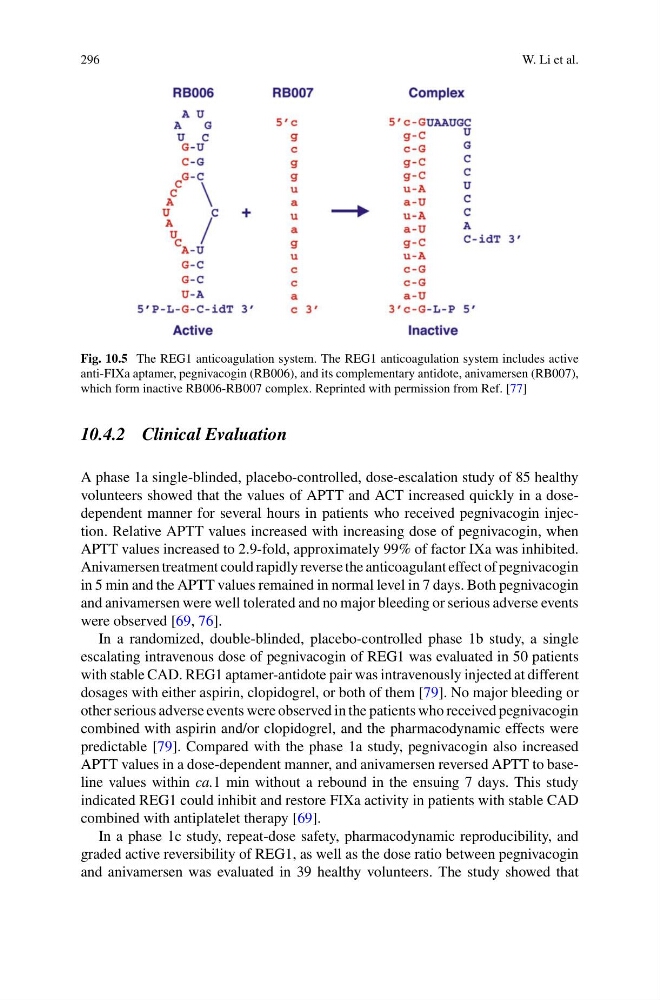
Fig. 10.5 The REG1 anticoagulation system. The REG1 anticoagulation system includes active
anti-FIXa aptamer, pegnivacogin (RB006), and its complementary antidote, anivamersen (RB007),
which form inactive RB006-RB007 complex. Reprinted with permission from Ref. [77]
10.4.2 Clinical Evaluation
A phase 1a single-blinded, placebo-controlled, dose-escalation study of 85 healthy
volunteers showed that the values of APTT and ACT increased quickly in a dosedependent manner for several hours in patients who received pegnivacogin injection. Relative APTT values increased with increasing dose of pegnivacogin, when
APTT values increased to 2.9-fold, approximately 99% of factor IXa was inhibited.
Anivamersen treatment could rapidly reverse the anticoagulant effect of pegnivacogin
in 5 min and the APTT values remained in normal level in 7 days. Both pegnivacogin
and anivamersen were well tolerated and no major bleeding or serious adverse events
were observed [69, 76].
In a randomized, double-blinded, placebo-controlled phase 1b study, a single
escalating intravenous dose of pegnivacogin of REG1 was evaluated in 50 patients
with stable CAD. REG1 aptamer-antidote pair was intravenously injected at different
dosages with either aspirin, clopidogrel, or both of them [79]. No major bleeding or
other serious adverse events were observed in the patients who received pegnivacogin
combined with aspirin and/or clopidogrel, and the pharmacodynamic effects were
predictable [79]. Compared with the phase 1a study, pegnivacogin also increased
APTT values in a dose-dependent manner, and anivamersen reversed APTT to baseline values within ca.1 min without a rebound in the ensuing 7 days. This study
indicated REG1 could inhibit and restore FIXa activity in patients with stable CAD
combined with antiplatelet therapy [69].
In a phase 1c study, repeat-dose safety, pharmacodynamic reproducibility, and
graded active reversibility of REG1, as well as the dose ratio between pegnivacogin
and anivamersen was evaluated in 39 healthy volunteers. The study showed that
W. Li et al.
Fig. 10.5 The REG1 anticoagulation system. The REG1 anticoagulation system includes active
anti-FIXa aptamer, pegnivacogin (RB006), and its complementary antidote, anivamersen (RB007),
which form inactive RB006-RB007 complex. Reprinted with permission from Ref. [77]
10.4.2 Clinical Evaluation
A phase 1a single-blinded, placebo-controlled, dose-escalation study of 85 healthy
volunteers showed that the values of APTT and ACT increased quickly in a dosedependent manner for several hours in patients who received pegnivacogin injection. Relative APTT values increased with increasing dose of pegnivacogin, when
APTT values increased to 2.9-fold, approximately 99% of factor IXa was inhibited.
Anivamersen treatment could rapidly reverse the anticoagulant effect of pegnivacogin
in 5 min and the APTT values remained in normal level in 7 days. Both pegnivacogin
and anivamersen were well tolerated and no major bleeding or serious adverse events
were observed [69, 76].
In a randomized, double-blinded, placebo-controlled phase 1b study, a single
escalating intravenous dose of pegnivacogin of REG1 was evaluated in 50 patients
with stable CAD. REG1 aptamer-antidote pair was intravenously injected at different
dosages with either aspirin, clopidogrel, or both of them [79]. No major bleeding or
other serious adverse events were observed in the patients who received pegnivacogin
combined with aspirin and/or clopidogrel, and the pharmacodynamic effects were
predictable [79]. Compared with the phase 1a study, pegnivacogin also increased
APTT values in a dose-dependent manner, and anivamersen reversed APTT to baseline values within ca.1 min without a rebound in the ensuing 7 days. This study
indicated REG1 could inhibit and restore FIXa activity in patients with stable CAD
combined with antiplatelet therapy [69].
In a phase 1c study, repeat-dose safety, pharmacodynamic reproducibility, and
graded active reversibility of REG1, as well as the dose ratio between pegnivacogin
and anivamersen was evaluated in 39 healthy volunteers. The study showed that