

1 Introduction of Aptamer, SELEX, and Different SELEX Variants
19
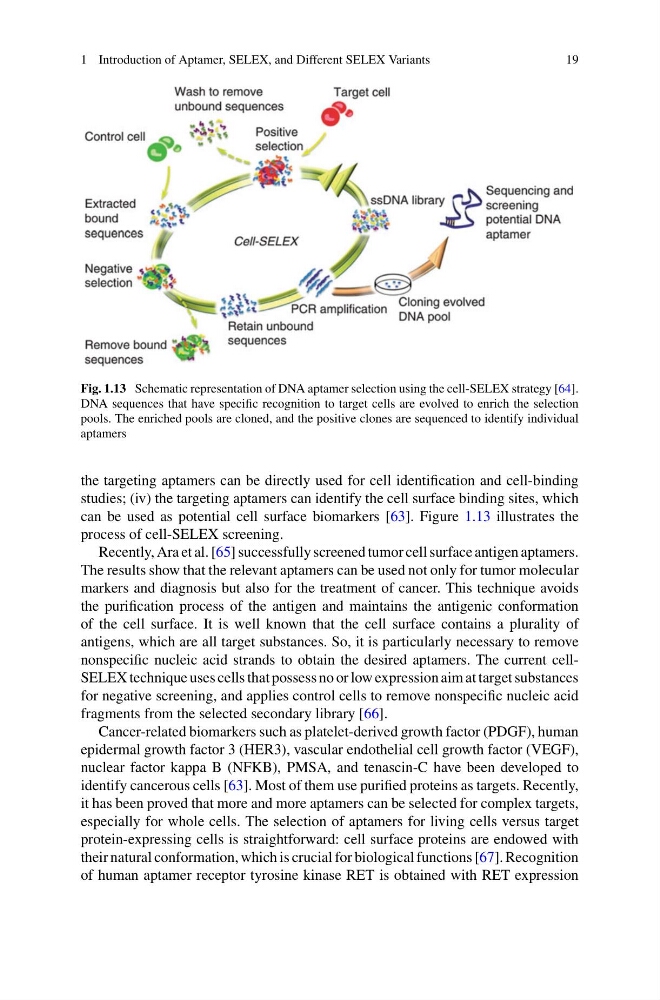
Fig. 1.13 Schematic representation of DNA aptamer selection using the cell-SELEX strategy [64].
DNA sequences that have specific recognition to target cells are evolved to enrich the selection
pools. The enriched pools are cloned, and the positive clones are sequenced to identify individual
aptamers
the targeting aptamers can be directly used for cell identification and cell-binding
studies; (iv) the targeting aptamers can identify the cell surface binding sites, which
can be used as potential cell surface biomarkers [63]. Figure 1.13 illustrates the
process of cell-SELEX screening.
Recently, Ara et al. [65] successfully screened tumor cell surface antigen aptamers.
The results show that the relevant aptamers can be used not only for tumor molecular
markers and diagnosis but also for the treatment of cancer. This technique avoids
the purification process of the antigen and maintains the antigenic conformation
of the cell surface. It is well known that the cell surface contains a plurality of
antigens, which are all target substances. So, it is particularly necessary to remove
nonspecific nucleic acid strands to obtain the desired aptamers. The current cellSELEX technique uses cells that possess no or low expression aim at target substances
for negative screening, and applies control cells to remove nonspecific nucleic acid
fragments from the selected secondary library [66].
Cancer-related biomarkers such as platelet-derived growth factor (PDGF), human
epidermal growth factor 3 (HER3), vascular endothelial cell growth factor (VEGF),
nuclear factor kappa B (NFKB), PMSA, and tenascin-C have been developed to
identify cancerous cells [63]. Most of them use purified proteins as targets. Recently,
it has been proved that more and more aptamers can be selected for complex targets,
especially for whole cells. The selection of aptamers for living cells versus target
protein-expressing cells is straightforward: cell surface proteins are endowed with
their natural conformation, which is crucial for biological functions [67]. Recognition
of human aptamer receptor tyrosine kinase RET is obtained with RET expression
19
Fig. 1.13 Schematic representation of DNA aptamer selection using the cell-SELEX strategy [64].
DNA sequences that have specific recognition to target cells are evolved to enrich the selection
pools. The enriched pools are cloned, and the positive clones are sequenced to identify individual
aptamers
the targeting aptamers can be directly used for cell identification and cell-binding
studies; (iv) the targeting aptamers can identify the cell surface binding sites, which
can be used as potential cell surface biomarkers [63]. Figure 1.13 illustrates the
process of cell-SELEX screening.
Recently, Ara et al. [65] successfully screened tumor cell surface antigen aptamers.
The results show that the relevant aptamers can be used not only for tumor molecular
markers and diagnosis but also for the treatment of cancer. This technique avoids
the purification process of the antigen and maintains the antigenic conformation
of the cell surface. It is well known that the cell surface contains a plurality of
antigens, which are all target substances. So, it is particularly necessary to remove
nonspecific nucleic acid strands to obtain the desired aptamers. The current cellSELEX technique uses cells that possess no or low expression aim at target substances
for negative screening, and applies control cells to remove nonspecific nucleic acid
fragments from the selected secondary library [66].
Cancer-related biomarkers such as platelet-derived growth factor (PDGF), human
epidermal growth factor 3 (HER3), vascular endothelial cell growth factor (VEGF),
nuclear factor kappa B (NFKB), PMSA, and tenascin-C have been developed to
identify cancerous cells [63]. Most of them use purified proteins as targets. Recently,
it has been proved that more and more aptamers can be selected for complex targets,
especially for whole cells. The selection of aptamers for living cells versus target
protein-expressing cells is straightforward: cell surface proteins are endowed with
their natural conformation, which is crucial for biological functions [67]. Recognition
of human aptamer receptor tyrosine kinase RET is obtained with RET expression