

10 Aptamers for Thrombotic Diseases
287
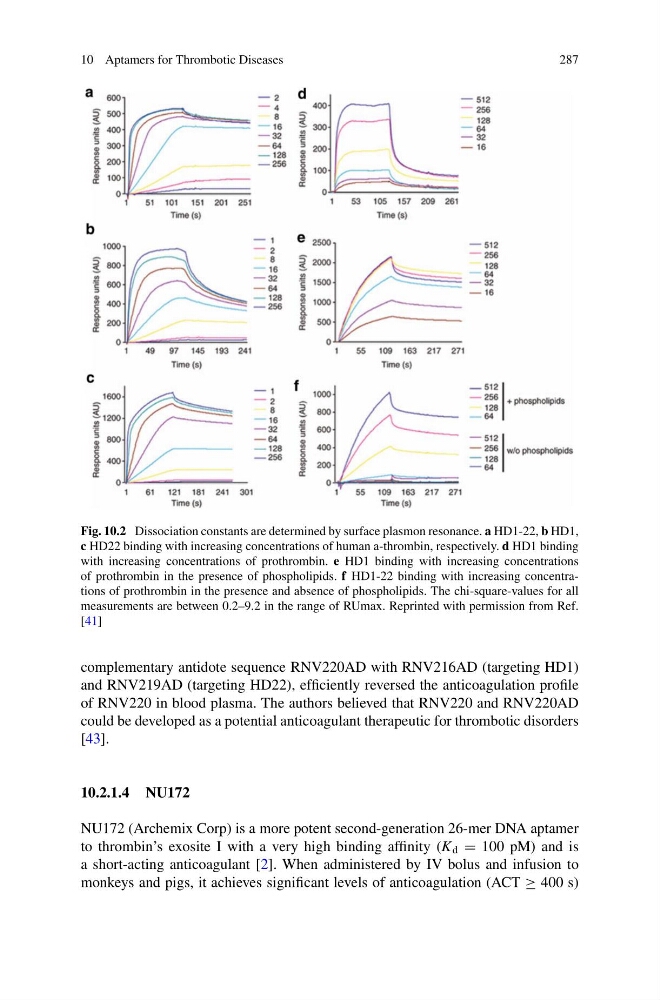
Fig. 10.2 Dissociation constants are determined by surface plasmon resonance. a HD1-22, b HD1,
c HD22 binding with increasing concentrations of human a-thrombin, respectively. d HD1 binding
with increasing concentrations of prothrombin. e HD1 binding with increasing concentrations
of prothrombin in the presence of phospholipids. f HD1-22 binding with increasing concentrations of prothrombin in the presence and absence of phospholipids. The chi-square-values for all
measurements are between 0.2–9.2 in the range of RUmax. Reprinted with permission from Ref.
[41]
complementary antidote sequence RNV220AD with RNV216AD (targeting HD1)
and RNV219AD (targeting HD22), efficiently reversed the anticoagulation profile
of RNV220 in blood plasma. The authors believed that RNV220 and RNV220AD
could be developed as a potential anticoagulant therapeutic for thrombotic disorders
[43].
10.2.1.4 NU172
NU172 (Archemix Corp) is a more potent second-generation 26-mer DNA aptamer
to thrombin’s exosite I with a very high binding affinity (K d = 100 pM) and is
a short-acting anticoagulant [2]. When administered by IV bolus and infusion to
monkeys and pigs, it achieves significant levels of anticoagulation (ACT ≥ 400 s)
287
Fig. 10.2 Dissociation constants are determined by surface plasmon resonance. a HD1-22, b HD1,
c HD22 binding with increasing concentrations of human a-thrombin, respectively. d HD1 binding
with increasing concentrations of prothrombin. e HD1 binding with increasing concentrations
of prothrombin in the presence of phospholipids. f HD1-22 binding with increasing concentrations of prothrombin in the presence and absence of phospholipids. The chi-square-values for all
measurements are between 0.2–9.2 in the range of RUmax. Reprinted with permission from Ref.
[41]
complementary antidote sequence RNV220AD with RNV216AD (targeting HD1)
and RNV219AD (targeting HD22), efficiently reversed the anticoagulation profile
of RNV220 in blood plasma. The authors believed that RNV220 and RNV220AD
could be developed as a potential anticoagulant therapeutic for thrombotic disorders
[43].
10.2.1.4 NU172
NU172 (Archemix Corp) is a more potent second-generation 26-mer DNA aptamer
to thrombin’s exosite I with a very high binding affinity (K d = 100 pM) and is
a short-acting anticoagulant [2]. When administered by IV bolus and infusion to
monkeys and pigs, it achieves significant levels of anticoagulation (ACT ≥ 400 s)