

280
W. Li et al.
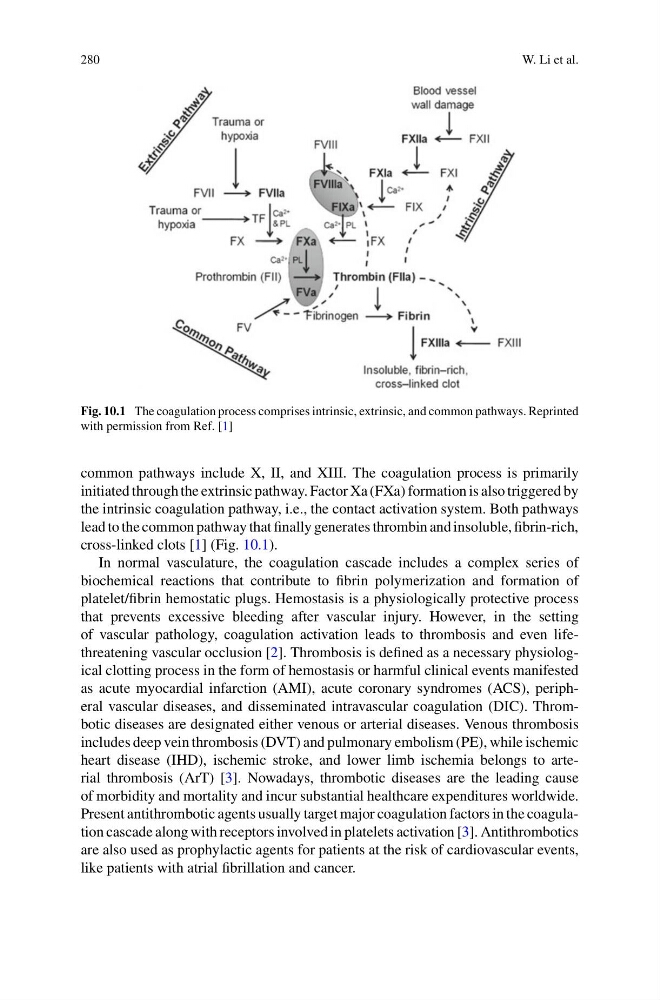
Fig. 10.1 The coagulation process comprises intrinsic, extrinsic, and common pathways. Reprinted
with permission from Ref. [1]
common pathways include X, II, and XIII. The coagulation process is primarily
initiated through the extrinsic pathway. Factor Xa (FXa) formation is also triggered by
the intrinsic coagulation pathway, i.e., the contact activation system. Both pathways
lead to the common pathway that finally generates thrombin and insoluble, fibrin-rich,
cross-linked clots [1] (Fig. 10.1).
In normal vasculature, the coagulation cascade includes a complex series of
biochemical reactions that contribute to fibrin polymerization and formation of
platelet/fibrin hemostatic plugs. Hemostasis is a physiologically protective process
that prevents excessive bleeding after vascular injury. However, in the setting
of vascular pathology, coagulation activation leads to thrombosis and even lifethreatening vascular occlusion [2]. Thrombosis is defined as a necessary physiological clotting process in the form of hemostasis or harmful clinical events manifested
as acute myocardial infarction (AMI), acute coronary syndromes (ACS), peripheral vascular diseases, and disseminated intravascular coagulation (DIC). Thrombotic diseases are designated either venous or arterial diseases. Venous thrombosis
includes deep vein thrombosis (DVT) and pulmonary embolism (PE), while ischemic
heart disease (IHD), ischemic stroke, and lower limb ischemia belongs to arterial thrombosis (ArT) [3]. Nowadays, thrombotic diseases are the leading cause
of morbidity and mortality and incur substantial healthcare expenditures worldwide.
Present antithrombotic agents usually target major coagulation factors in the coagulation cascade along with receptors involved in platelets activation [3]. Antithrombotics
are also used as prophylactic agents for patients at the risk of cardiovascular events,
like patients with atrial fibrillation and cancer.
W. Li et al.
Fig. 10.1 The coagulation process comprises intrinsic, extrinsic, and common pathways. Reprinted
with permission from Ref. [1]
common pathways include X, II, and XIII. The coagulation process is primarily
initiated through the extrinsic pathway. Factor Xa (FXa) formation is also triggered by
the intrinsic coagulation pathway, i.e., the contact activation system. Both pathways
lead to the common pathway that finally generates thrombin and insoluble, fibrin-rich,
cross-linked clots [1] (Fig. 10.1).
In normal vasculature, the coagulation cascade includes a complex series of
biochemical reactions that contribute to fibrin polymerization and formation of
platelet/fibrin hemostatic plugs. Hemostasis is a physiologically protective process
that prevents excessive bleeding after vascular injury. However, in the setting
of vascular pathology, coagulation activation leads to thrombosis and even lifethreatening vascular occlusion [2]. Thrombosis is defined as a necessary physiological clotting process in the form of hemostasis or harmful clinical events manifested
as acute myocardial infarction (AMI), acute coronary syndromes (ACS), peripheral vascular diseases, and disseminated intravascular coagulation (DIC). Thrombotic diseases are designated either venous or arterial diseases. Venous thrombosis
includes deep vein thrombosis (DVT) and pulmonary embolism (PE), while ischemic
heart disease (IHD), ischemic stroke, and lower limb ischemia belongs to arterial thrombosis (ArT) [3]. Nowadays, thrombotic diseases are the leading cause
of morbidity and mortality and incur substantial healthcare expenditures worldwide.
Present antithrombotic agents usually target major coagulation factors in the coagulation cascade along with receptors involved in platelets activation [3]. Antithrombotics
are also used as prophylactic agents for patients at the risk of cardiovascular events,
like patients with atrial fibrillation and cancer.