

1 Introduction of Aptamer, SELEX, and Different SELEX Variants
17
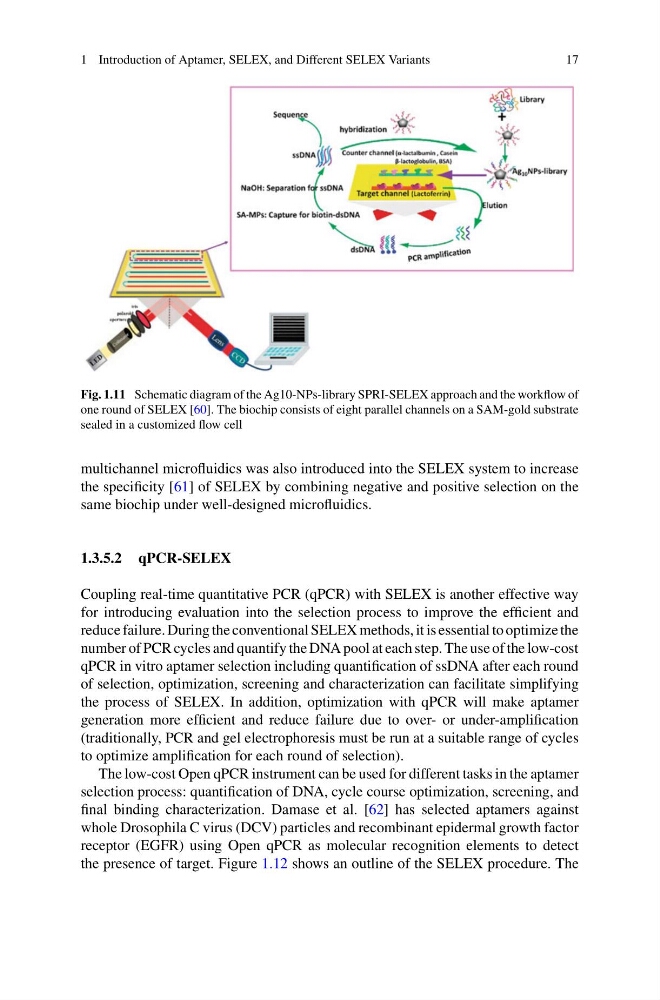
Fig. 1.11 Schematic diagram of the Ag10-NPs-library SPRI-SELEX approach and the workflow of
one round of SELEX [60]. The biochip consists of eight parallel channels on a SAM-gold substrate
sealed in a customized flow cell
multichannel microfluidics was also introduced into the SELEX system to increase
the specificity [61] of SELEX by combining negative and positive selection on the
same biochip under well-designed microfluidics.
1.3.5.2 qPCR-SELEX
Coupling real-time quantitative PCR (qPCR) with SELEX is another effective way
for introducing evaluation into the selection process to improve the efficient and
reduce failure. During the conventional SELEX methods, it is essential to optimize the
number of PCR cycles and quantify the DNA pool at each step. The use of the low-cost
qPCR in vitro aptamer selection including quantification of ssDNA after each round
of selection, optimization, screening and characterization can facilitate simplifying
the process of SELEX. In addition, optimization with qPCR will make aptamer
generation more efficient and reduce failure due to over- or under-amplification
(traditionally, PCR and gel electrophoresis must be run at a suitable range of cycles
to optimize amplification for each round of selection).
The low-cost Open qPCR instrument can be used for different tasks in the aptamer
selection process: quantification of DNA, cycle course optimization, screening, and
final binding characterization. Damase et al. [62] has selected aptamers against
whole Drosophila C virus (DCV) particles and recombinant epidermal growth factor
receptor (EGFR) using Open qPCR as molecular recognition elements to detect
the presence of target. Figure 1.12 shows an outline of the SELEX procedure. The
17
Fig. 1.11 Schematic diagram of the Ag10-NPs-library SPRI-SELEX approach and the workflow of
one round of SELEX [60]. The biochip consists of eight parallel channels on a SAM-gold substrate
sealed in a customized flow cell
multichannel microfluidics was also introduced into the SELEX system to increase
the specificity [61] of SELEX by combining negative and positive selection on the
same biochip under well-designed microfluidics.
1.3.5.2 qPCR-SELEX
Coupling real-time quantitative PCR (qPCR) with SELEX is another effective way
for introducing evaluation into the selection process to improve the efficient and
reduce failure. During the conventional SELEX methods, it is essential to optimize the
number of PCR cycles and quantify the DNA pool at each step. The use of the low-cost
qPCR in vitro aptamer selection including quantification of ssDNA after each round
of selection, optimization, screening and characterization can facilitate simplifying
the process of SELEX. In addition, optimization with qPCR will make aptamer
generation more efficient and reduce failure due to over- or under-amplification
(traditionally, PCR and gel electrophoresis must be run at a suitable range of cycles
to optimize amplification for each round of selection).
The low-cost Open qPCR instrument can be used for different tasks in the aptamer
selection process: quantification of DNA, cycle course optimization, screening, and
final binding characterization. Damase et al. [62] has selected aptamers against
whole Drosophila C virus (DCV) particles and recombinant epidermal growth factor
receptor (EGFR) using Open qPCR as molecular recognition elements to detect
the presence of target. Figure 1.12 shows an outline of the SELEX procedure. The